Iranian Health Ministry Releases New Details on Mojtaba Khamenei Injury
Iran's Health Ministry released new details regarding injuries sustained by Supreme Leader Mojtaba Khamenei during the Feb. 28 Tehran airstrikes, rejecting international reports of severe trauma and stating that treatment involved only minor wounds and "a few stitches."
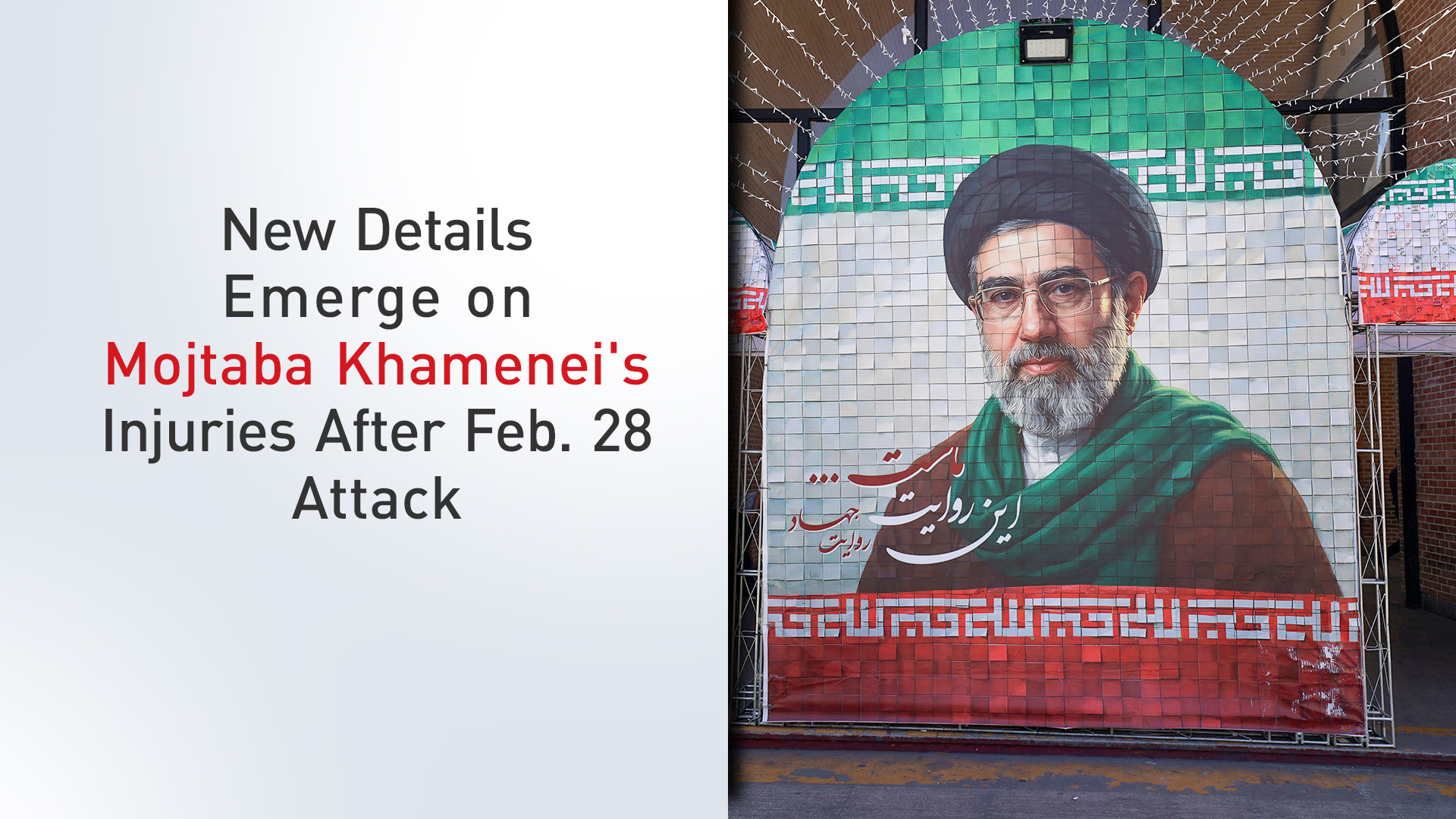
ERBIL (Kurdistan24) - The Iranian Ministry of Health issued new, detailed disclosures regarding the injuries sustained by Supreme Leader Mojtaba Khamenei during the Feb. 28 airstrikes on Tehran on Tuesday, providing the most specific medical timeline to date.
According to Iranian Health Ministry officials, the Iranian Supreme Leader was transferred to Sina Hospital following the bombardment of the government district, where he received treatment for what authorities characterized as minor, superficial injuries.
The latest remarks, delivered by Hossein Karmanpour, the Director of the Center for Public Relations and Information at the Iranian Ministry of Health, aim to definitively counter widespread international speculation regarding the severity of Mojtaba Khamenei's condition.
According to remarks cited by the "Hamshahri Online" website, Karmanpour explicitly denied reports that the Supreme Leader was severely disfigured or gravely wounded.
Instead, the Health Ministry official stated that the medical intervention was limited to "a few stitches" on his leg, after which he was discharged.
This newly disclosed information highlights that Mojtaba Khamenei's health has evolved from a matter of domestic medical concern into a major geopolitical issue.
Following the death of his father, Ayatollah Ali Khamenei, in the same Feb. 28 strike, the swift succession of Mojtaba Khamenei was designed to project institutional continuity.
However, his complete absence from public view since his appointment on Mar. 8 has fueled intense regional speculation and conflicting narratives regarding his capacity to govern.
Tehran is increasingly prioritizing stability messaging to assure both its populace and international adversaries that the regime's command structure remains fully intact as it navigates complex ceasefire negotiations and high-stakes military tensions with the United States.
Latest Health Ministry Disclosure
The timeline provided by the Health Ministry offers a in-depth look at the immediate aftermath of the Feb. 28 joint U.S.-Israeli strikes.
According to Iranian officials, the bombardment targeted the vicinity of the Supreme Leader's official residence, as well as the offices of President Masoud Pezeshkian and other government members, at approximately 10:00 AM.
Karmanpour detailed the chaotic post-strike environment in the capital.
The Iranian official stated that severe traffic congestion paralyzed vehicle movement in Tehran, forcing Health Minister Zafarghandi to travel to Sina Hospital in the city center via motorcycle.
According to the report, the hospital administration was notified at 12:00 PM that Mojtaba Khamenei was being transferred to the facility.
Karmanpour noted that this transfer initially caused confusion among official media outlets regarding how to manage the information, given the intense international scrutiny surrounding the event.
Regarding the medical treatment, the Health Ministry explicitly sought to downplay the severity of the incident.
Karmanpour stated that the medical team performed a minor procedure on a superficial leg wound, consisting of just a few stitches, before the Supreme Leader left the hospital.
The official categorically denied international reports suggesting severe injuries or disfigurement.
In addition to addressing the Supreme Leader's health, Karmanpour utilized the address to discuss the broader humanitarian impact of the conflict.
He criticized American policies, citing strikes on the coastal city of Minab in Hormozgan province, which he stated resulted in the deaths and injuries of numerous school students.
According to Iranian officials, these attacks coincided with severe flooding in the region, severely complicating logistical and medical responses. Karmanpour noted that 92 injured students currently remain under medical supervision.
The February Strike and Leadership Transition
The new medical disclosures arrive in the wake of a profound leadership shock for the Islamic Republic.
Earlier reports indicated that the Feb. 28 joint U.S.-Israeli missile strike on Tehran resulted in the death of the long-standing Supreme Leader, Ali Khamenei. The attack plunged the region into a state of acute crisis.
On Mar. 8, Iran's Assembly of Experts announced the election of Mojtaba Khamenei as the new Supreme Leader. However, his immediate succession was clouded by reports that he had been caught in the same bombardment that killed his father.
Since taking office, Mojtaba Khamenei has made no public appearances, limiting his communications entirely to written messages read by state television anchors.
This deviation from the traditional practice of televised addresses created immediate doubt regarding his health status and physical capacity to lead the country.
Competing Narratives About His Condition
The Health Ministry's account of "a few stitches" stands in stark contrast to previous assessments circulating in the international press.
International media reports previously claimed that the new leader sustained catastrophic injuries.
According to earlier background reports, outlets such as Reuters cited sources indicating that Mojtaba Khamenei suffered severe facial and leg injuries, while a detailed report by The New York Times suggested he had undergone multiple surgeries on one leg and was awaiting a prosthetic limb.
Furthermore, these assessments were amplified by statements from Washington.
In mid-March, U.S. War Secretary Pete Hegseth publicly stated that Khamenei was "wounded and likely disfigured."
The profound disconnect between the official Iranian narrative of superficial injuries and Western intelligence assessments of severe trauma has transformed the issue of his health into a battleground of competing strategic narratives.
Institutional Messaging and Political Stability
The latest comments from the Health Ministry are part of a broader, coordinated campaign by Tehran to project unshakeable institutional stability.
According to reports, Mazaher Hosseini, a senior official in the Supreme Leader's office, recently stated that Mojtaba Khamenei is in "perfect health."
Hosseini claimed that the leader was merely knocked down by a blast wave, resulting in slight injuries to his back and kneecap, which are healing.
Iranian officials have characterized demands for visual proof of his condition as a tactical maneuver by adversaries.
By consistently framing his injuries as minor, Tehran is attempting to reassure its domestic base that the core of the Islamic Republic remains unbroken. The strategic importance of this stability messaging is paramount; any perceived weakness or leadership vacuum could invite further domestic unrest or external coercion.
Regional and Diplomatic Implications
The uncertainty surrounding Mojtaba Khamenei's health intersects directly with ongoing diplomatic efforts to halt the regional conflict.
The reports note that the Iranian leadership is currently evaluating a U.S.-backed ceasefire proposal aimed at ending the war and reopening the strategic Strait of Hormuz.
In this high-stakes environment, leadership rumors can significantly affect diplomatic leverage.
Any perception of operational incapacity at the highest levels of the Iranian state could embolden adversaries or complicate complex negotiations.
Consequently, Iranian President Masoud Pezeshkian recently offered a rare public acknowledgment of a meeting with the Supreme Leader, a move designed to reinforce the narrative that Mojtaba Khamenei remains mentally sharp, actively engaged, and firmly in command of the state apparatus during these critical ceasefire discussions.
Public Absence and Political Messaging
Despite the repeated assurances from the Health Ministry and the Supreme Leader's office, the lack of public visibility remains a point of intense scrutiny.
The reliance on surrogate officials, written statements, and even reported AI-generated video footage has only fueled ongoing doubts.
Iranian officials have asked the public to be patient, promising that Mojtaba Khamenei will speak publicly "when the time is right."
For now, the state is relying on detailed medical timelines, such as the one provided by Karmanpour, to bridge the gap between his physical absence and the necessity of projecting absolute authority.
The health of Iran's Supreme Leader Mojtaba Khamenei has evolved into a major issue of regional political significance.
Amid ongoing geopolitical tensions and intense scrutiny over Iran's leadership continuity, Tehran's latest medical disclosures represent a calculated effort to project institutional stability and dispel international speculation regarding his capacity to govern.