Trump Delays Planned Iran Strike Amid Gulf-Mediated Talks
In a post on his Truth Social platform, Trump said he would “hold off on our planned Military attack of the Islamic Republic of Iran, which was scheduled for tomorrow,” citing ongoing diplomatic efforts involving Qatar, Saudi Arabia, and the United Arab Emirates.
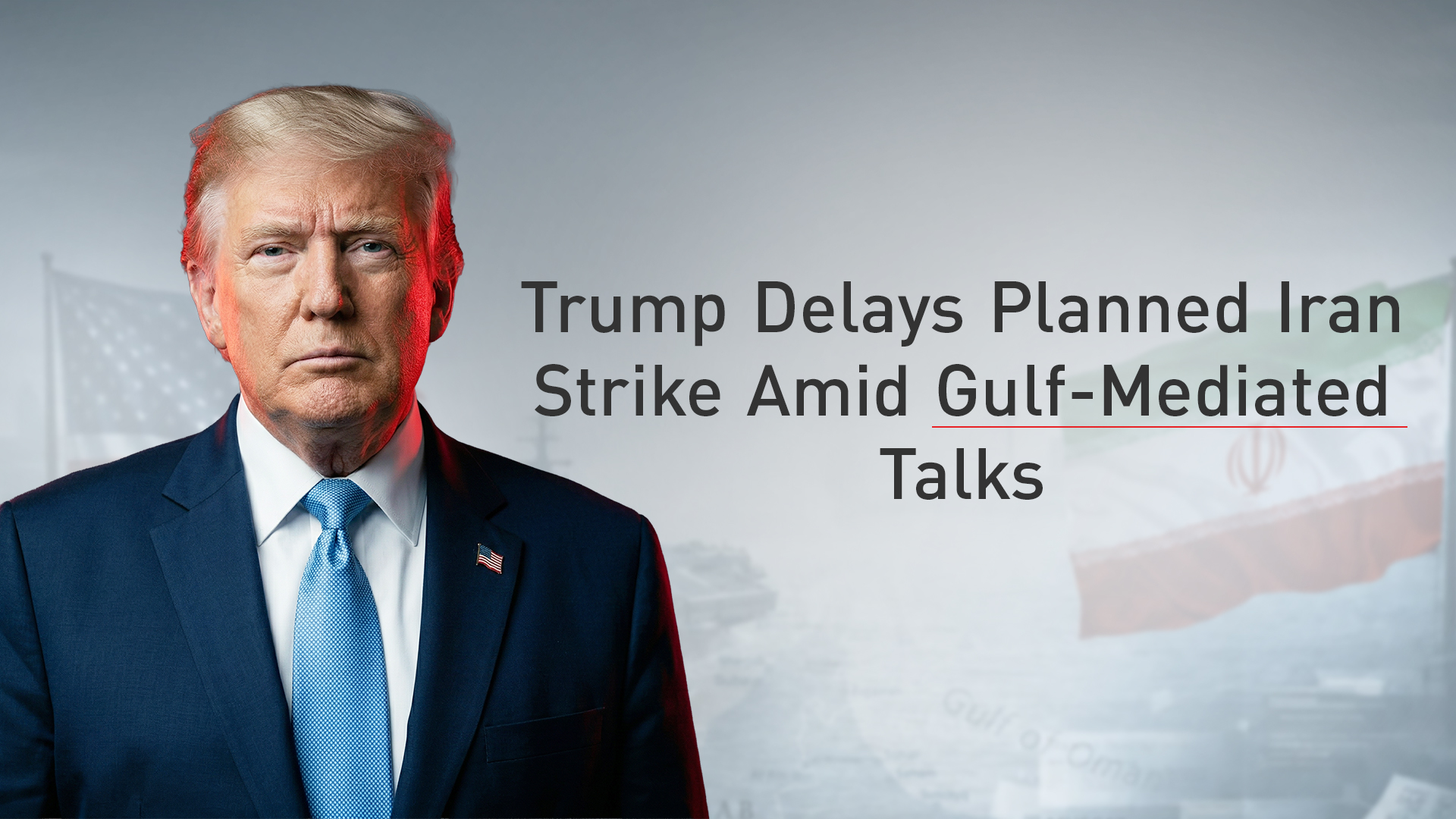
ERBIL (Kurdistan24) – U.S. President Donald Trump announced Monday that he was delaying a planned military strike on Iran that had reportedly been scheduled for Tuesday, saying the decision came at the request of Gulf leaders as negotiations with Tehran intensified.
In a post on his Truth Social platform, Trump said he would “hold off on our planned Military attack of the Islamic Republic of Iran, which was scheduled for tomorrow,” citing ongoing diplomatic efforts involving Qatar, Saudi Arabia, and the United Arab Emirates.
According to Trump, Gulf leaders urged Washington to delay military action because “serious negotiations are now taking place” with Tehran. He added that the regional allies believe an agreement can still be reached that ensures “NO NUCLEAR WEAPONS FOR IRAN!”
Trump also stated that he had informed the U.S. military that the operation would not proceed as planned, but warned that forces remain prepared for “a full, large scale assault of Iran, on a moment’s notice” if negotiations fail to produce what he described as an acceptable deal.
The announcement marked a sudden shift after days of escalating rhetoric from Trump following his return from China, where he met Chinese President Xi Jinping. On Sunday, Trump warned that “the clock is ticking” and threatened that “there won’t be anything left” of Iran if a peace agreement was not reached.
The United States and Israel have been engaged in a military confrontation with Iran since late February, when U.S. and Israeli forces launched strikes targeting Iranian positions. The conflict has heightened tensions across the Middle East, disrupted regional stability, and contributed to rising global energy prices.
Diplomatic progress has remained limited despite a fragile ceasefire reached in April. The two sides have held only one round of talks in Pakistan in recent months.
On Sunday, Iran’s semi-official Fars News Agency reported that Washington had presented Tehran with a five-point proposal aimed at ending the conflict. According to the report, the proposal included demands that Iran keep only one nuclear facility operational and transfer its stockpile of highly enriched uranium to the United States.
Fars also reported that Iran’s response stressed Tehran’s continued authority over the strategic Strait of Hormuz, one of the world’s most important energy transit routes, which Iran has largely restricted since the outbreak of the war.
On Monday, the newly established Persian Gulf Strait Authority (PGSA), created by Iran to oversee operations in the Strait of Hormuz, announced it would provide “real-time updates” on developments in the waterway through the social media platform X.
Trump has insisted that reopening the Strait of Hormuz must be part of any future agreement with Iran, underscoring the waterway’s central role in ongoing negotiations.