Hospital Hit, Cities Rocked as Iran and Israel Exchange Fire and Trump Weighs U.S. Military Action
According to The Wall Street Journal, Trump had already approved military plans earlier this week but delayed action in hopes Iran might abandon its nuclear ambitions.
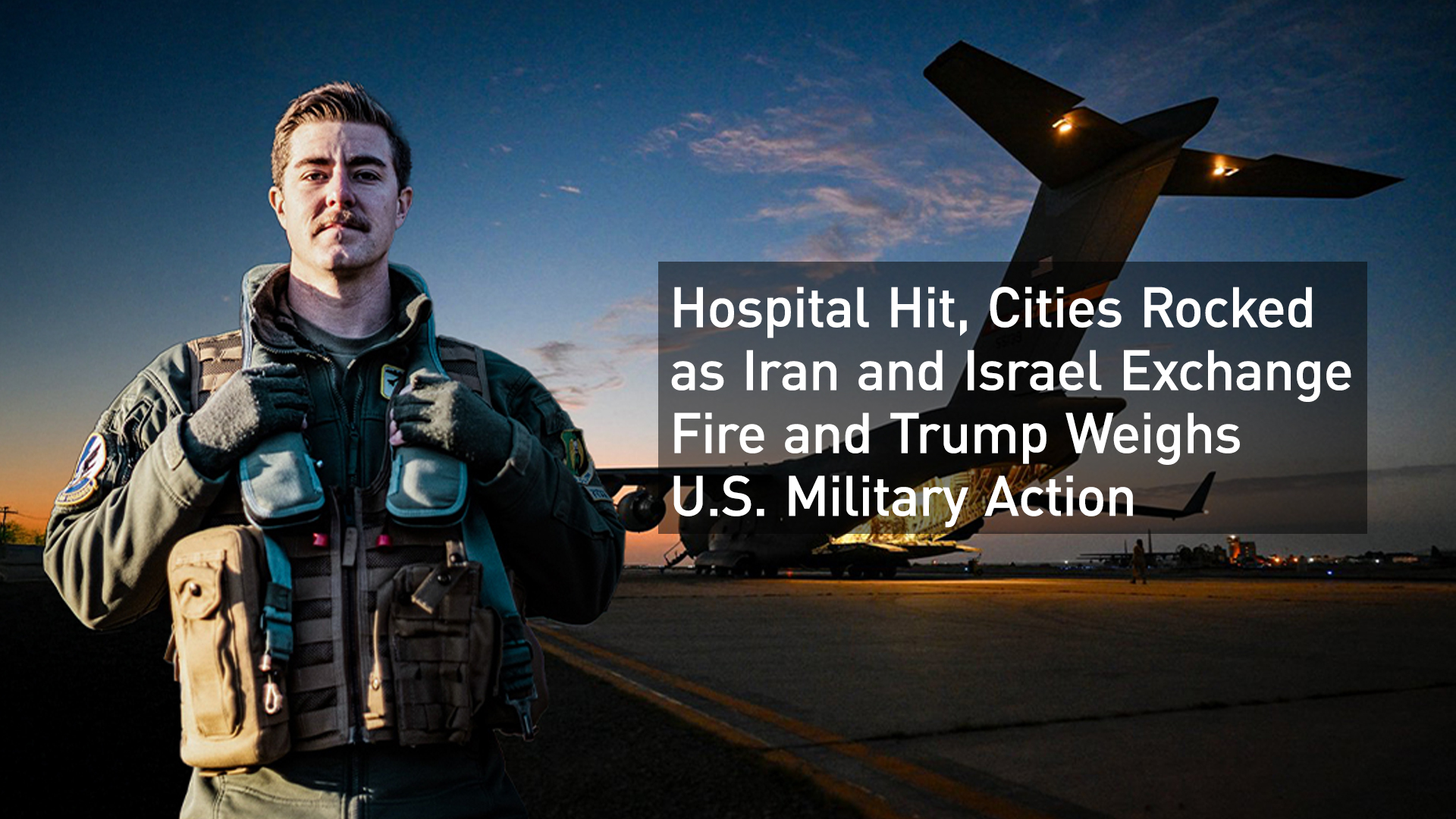
ERBIL (Kurdistan24) — Iran launched a new wave of missile attacks on Israel Thursday, hitting civilian areas including a hospital in Beersheba, according to AFP, as U.S. President Donald Trump said he was still weighing possible American military involvement in the escalating conflict.
AFP journalists reported hearing sustained and violent explosions across Jerusalem and Tel Aviv, with air raid sirens sounding in several regions as Iranian projectiles targeted key Israeli cities. Shortly after the assault, the Israeli army announced that it was safe for citizens to leave their shelters.
Israel’s Foreign Minister confirmed that Soroka Hospital in Beersheba had sustained “extensive damage,” and Israeli emergency services said at least 32 people were injured in the latest barrage. The explosions in Jerusalem were reportedly the loudest heard by AFP teams since hostilities began one week ago.
The attack came hours after fresh Israeli airstrikes on Tehran and other Iranian cities. Israel launched a strike on Iran’s Arak heavy water nuclear reactor early Thursday, Iranian state television reported. According to Iranian state television, the facility had been evacuated before the attack, and “there is no radiation danger whatsoever.” Iran did not provide further details on the extent of the damage or potential casualties.
U.S. Position Unclear
President Trump has kept his position on possible U.S. military involvement intentionally vague. “I may do it, I may not do it. I mean, nobody knows what I’m going to do,” Trump told reporters Wednesday. He added, “The next week is going to be very big,” but declined to elaborate.
Speaking to the press on Thursday, Trump said he had not made a final decision, stating, “I like to make the final decision one second before it’s due, because things change. Especially with war.”
According to The Wall Street Journal, Trump had already approved military plans earlier this week but delayed action in hopes Iran might abandon its nuclear ambitions.
The White House said the president was scheduled to receive an intelligence briefing later Thursday, while Secretary of State Marco Rubio was meeting his British counterpart to discuss developments in the region.
Despite Trump’s claim that “Iranian officials want to come to the White House,” Tehran has firmly denied any such request and continues to resist Washington’s demands.
Tehran Stands Firm
Iran’s Supreme Leader Ayatollah Ali Khamenei rejected Trump’s call for an “unconditional surrender,” labeling the ultimatum “unacceptable.” “Iran will never surrender,” Khamenei said Wednesday, adding, “Any military intervention will undoubtedly result in irreparable damage.”
Iran’s Foreign Minister Abbas Araghchi emphasized that Iran’s response has been targeted solely at Israel. “Iran has so far only retaliated against the Israeli regime and not those who are aiding and abetting it,” he told AFP.
Since hostilities erupted last Friday, Iran has reportedly launched approximately 400 ballistic missiles and 1,000 drones at Israeli targets, an Israeli military official told AFP on condition of anonymity. Around 20 of those missiles are said to have hit civilian areas.
Israel says Iranian strikes have killed at least 24 people and injured hundreds. Iran, in turn, claims Israeli airstrikes have killed at least 224 individuals, including military commanders, nuclear scientists, and civilians. Neither side has updated the official death toll since earlier this week.
International Concerns Grow
The escalating military campaign has sparked urgent calls for de-escalation. Russian President Vladimir Putin said Thursday that a negotiated solution ensuring both Israel’s security and Iran’s right to a civilian nuclear program was still possible. “It would be good for all of us to look for ways to stop the fighting,” he said, adding that Iran had not requested Russian military support.
Meanwhile, inside Iran, the war has led to widespread humanitarian concerns. Speaking to AFP near the Bashmakh border crossing with Iraq, an Iranian man reported food shortages. “There are shortages of rice, bread, sugar, and tea,” he said, requesting anonymity for safety reasons.
Internet access across Iran has also been severely disrupted. A London-based watchdog reported a “near-total national internet blackout” on Wednesday, and Iranian media confirmed further restrictions.
Israel continues to justify its air campaign as a means to prevent Iran from developing nuclear weapons. While Iran has enriched uranium up to 60% — well above the 3.67% cap set by the 2015 nuclear deal, but below weapons-grade — Israel sees this as a grave threat. According to the Stockholm International Peace Research Institute, Israel possesses around 90 nuclear warheads, although it maintains official ambiguity about its arsenal.
As the conflict deepens, the world watches closely for signs of U.S. involvement — a move that could reshape the region’s strategic landscape for years to come.
Kurdistan24 English will continue to provide instant coverage and up-to-date news on developments in the ongoing war between Israel and Iran. Keep an eye on Kurdistan24 English's website and social media platforms for the latest updates.