Israel Strikes Iranian Nuclear Facility, Kills Senior Commanders Amid Warnings of Prolonged War
Iran’s Supreme Leader’s senior adviser, Ali Larijani, responded to Grossi’s remarks with a veiled threat, posting on social media that the U.N. nuclear chief would “pay” once the war concluded.
ERBIL (Kurdistan24) — Israel's military on Saturday confirmed that it had struck an Iranian nuclear research facility and killed three senior Iranian commanders, as tensions between the two arch-rivals escalated into a deadly conflict that shows no sign of slowing. Israeli officials indicated that the military is preparing for a potentially prolonged campaign aimed at crippling Iran's nuclear capabilities, according to the Associated Press (AP).
Smoke was seen early Saturday rising from a mountainous area near Isfahan, where the targeted facility—identified as a centrifuge production site—was located. An Israeli military official, speaking to reporters on condition of anonymity under army guidelines, said the strikes occurred in two waves and aimed at multiple centrifuge facilities, including other sites hit earlier in the week. It marked the second time Israel has targeted Isfahan since the war began on June 13.
Akbar Salehi, deputy governor for security affairs in Isfahan province, confirmed to local media that Israeli strikes had caused damage to the facility but said no casualties had been reported.
According to AP, the overnight escalation also included Iran launching a fresh wave of missiles and drones at Israel. The Israeli military described it as a “small barrage” that was largely intercepted by its air defense systems. An Israeli official claimed more than 50% of Iran's launchers had now been destroyed. “We’re creating a bottleneck—making it harder for them to fire toward Israel,” the official said.
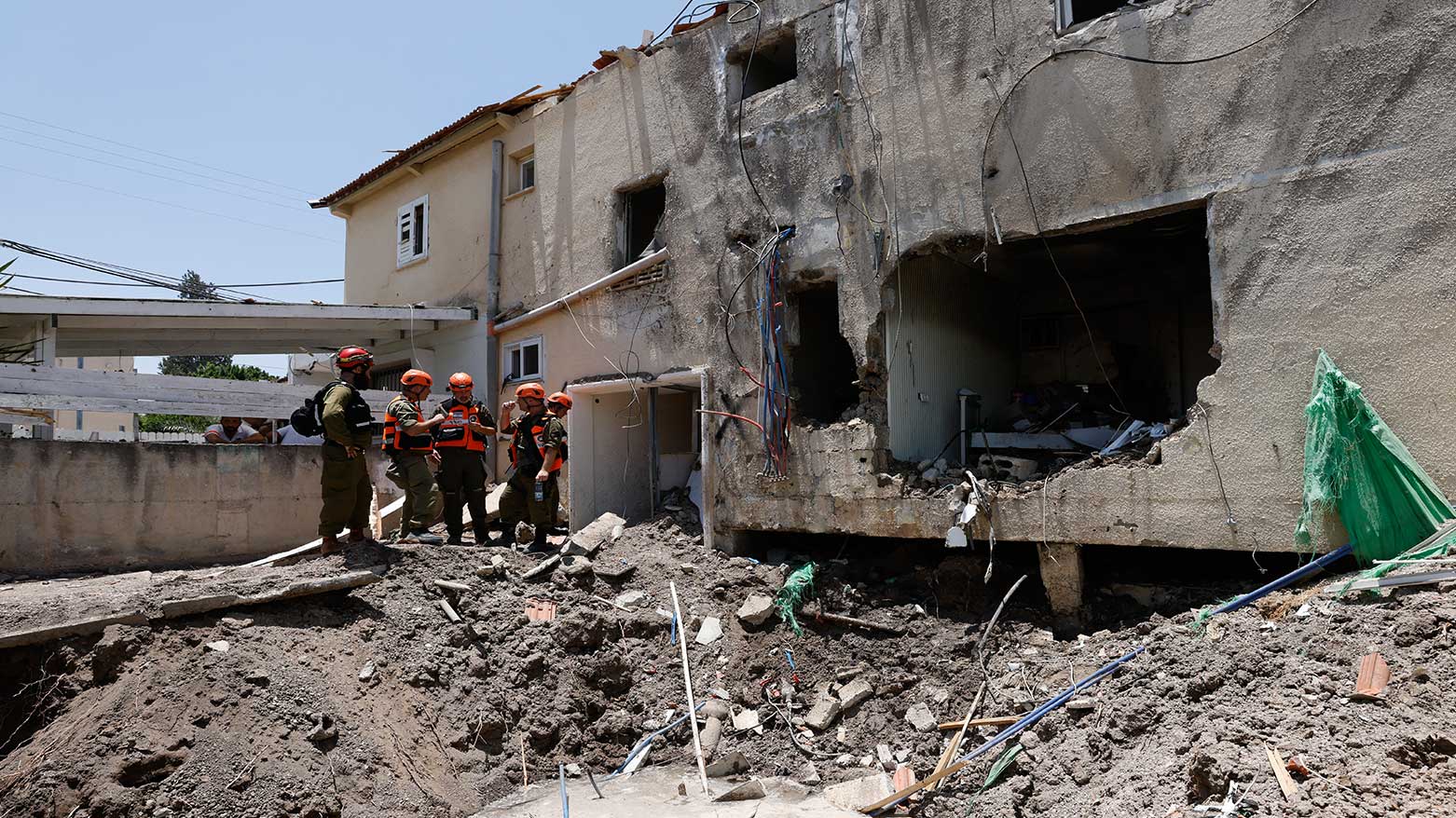
Despite this, one Iranian drone reportedly struck a two-story building in northern Israel, but no injuries were reported, according to Israel’s Magen David Adom rescue service.
Israel’s military spokesperson, Brig. Gen. Effie Defrin, said the army has been ordered by Chief of Staff Lt. Gen. Eyal Zamir to prepare for a “prolonged campaign.” “We are deepening our strikes night after night, and we have amazing achievements,” he said. “We will continue until the threat is removed.”
Diplomatic Efforts Falter
AP reported that diplomatic efforts in Geneva failed to yield any breakthroughs. While European diplomats expressed cautious optimism for future talks, Iranian Foreign Minister Abbas Araghchi ruled out negotiations with the United States unless Israeli aggression ceased.
“Iran is ready to consider diplomacy once again and once aggression is stopped and the aggressor is held accountable for the crimes committed,” Araghchi told reporters. No date was set for the next round of talks.
U.S. President Donald Trump is reportedly weighing the option of active military involvement in support of Israel. Araghchi warned that such a move “would be very unfortunate” and “very, very dangerous for everyone.”
War Death Toll Mounts
The conflict has taken a significant toll on both nations. According to a Washington-based Iranian human rights group cited by AP, more than 720 people, including at least 285 civilians, have been killed in Iran. Over 2,500 have been wounded. Israel says it has suffered at least 24 deaths and hundreds of injuries from Iran’s barrage of over 1,000 drones and 450 missiles.
Israeli Prime Minister Benjamin Netanyahu has vowed to continue the military operation “for as long as it takes” to eliminate Iran’s nuclear program and its ballistic missile arsenal. However, experts cited by AP say fully neutralizing Iran’s nuclear infrastructure may be unachievable without U.S. military assistance, particularly to destroy fortified underground sites like Fordo, which are only vulnerable to America’s bunker-busting bombs.
High-Profile Iranian Commanders Targeted
In the initial phases of the war, Israel’s opening strikes killed three of Iran’s most senior military leaders: Gen. Mohammad Bagheri, Gen. Hossein Salami, and Gen. Amir Ali Hajizadeh. The campaign of targeted assassinations has continued. On Saturday, Israel announced the killing of Saeed Izadi, commander of the Palestine Corps within the Quds Force, who was reportedly responsible for funding and arming Hamas ahead of the Oct. 7, 2023, attack on Israel.
Izadi was killed in an apartment in Qom, where local authorities confirmed an attack on a four-story building. Israeli officials also said they had eliminated Behnam Shahriyari, who led the Quds Force's weapons transfer operations to Hamas and Hezbollah, as well as a commander of Iran's drone force.
IAEA Chief Warns of Nuclear Disaster
At an emergency U.N. Security Council meeting on Friday, Rafael Grossi, head of the International Atomic Energy Agency (IAEA), warned against any military strikes on Iran’s nuclear reactors, particularly the Bushehr nuclear power plant. “In case of an attack on Bushehr, a direct hit would result in a very high release of radioactivity to the environment,” he said.
Although Israel has not struck Iran’s nuclear power reactors, AP reports that its attacks have focused on uranium enrichment facilities at Natanz, workshops near Tehran, labs in Isfahan, and the Arak heavy water reactor.
Iran’s Supreme Leader’s senior adviser, Ali Larijani, responded to Grossi’s remarks with a veiled threat, posting on social media that the U.N. nuclear chief would “pay” once the war concluded.
Iran continues to insist its nuclear program is peaceful. Yet, after the U.S. withdrew from the 2015 nuclear deal during Trump’s first term, Tehran began enriching uranium up to 60%—just a step away from weapons-grade levels—while limiting international inspections.
Israel, which is widely believed to possess nuclear weapons but has never officially acknowledged it, views Iran’s enrichment activities as an existential threat.
As the war enters its second week, Israeli officials show no signs of backing down. With the nuclear threat and regional stability hanging in the balance, the next moves by the U.S. and Iran will determine whether the conflict becomes a prolonged, possibly regional war.
Kurdistan24 English will continue to provide instant coverage and up-to-date news on developments in the ongoing war between Israel and Iran. Keep an eye on Kurdistan24 English's website and social media platforms for the latest updates.