Iraqi Returnees from Syria’s al-Hol Camp Struggle with Reintegration, Face Pressure to Disown Relatives
“All I wanted was to return to Iraq,” Darwish told AFP, reflecting on his time in the Kurdish-controlled camp. “But I had to disown my sons. My house is gone. I am back to square one.”
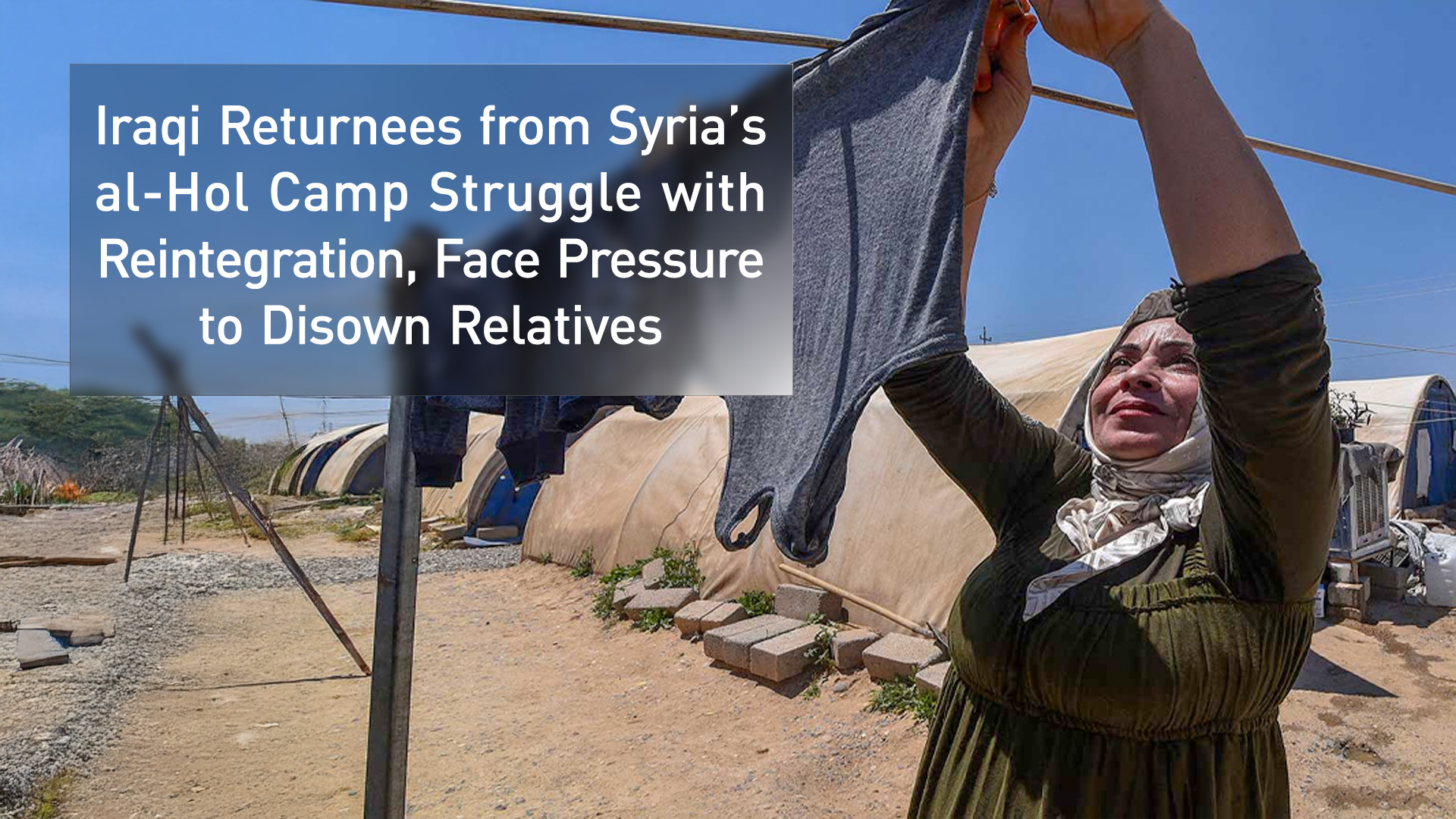
ERBIL (Kurdistan24) — After years in Syria’s notorious al-Hol detention camp, 64-year-old Ibrahim Darwish was relieved to return to Iraq — only to be confronted with a painful condition: disowning his sons accused of ties to the Islamic State (ISIS) group.
“All I wanted was to return to Iraq,” Darwish told AFP, reflecting on his time in the Kurdish-controlled camp, which holds thousands of family members of suspected ISIS fighters under harsh, prison-like conditions. “But I had to disown my sons. My house is gone. I am back to square one.”
Darwish is among thousands of Iraqis repatriated from al-Hol, who now face immense challenges reintegrating into their communities. Their perceived affiliation with ISIS has not only isolated them socially but also hindered access to basic rights and services.
According to an AFP investigation, based on interviews with more than 15 returnees, aid workers, and a lawyer — most of whom spoke on condition of anonymity — returnees are often pressured by local authorities and armed groups to denounce or sever ties with relatives accused of ISIS links. These disownment pledges are presented as a prerequisite for returning home or obtaining essential documents such as national ID cards.
A lawyer involved in multiple returnee cases described these pledges as "essentially complaints by one family member against another,” and warned of a widespread misconception that disownment is mandatory for receiving official documentation.
A senior Iraqi official, however, told AFP that this practice is illegal. “Requesting disownment statements has become illegal, and anyone who asks for it should be reported,” the official said, asserting that the government supports reintegration.
Darwish said he was able to leave al-Hol after receiving security clearance and the support of his tribal leader. Upon his return, he spent months at al-Jadaa camp — a transitional "rehabilitation" center run by Iraqi authorities — where he felt “the most welcome.” But upon requesting to return to his home in Salaheddin province, local authorities told him to first disown his sons, who are detained on suspicion of ISIS membership — a charge he denies. He reluctantly complied, knowing that refusal would jeopardize his livelihood.
“How was I going to farm my land and make ends meet?” he asked.
In Mosul, a woman in her thirties expressed fear of returning to her hometown in Salaheddin after her father was arrested and later died in custody. Now living with her sister and children in a crumbling house, she fears eviction and is unable to secure new identity papers without possibly having to disown her detained husband.
“We were brought back from al-Hol — that was good,” she said. “But now, we need the authorities to support us so we can stand on our feet.”
Thanassis Cambanis, director of the New York-based Century International, warned that Iraq’s policies may unintentionally fuel further radicalization. “At a minimum, collective punishment of the ISIS families is an injustice and a moral error,” Cambanis said. “At a maximum, Iraq's policy creates a ripe pool of potential recruits for violent sectarian extremists.”
Since 2021, Iraq has repatriated about 17,000 people from al-Hol, primarily women and children. While many Western countries have refused to bring back their nationals from the camp, Baghdad’s reintegration effort has received some support from local and international organizations.
The Geneva-based Global Community Engagement and Resilience Fund (GCERF) supports several reintegration centers across Iraq, which have helped around 6,000 returnees so far. The centers provide services such as psychological support, vocational training, and educational assistance.
Kevin Osborne of GCERF emphasized the need for more robust support: “The growing number of returnees requires expanded support to adequately prepare communities and enable smooth, sustainable reintegration.”
In Mosul, Noran Mahmood of the GCERF-supported Iraqi Institution for Development said many returnees are grappling with deep-seated trauma and societal stigma. “They feel that having been in al-Hol is a disgrace,” she noted, adding that depression, insomnia, and anxiety are common.
Rahaf, 24, is one of many women receiving psychological counseling. After years of trauma, she recently enrolled in middle school with the group’s help — a major step toward rebuilding her life.
“I feel successful,” she said. “I want to become a lawyer or a teacher.”