Iran and Belarus Sign Defense and Economic Cooperation Pacts Amid Sanctions Pressure
Pezeshkian emphasized that Tehran would help Minsk “neutralize” sanctions, citing Iran’s decades-long experience navigating Western restrictions.
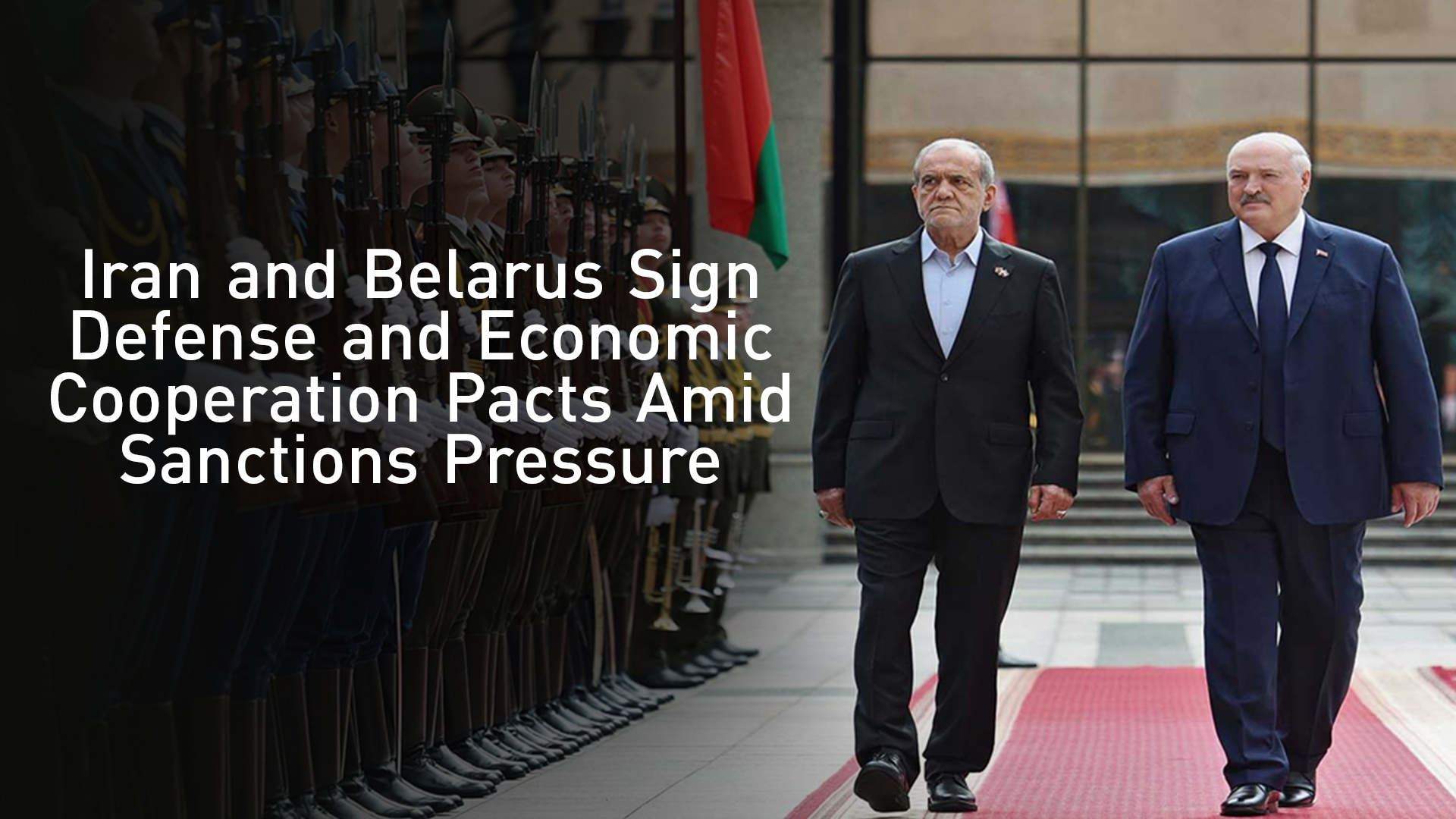
ERBIL (Kurdistan24) — The leaders of Belarus and Iran signed a sweeping package of agreements Wednesday to deepen cooperation in defense, industry, and other sectors, underscoring their shared effort to withstand mounting Western sanctions.
Belarusian President Alexander Lukashenko and Iranian President Masoud Pezeshkian oversaw the signing of 13 documents in Minsk, according to The Associated Press. The two governments, both under heavy sanctions, framed the agreements as a step toward building a “strategic partnership.”
“We are ready to cooperate with you on all issues — from providing your country with food to military-technical cooperation,” Lukashenko told Pezeshkian, hailing him as a “friend.” While neither side disclosed specifics of the defense deals, they confirmed the accords cover areas such as tourism, science, technology, and education, alongside industry and agriculture.
Pezeshkian emphasized that Tehran would help Minsk “neutralize” sanctions, citing Iran’s decades-long experience navigating Western restrictions. Belarus, for its part, could offer Iran access to its wood-processing and chemical industries, as well as to its key exports of potash fertilizers.
The two presidents also pledged to begin work on a broader strategic partnership treaty.
Deepening Ties Amid Regional Conflicts
The talks come as both nations have aligned themselves more closely with Moscow in recent years. Lukashenko, a staunch ally of Russian President Vladimir Putin, allowed Russian forces to stage their 2022 invasion of Ukraine from Belarusian soil and has since hosted Russian tactical nuclear weapons.
Iran, meanwhile, has supplied Russia with drones used in the war, and Pezeshkian signed a strategic cooperation treaty with Putin in January, though it stopped short of a mutual defense pact.
Lukashenko also condemned recent U.S. strikes on Iran’s nuclear infrastructure, calling them “a serious threat to regional and international stability and security.” He added, “We support Iran’s legitimate right to develop peaceful nuclear energy.”
Iran Showcases Military Strength After War with Israel
The Belarus-Iran summit coincided with Tehran’s announcement of new naval exercises in the Gulf of Oman and Indian Ocean — its first large-scale military drill since the end of its 12-day war with Israel in June.
According to state television, the “Sustainable Power 1404” exercise involves naval vessels launching cruise missiles and deploying drones at sea-based targets. While routine, the drills come as Iranian leaders attempt to project strength following Israeli strikes that destroyed key air defense systems and targeted nuclear facilities during the war.
Iran’s regular navy, based in Bandar Abbas and numbering around 18,000 personnel, operates largely outside the Persian Gulf, leaving the Strait of Hormuz and its surrounding waters to the Revolutionary Guard’s naval forces. The Guard is known for shadowing U.S. vessels and seizing Western ships amid past tensions over Tehran’s nuclear program.
Since the ceasefire, Iranian officials have repeatedly warned they are ready to counter any renewed Israeli attack. Defense Minister Brig. Gen. Aziz Nasirzadeh told the state-run IRNA news agency this week that new missile systems have been deployed to bolster deterrence.
Nuclear Dispute Deepens
Iran has also suspended its cooperation with the International Atomic Energy Agency, halting oversight of its nuclear sites as it enriches uranium close to weapons-grade levels.
European powers — France, Germany, and the United Kingdom — have warned that unless Iran resolves its dispute with the IAEA by August 31, they will trigger a “snapback” mechanism to reimpose all United Nations sanctions lifted under the 2015 nuclear accord.
Already weakened by years of U.S. sanctions, observers warn Iran’s fragile economy could face further strain if U.N. restrictions return.
Iranian Foreign Minister Abbas Araghchi on Wednesday highlighted the underlying causes of U.S. military actions against Iran, describing them as a direct response to Washington’s inability to compel Tehran to abandon uranium enrichment entirely.
In an interview with the Islamic Republic News Agency (IRNA), Araghchi explained that American negotiators, engaged in Oman-mediated indirect talks, maintained a consistent demand for “zero enrichment,” arguing that any level of uranium processing left open the potential for nuclear weapons development.
Rejecting this stance, Araghchi reaffirmed Iran’s steadfast position, rooted in a religious decree by Supreme Leader Ayatollah Seyyed Ali Khamenei, that the country neither seeks nuclear arms nor intends to halt enrichment.
He emphasized Tehran’s insistence on maintaining its peaceful nuclear program and protecting the scientific advancements it has independently achieved, framing enrichment as both a sovereign right and a critical component of national scientific progress.