Iraqi PM Meets KRG Delegation, Orders Resumption of Oil Operations Across Kurdistan
Baghdad moves to restore Kurdistan Region oil operations after conflict-driven disruptions, as Erbil and Baghdad deepen economic coordination following a landmark diplomatic push.
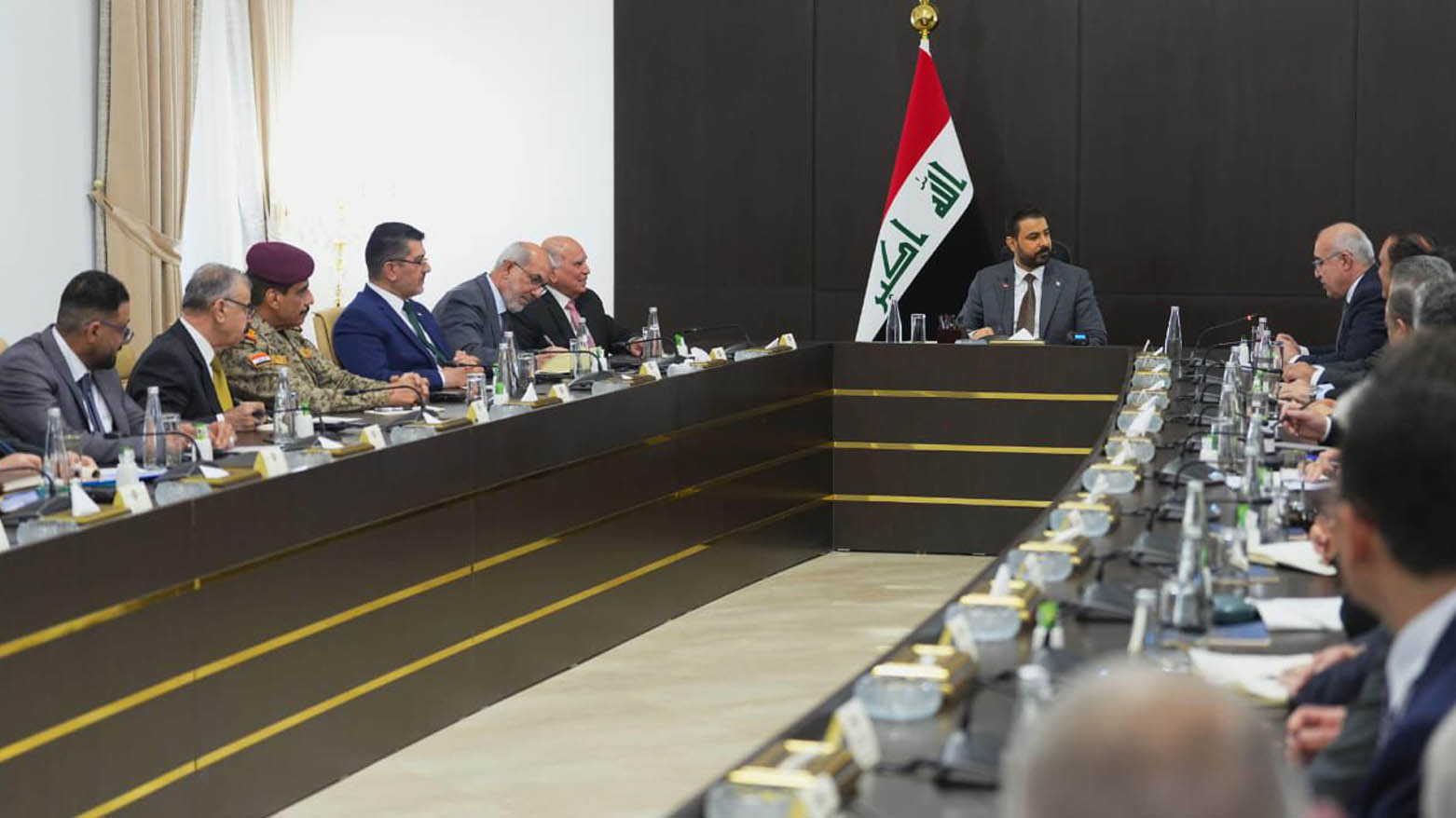
ERBIL (Kurdistan24) - The economic cost of war has a way of clarifying priorities. On Wednesday, Iraqi Prime Minister Ali Falih al-Zaidi convened a meeting that brought together a Kurdistan Regional Government delegation and representatives of international oil companies operating in the Kurdistan Region, and emerged from it with a clear directive: all oil firms are to resume operations in the Kurdistan Region beginning Thursday.
The decision, announced by the Iraqi Prime Minister's Office, was framed explicitly as a response to the severe economic losses Iraq has sustained from the suspension of oil exports through the Strait of Hormuz — disruptions triggered by the regional conflict that has convulsed the Middle East in recent weeks.
The losses, Zaidi acknowledged during the meeting, have been significant, making accelerated action to restore production capacity not merely desirable but necessary.
A Meeting of Principals
The KRG delegation was led by Kamal Mohammed Salih, Kurdistan Region's minister of natural resources, and was accompanied by representatives from a number of major international oil companies.
The session was held in the presence of Iraq's ministers of foreign affairs and oil, as well as the country's chief of staff — a composition that underscored the gravity Baghdad assigned to the occasion.
According to a statement from the Iraqi Prime Minister's Office, Zaidi received a comprehensive briefing on the operational conditions facing oil companies in the Kurdistan Region in the wake of recent conflict-related developments.
A realistic and appropriate vision was then presented for how those companies can resume work at the earliest opportunity.
Zaidi instructed relevant parties to provide all requirements necessary to ensure the security and stability of oil company operations in the Region — a directive that reflects both the urgency of restoring output and Baghdad's recognition that the conditions enabling that restoration must be actively created, not assumed.
The losses stemming from the halt in oil exports via the Strait of Hormuz represent a significant blow to Iraq's economy, and the Kurdistan Region's production capacity sits at the center of any recovery calculus.
By ordering an immediate resumption of operations, Zaidi signaled that the federal government views the Region's oil sector not as a peripheral or contested variable, but as an integral component of Iraq's broader economic recovery.
That framing does not occur in a vacuum. It follows a landmark diplomatic engagement last month, when Kurdistan Region Prime Minister Masrour Barzani made an official two-day visit to Baghdad — his most substantive outreach to the federal government in recent memory.
During that visit, Prime Minister Barzani and al-Zaidi agreed to pursue constitutional solutions to long-standing disputes over revenue-sharing, governance, and oil and gas policy, with a broad parliamentary consensus forming around the principle that the stability of Zaidi's cabinet is directly tied to the resolution of Erbil-Baghdad tensions.
A Momentum for State Consolidation
Wednesday's meeting is, in one sense, an operational follow-through on that political groundwork. The shift from diplomatic agreement to economic directives — from the Government Palace in Baghdad to a working session with oil ministers and international energy firms — marks a transition from symbolic reconciliation to institutional action.
It is the kind of momentum that Erbil-Baghdad relations have historically struggled to sustain past the initial announcement.
The resumption order, if executed, would mark a meaningful turning point — not only in Iraq's economic recovery from the disruptions of regional conflict, but in the longer arc of Erbil-Baghdad normalization. Whether it becomes a foundation or another false start is the question that the coming weeks will answer.