Zakho Women’s Market Empowers Local Entrepreneurs
The two-day event brings together 22 women artisans to display and sell traditional Kurdish foods, handicrafts, and cultural products, highlighting female entrepreneurship and economic empowerment in the Kurdistan Region.
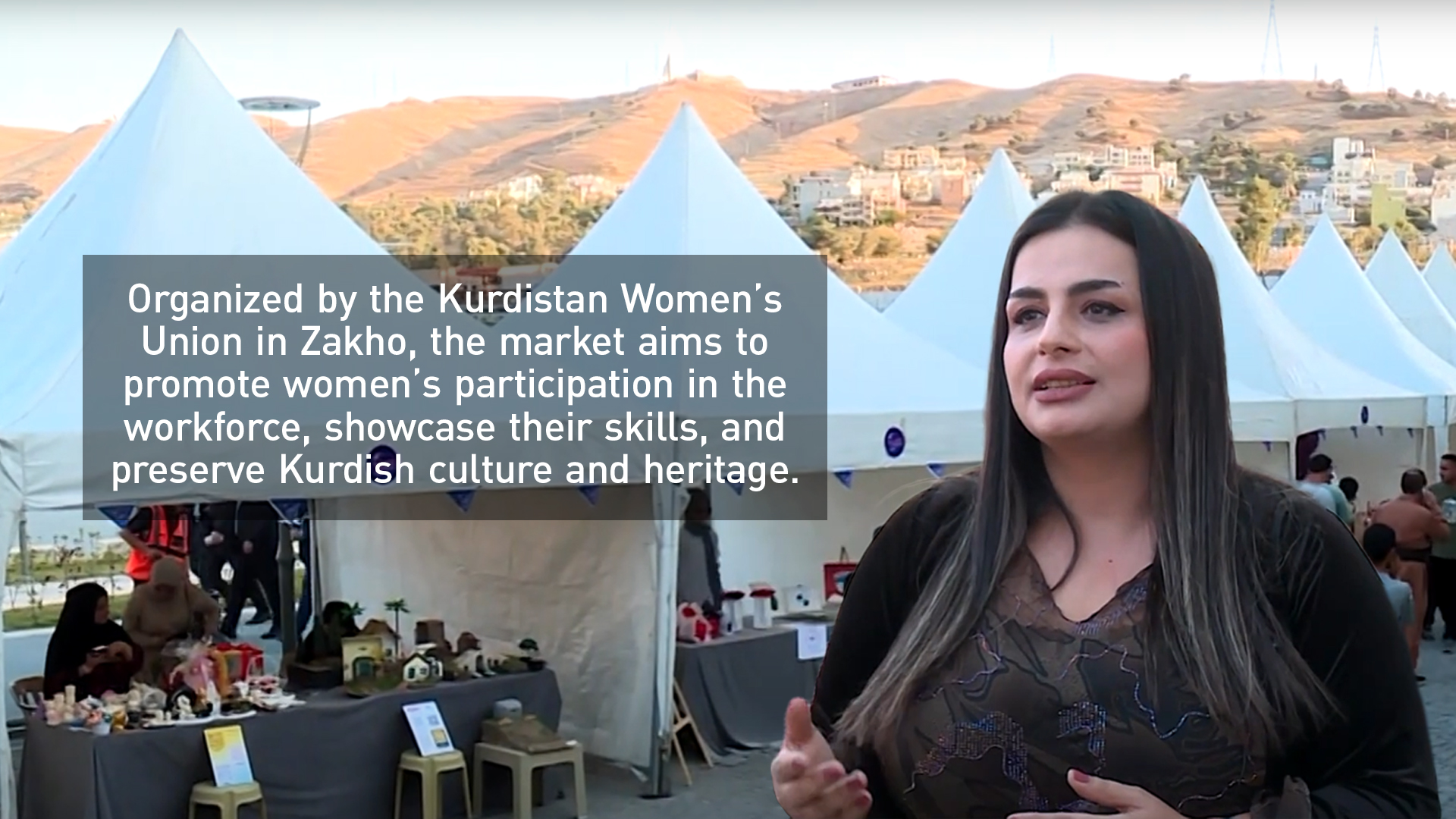
ERBIL (Kurdistan24) — The Kurdistan Women’s Union branch in Zakho has opened a two-day market aimed at supporting women and promoting their skills. The initiative, held in the city center, features 22 women presenting and selling their handmade products, ranging from traditional Kurdish foods and sweets to handicrafts, embroidered clothing, and cultural items.
Siham Salah, secretary of the Women’s Union in Zakho, told Kurdistan24 that the event is not only about selling goods but also about encouraging women to enter the labor market, showcase their abilities, and preserve Kurdish culture.
“The goal is to inspire women to participate in business, to bring their products into the marketplace, and to introduce Kurdish traditions and heritage to visitors,” she explained.
Several participants highlighted the importance of the initiative. One woman described the market as “a great opportunity for women artisans” to display their creations and generate income. Another, who specializes in sewing, noted that the large turnout gave her motivation to continue her work.
“People are visiting and buying from us, which encourages us to keep going,” she said.
The Kurdistan Women’s Union has been organizing similar events across cities and towns of the Kurdistan Region, intending to strengthen women’s presence in society, creating job opportunities, and promote female economic empowerment.
Women’s Role in Business and the Economy in Kurdistan
Women in the Kurdistan Region of Iraq have become an increasingly important force in driving economic growth and contributing to local communities. Over the past two decades, the expansion of civil society initiatives, government support programs, and international partnerships has provided greater opportunities for women to engage in business.
Women-led enterprises, particularly in the fields of handicrafts, agriculture, retail, and small-scale manufacturing, have helped create alternative sources of income for families, reduce unemployment, and stimulate local markets.
Organizations such as the Kurdistan Women’s Union have played a central role in providing platforms for women to display their work, access micro-financing opportunities, and network with other entrepreneurs. By encouraging women to enter the workforce and build independent businesses, these initiatives not only strengthen household economies but also challenge traditional gender norms that have historically limited women to domestic roles.
Events like the Zakho market symbolize how female entrepreneurship is both preserving Kurdish heritage through traditional crafts and reshaping the future of the region’s economy.
Women in Political Leadership and Decision-Making
Alongside their growing economic contributions, women in the Kurdistan Region have made notable strides in politics and governance. Since the early years of the Kurdistan Regional Government (KRG), Kurdish political parties have incorporated female participation into their organizational structures, with quotas ensuring women hold parliamentary seats and positions in local councils.
Over the years, women have risen to senior positions in the Kurdistan Parliament, the Council of Ministers, and within the leadership ranks of major Kurdish parties such as the Kurdistan Democratic Party (KDP) and the Patriotic Union of Kurdistan (PUK).
Women have also served as ministers, deputy speakers of parliament, and heads of parliamentary committees, playing an active role in shaping legislation and influencing key policy decisions. Their engagement extends to issues of human rights, education, health, and economic development, where they have been strong advocates for inclusive policies.
The growing representation of women in decision-making positions demonstrates a wider cultural and political transformation in the Kurdistan Region, where female voices are increasingly seen as essential to governance and social progress.
The Zakho women’s market reflects both the resilience and ambition of Kurdish women. By entering the business world, they are not only sustaining themselves and their families but also contributing to the broader economic landscape of the Kurdistan Region.
Combined with their expanding influence in politics and governance, Kurdish women are solidifying their role as key actors in both the economic development and democratic future of the region.