Khamenei Defends Mandatory Hijab Amid Growing Pushback and Political Tensions
The Supreme Leader’s remarks come as conservative lawmakers pressure the judiciary over lax enforcement, and public defiance surges following Mahsa Amini’s death.
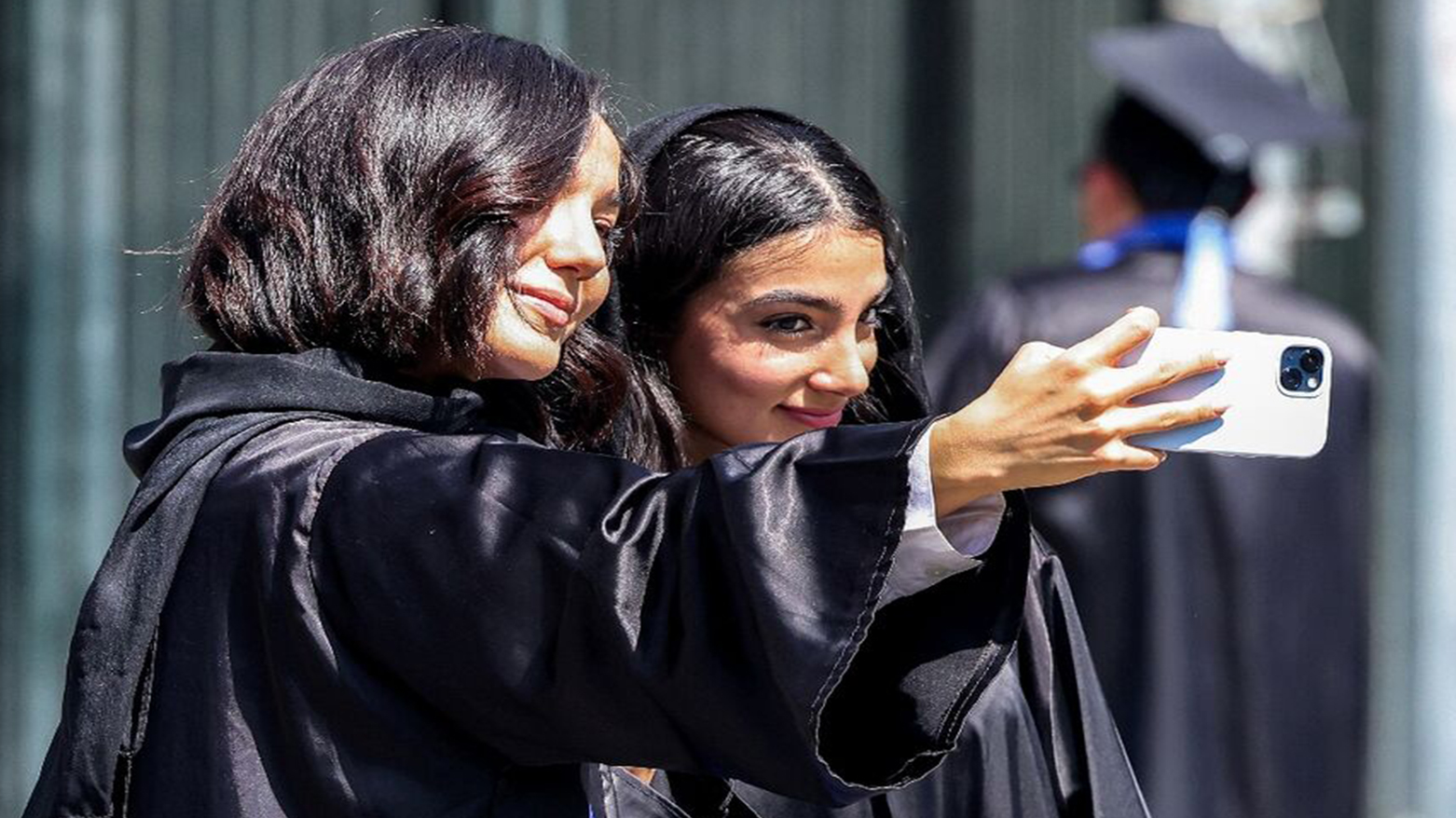
ERBIL (Kurdistan24) — Iran’s Supreme Leader Ayatollah Ali Khamenei on Wednesday offered a forceful defense of the mandatory hijab, responding to rising public noncompliance and intensifying criticism from hardline factions who accuse authorities of failing to uphold the Islamic Republic’s strict dress codes.
Khamenei’s comments came one day after more than half of Iran’s conservative-led parliament issued a rare public rebuke of the judiciary, faulting it for what they described as inadequate enforcement of compulsory headscarves.
The dispute underscores deepening divisions within Iran’s ruling establishment over how to confront growing societal resistance.
Fueling the controversy, Khamenei’s own office faced rare backlash last week from ultraconservative supporters after one of its affiliated newspapers published the photograph of an unveiled Iranian woman killed in the June war with Israel. The woman appeared wearing a baseball cap with her hair exposed — an image that hardliners said undermined the state’s commitment to Islamic dress codes.
“In the Islamic Republic, it has been shown that a Muslim woman, wearing the hijab and respecting the Islamic dress, can progress more than others in all areas and play an active role both in society and in her home,” Khamenei said during a meeting with a group of women.
He added that women had advanced “in many areas” under the post-1979 system that mandates modest dress.
Compulsory veiling became law after the Islamic Revolution that toppled the Shah in 1979, but enforcement has faced unprecedented challenges in recent years. Defiance surged dramatically after the September 2022 death of Mahsa Amini, a 22-year-old Iranian Kurd who was detained for allegedly violating hijab rules.
Her death triggered months of nationwide protests, during which hundreds were killed and thousands arrested, according to rights groups. Iranian authorities dismissed the unrest as foreign-orchestrated “riots.”
In 2023, parliament passed a bill that would have sharply increased penalties for women not wearing the hijab, but the government has refused to ratify it. President Masoud Pezeshkian, who took office in July 2024, has repeatedly argued that women “cannot be forced” to adhere to the dress code.
Government spokeswoman Fatemeh Mohajerani said in January that the bill had been shelved because it “could have had serious social consequences,” signaling the administration’s reluctance to escalate an issue already central to public anger.
The lawmakers’ unusually direct criticism of the judiciary reflects a widening institutional rift over how to confront an emboldened public that increasingly views compulsory veiling as outdated and unjust. Their letter warned that lax enforcement had created what they described as a cultural “breach,” blaming the judiciary for enabling what they consider “abnormal behaviours.”
Yet the Pezeshkian administration’s refusal to promulgate the parliament’s punitive hijab bill has underscored a fundamentally different approach within the government, one that prioritizes social stability over coercive policing.
President Pezeshkian has repeatedly argued that forced veiling is neither sustainable nor compatible with his government’s efforts to ease tensions after years of unrest.
The divide has grown more pronounced as conservative clerics accuse the government of tolerating Western-style “nudity,” while authorities have stepped up targeted closures of cafés, restaurants, and other public venues for not enforcing dress codes.
Parliament speaker Mohammad Bagher Ghalibaf, a leading conservative figure, suggested this week that the hijab debate has been politicized by both sides, insisting that the conflict “has nothing to do with the principle of hijab itself.”
Nonetheless, with public defiance spreading in Tehran and other major cities, the dispute has evolved into one of the most contentious and symbolic battles shaping Iran’s domestic political landscape.
As political factions continue to clash over enforcement mechanisms, widespread noncompliance across Iranian cities suggests that the debate over hijab — once considered a settled principle of the Islamic Republic — has become one of the most volatile challenges facing the country’s leadership.