Iraq’s Prime Minister Approves Findings of Khor Mor Attack Investigation
Al-Sudani approved the Khor Mor attack findings, confirming two drones launched from Tuz Khurmatu, identifying perpetrators, and proposing joint security measures with the KRG.
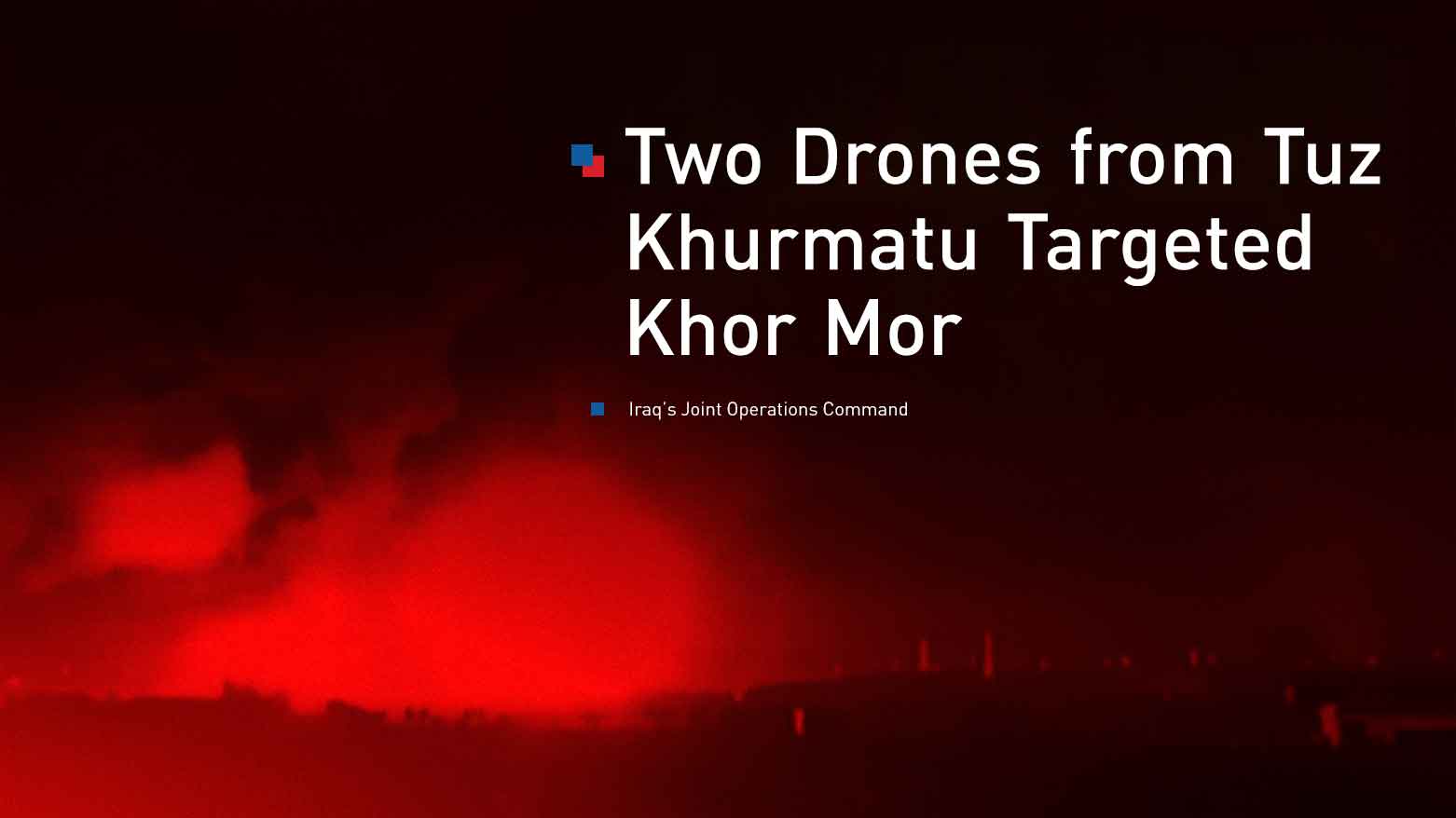
ERBIL (Kurdistan24) – Iraqi Prime Minister Mohammed Shia’ al-Sudani has approved the official findings of the investigative committee examining the latest attack on the Khor Mor gas field, a site that has now been struck 11 times in recent years.
The announcement was delivered on Wednesday, by Sabah al-Nu’man, spokesperson for Iraq’s Joint Operations Command, who confirmed that the attack was carried out using two explosive-laden drones launched from the eastern outskirts of Tuz Khurmatu.
According to the statement, one of the drones crashed inside the Khor Mor field, while the second fell outside its perimeter. Security teams recovered the remaining parts of both drones for forensic extraction of their internal memory components.
The spokesperson said the committee’s findings confirm the following:
First Section – Details of the Attack
1-The attack was executed with two unmanned aerial vehicles, one of which hit the field while the other fell outside. Both drones were collected by technical teams for evidence extraction.
2-The drones were launched from southeastern Tuz Khurmatu, specifically from areas east of the district.
3-This marks the 11th attack targeting the Khor Mor gas field.
4-The perpetrators have been identified; some have evaded capture, while arrest warrants have been issued for others now being actively pursued by security forces.
5-After identifying the suspects, security agencies gathered all technical evidence to prepare the case for judicial proceedings.
Second Section – Recommendations to Protect the Field
The committee proposed several measures to be implemented by the federal government in coordination with the Kurdistan Regional Government (KRG):
1-Deploying additional security forces in eastern Salahaddin to fill security gaps and unify command structures among intelligence and operational units.
2-Directing both the Ministries of Defense and Interior, as well as the Popular Mobilization Forces, to replace local commanders with more experienced leadership.
3-Strengthening intelligence communication channels between Iraqi and Kurdistan Region agencies.
4-Establishing an integrated air-defense system for the Khor Mor site through coordination between Baghdad and Erbil.
5-Imposing strict regulations on the use and movement of drones, ensuring no unmanned aircraft operates without formal authorization.
6-Requesting the Supreme Judicial Council to form a specialized committee with intelligence bodies to pursue all individuals involved.
The statement concluded that the committee will continue its work “until every person connected to this attack is brought to justice,” describing the operation as a “dangerous terrorist act” targeting Iraq’s sovereignty, economic interests, and national stability.
The approval of the investigation comes as Dana Gas confirmed that the November 26 night’s strike was in fact a missile attack, not a drone strike, which hit one of the condensate storage units and triggered a large fire. Although no employees were harmed, production was halted to assess damage and ensure safety before resuming operations.
The company said it continues coordinating with authorities to restore output and re-establish gas flow to power stations across the Kurdistan Region.
Rebaz Hamlan, the KRG’s Deputy Minister for Economic Affairs, sharply condemned the attack and criticized Baghdad’s record on accountability.
He said the federal government “has never revealed the perpetrators behind previous attacks on Erbil or vital oil and gas infrastructure,” describing the failure to prosecute attackers as a long-standing weakness.
Hamlan stressed that the motives behind the latest strike are clear:
-Disrupting the Kurdistan Region’s ability to provide 24-hour electricity
-Undermining security and stability
-Damaging the Region’s economic strength and vital infrastructure
He added:
“Those who carried out the attack on Khor Mor — and those supporting them — do not serve the people. Their goal is only destruction and chaos.”
The missile strike at 23:30 local time caused an immediate cutoff of all gas supplies feeding power stations, leading to significant electricity shortages in multiple areas, including Sulaimani.
The KRG Ministries of Natural Resources and Electricity issued a joint statement confirming that they are working with Dana Gas to assess the damage and restore normal operations.
Over the past years, the Khor Mor field — located between Kirkuk and Sulaimani — has repeatedly come under attack from rockets and drones, making it one of the most persistently targeted strategic energy installations in Iraq.
Iraq’s Joint Operations Command condemned the strike as “a dangerous terrorist act aimed at obstructing efforts to strengthen security and economic stability,” echoing concerns shared by KRG officials that continued attacks threaten the livelihoods of millions who rely on Khor Mor’s gas supply.
As investigations continue and both governments move toward implementing new protective measures, the Khor Mor attack stands as another stark reminder of the persistent threats facing Iraq’s most critical energy infrastructure — and the urgent need for coordinated, robust security responses.