Lebanon’s President Says Beirut Seeks to Avoid War With Israel
Aoun tells UN envoys Lebanon rejects war with Israel, urging support for army disarmament plans amid ongoing strikes and fragile ceasefire talks.
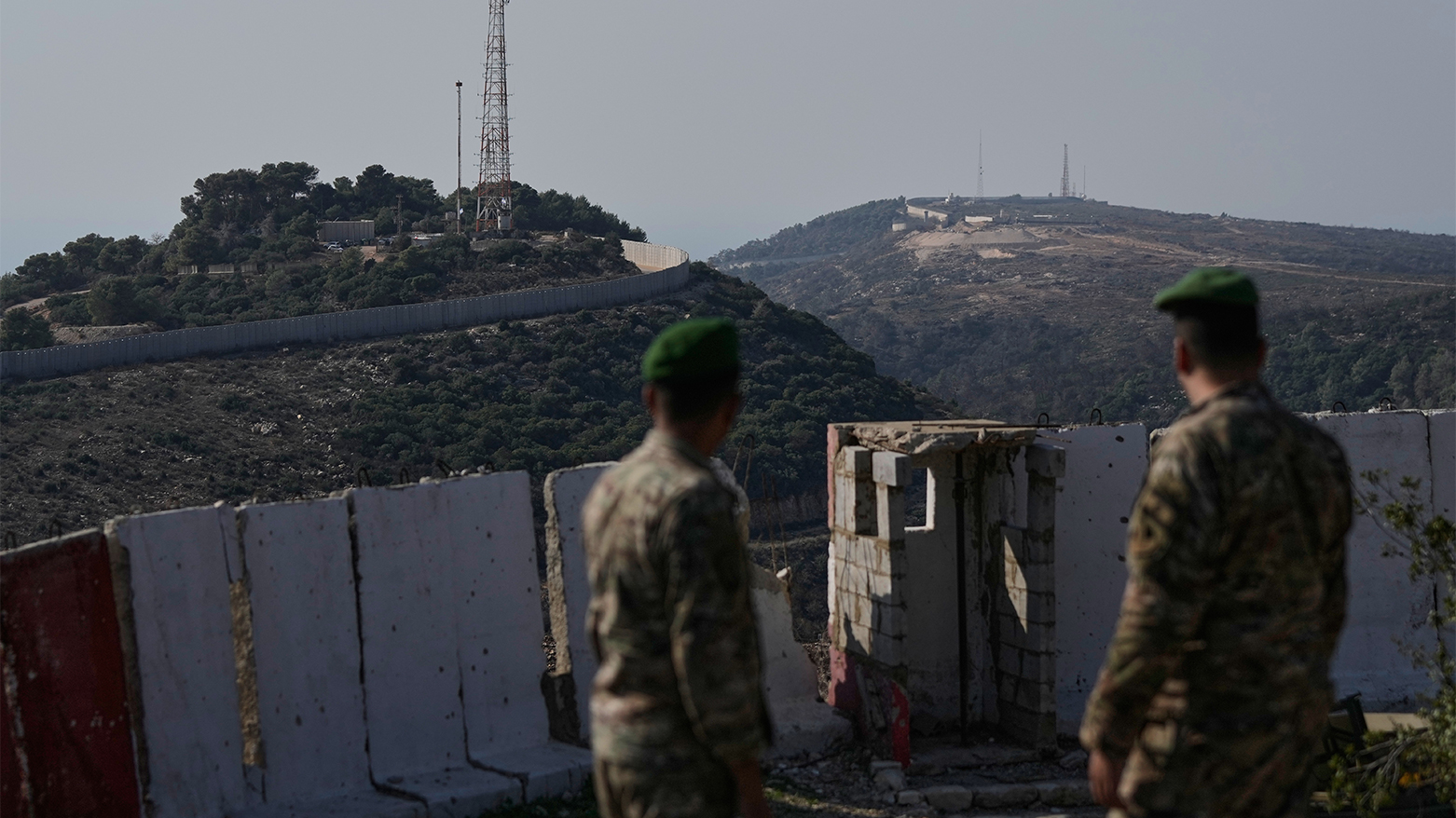
ERBIL (Kurdistan24) – Amid a precarious geopolitical landscape defined by lingering hostilities and tentative diplomatic breakthroughs, Lebanese President Joseph Aoun issued a definitive message to the international community on Friday, declaring that his nation categorically rejects a return to full-scale war with Israel.
Speaking to a high-level United Nations Security Council delegation in Beirut, the President articulated the exhaustion of a population that has weathered relentless conflict, asserting that there can be "no going back" to the era of open military confrontation.
According to a detailed report by Agence France-Presse (AFP), President Aoun’s comments came just days after a historic development in which civilian representatives from both Lebanon and Israel engaged in their first direct talks in decades.
However, this diplomatic progress is shadowed by a volatile reality on the ground.
Despite a ceasefire agreement brokered in November 2024 intended to halt over a year of intense fighting between Israel and the Iran-backed militia Hezbollah, the region remains a powder keg. Israel has continued to conduct airstrikes across Lebanese territory and maintains a troop presence in five specific areas of southern Lebanon that it deems strategically vital, complicating efforts to enforce a comprehensive truce.
During the critical meeting with the UN Security Council ambassadors, President Aoun emphasized the humanitarian and psychological toll the conflict has taken on the country.
A statement from the Lebanese presidency, cited by AFP, quoted Aoun telling the diplomats that the Lebanese people "do not want war again" and that they "have suffered enough."
His plea was framed not just as a political stance, but as a reflection of a national fatigue with violence. "There will be no going back," Aoun insisted, underscoring the necessity of moving toward a sustainable diplomatic resolution.
A central pillar of Aoun’s strategy involves the empowerment of state institutions over non-state actors.
In his address to the envoys, the President made a fervent call for international backing of the Lebanese Armed Forces. He specifically requested support for the army's ongoing efforts to disarm non-government groups, a clear reference to the complex challenge posed by Hezbollah’s independent military arsenal.
The President revealed that the army is operating under a government-approved plan and expects to finalize the first phase of this disarmament initiative by the end of the current year. "The Lebanese army will play its full role," Aoun assured the delegation, adding the caveat that "the international community must support and assist it" to ensure success in reasserting state sovereignty.
The President remained resolute regarding the country's trajectory, stating that the decision to move away from conflict is irreversible "even if it requires some time, because the Lebanese are tired of military confrontations." This acknowledgment of the difficult road ahead reflects the intricate balance the government must strike between internal political dynamics and external security threats.
Addressing the recently initiated dialogue between the two nations, Aoun referenced "a new round of negotiations" that commenced on Wednesday. He placed the onus for the success of these talks squarely on the Israeli leadership.
The President stressed "the need to pressure the Israeli side to implement the ceasefire and withdraw," expressing his hope that the visiting UN delegation would exert the necessary influence to achieve this compliance. According to Aoun, the ultimate outcome of these sensitive discussions "depends primarily on Israel's position, upon which the negotiations will either reach practical results or fail."
The diplomatic calendar remains active, with the committee tasked with overseeing the ceasefire scheduled to convene new sessions starting December 19.
These upcoming meetings are notable for the anticipated participation of civilian delegates from both Lebanon and Israel, signaling a potential shift from purely military-to-military de-confliction toward broader conflict resolution mechanisms.
The UN delegation’s itinerary highlights the regional scope of the crisis. Having visited Damascus on Thursday before meeting with Lebanese officials on Friday, the diplomats are scheduled to travel south the following day.
Accompanied by United States envoy Morgan Ortagus, they will inspect the volatile border area in southern Lebanon, a zone that remains the focal point of the tension.
While President Aoun advocated for state sovereignty, the political complexity of Lebanon was further illuminated by the stance of Parliament Speaker Nabih Berri.
A close ally of Hezbollah, Berri met with the UN delegation separately and issued a stern warning regarding the conditions of dialogue.
"Negotiating under fire is unacceptable," Berri stressed, referring to the continued Israeli military operations. He reiterated that stability in the south is contingent upon Israel’s strict adherence to UN Resolution 1701 and the terms of the ceasefire agreement.
Berri demanded an immediate halt to "daily violations" and called for the full withdrawal of Israeli forces behind the internationally recognized border. UN Resolution 1701, referenced by Berri, was the measure that ended the 2006 war between Hezbollah and Israel and remains the legal framework for security in the area.
The fragility of the situation was underscored by violent incidents reported by AFP just a day prior to the meetings.
On Thursday, Israel launched airstrikes targeting four towns in southern Lebanon.
The Israeli military justified the operations by stating it was targeting Hezbollah infrastructure, including weapons depots, to prevent the group from rearming. These actions drew sharp criticism from UN peacekeepers stationed in the region, who characterized the strikes as "clear violations of Security Council resolution 1701."
Further illustrating the lawlessness in the border zone, UN peacekeepers reported that their vehicles came under fire near the town of Bint Jbeil on Thursday.
The attack involved six men riding on three mopeds who opened fire on the international patrol; no injuries were reported in the incident, but it served as a stark reminder of the dangers facing the monitoring force.
Amid these provocations, Hezbollah has maintained a complex posture. While the group steadfastly refuses to disarm—putting it at odds with Aoun’s stated goals—it has notably refrained from responding to Israeli attacks since the ceasefire came into effect.
However, tensions remain extremely high, as the group has publicly promised a response to the targeted killing of its military chief in an Israeli strike on Beirut's southern suburbs last month, a vow that hangs over the current diplomatic efforts like a dark cloud.
As the UN delegation prepares to tour the southern border with US envoy Morgan Ortagus, the message from Beirut is one of desperate urgency.
The Lebanese leadership, through President Aoun, has made it clear that the nation's capacity for war is exhausted, and the only viable path forward lies in the full implementation of international resolutions and the restoration of state authority, provided the international community can compel all actors to step back from the brink.