Canada Revives Kurdish Friendship Group, Boosting Diplomatic Ties with Erbil
Canadian Parliament reactivates Kurdish friendship group with Tom Kmiec as chair, hailed by Shifa Barzani and the Kurdistani Diaspora Confederation as a vital diplomatic step.
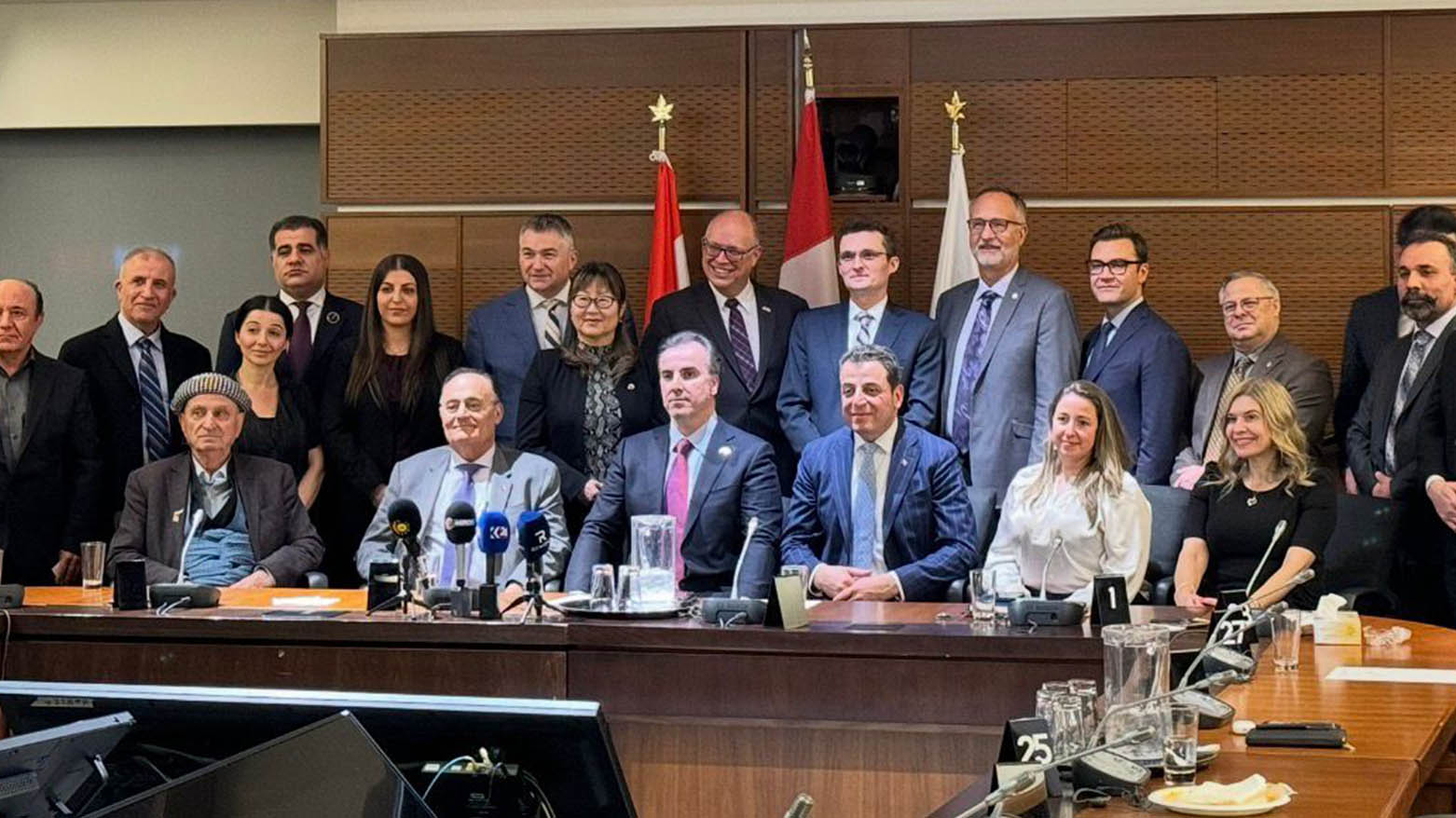
ERBIL (Kurdistan24) – The Canadian Federal Parliament has officially reactivated the Kurdish-Canadian Friendship Group, marking the commencement of a revitalized era of political cooperation and advocacy in Ottawa. The announcement, which took place within the corridors of the Canadian capital, serves as a cornerstone in the ongoing diplomatic efforts to open new gateways for the Kurdish cause on the international stage.
This strategic move was spearheaded by the Kurdistani Diaspora Confederation, with the high-profile presence of Shifa Barzani, the general supervisor of the Kurdistani Diaspora at the Barzani Headquarters, underscoring the importance the Kurdish leadership places on maintaining robust ties with Western democracies.
The reactivation of this parliamentary group is viewed by observers and officials alike as a critical achievement in the broader strategy of strengthening international relations. By re-establishing a formal body within the Canadian federal legislature, the Kurdistan Region effectively secures a vital platform within one of the G7’s key decision-making centers. The initiative aligns seamlessly with the long-term diplomatic vision of the Kurdistan leadership, which seeks to ensure that the Kurdish voice is not only heard but actively represented in global political forums.
The presence of Shifa Barzani at the announcement highlights the direct link between the diaspora’s activities abroad and the central leadership in Kurdistan, signaling a unified and coordinated approach to foreign affairs that leverages the influence of the Kurdish community living in Canada.
As the group enters this new phase of operation, a significant leadership transition has taken place, reflecting a renewed commitment to advocacy and principled support. Tom Kmiec, a parliamentarian widely recognized within diplomatic circles as a sincere and principled friend to the Kurdish people, has been appointed as the new chairman of the friendship group.
His appointment is regarded as a strategic asset for the group, given his reputation for steadfast support regarding the national issues of the Kurds. Kmiec’s leadership is expected to inject new energy into the group’s activities, ensuring that the unique challenges and aspirations of the Kurdistan Region remain on the agenda of Canadian lawmakers.
His selection as chairman represents a continuity of support while promising a fresh perspective on how to navigate the complex landscape of international diplomacy from within the House of Commons in Ottawa.
The transition of leadership also provided an opportunity to reflect on the foundational work laid by his predecessor. Ziad Aboultaif, the former chairman, was recognized for his prominent and honest role in managing the duties of the group during the past period. Aboultaif’s tenure was characterized by a dedication to building a durable bridge of communication between the two nations, a legacy that has paved the way for the current reactivation.
His efforts in maintaining the integrity of the group and fostering dialogue were acknowledged as essential contributions that kept the channels of diplomacy open, even during challenging times. The seamless handover from Aboultaif to Kmiec suggests a stable and enduring commitment within the Canadian parliament to the Kurdish friendship initiative, rather than it being the project of a single individual.
The Kurdistani Diaspora Confederation has made it clear that this reactivation is not merely symbolic but is intended to yield tangible results. In their announcement, the Confederation stressed that it will work closely and collaboratively with the new leadership of the friendship group.
The objective of this close cooperation is to render the role of the Kurds in Canada more effective, transforming passive support into active engagement. By aligning the goals of the diaspora community with the legislative reach of the friendship group, the Confederation aims to create a synergy that amplifies Kurdish interests in areas of mutual concern, such as human rights, cultural recognition, and regional stability in the Middle East.
This partnership model serves as a blueprint for how diaspora communities can effectively engage with host governments to foster understanding and political support.
The operational reality of parliamentary diplomacy was also a topic of discussion, particularly regarding recent missed opportunities due to legislative demands. It was noted that a delegation from the friendship group had been scheduled to participate in the Middle East Peace and Security (MEPS) forum held in the city of Duhok last month. The MEPS forum is a premier gathering for discussing regional stability, and the attendance of Canadian MPs would have been a significant gesture of solidarity.
However, the visit was ultimately not made, a decision necessitated by the domestic responsibilities of the parliamentarians. The Canadian parliament was, at the time, preoccupied with sensitive and intensive discussions regarding the country's 2026 budget.
This context is crucial, as it highlights that the members of the friendship group are active, influential legislators deeply involved in the governance of their own country, which, while occasionally causing scheduling conflicts, ultimately adds weight and credibility to their support for the Kurdistan Region when they are able to engage.
The roots of this parliamentary relationship run deep, providing a solid foundation for the current revitalization. It is worth remembering that the history of the establishment of the Kurdish-Canadian friendship group dates back to 2016.
At its inception, the group boasted a robust membership of more than 20 parliamentarians, a figure that demonstrated considerable cross-party interest in Kurdish affairs. The longevity of the group, now approaching its tenth anniversary, speaks to the enduring nature of the bond between Canada and the Kurdistan Region. It suggests that the relationship is not based on fleeting political trends but on shared values and a sustained interest in the developments within Kurdistan.
The reactivation comes at a time when the Kurdistan Region is actively seeking to diversify its diplomatic alliances and strengthen its soft power globally. Canada, with its reputation for promoting human rights, federalism, and multiculturalism, represents a natural partner for the Kurdistan Region.
The friendship group serves as a conduit for these shared values, allowing for a direct line of communication that bypasses the formalities of traditional state-to-state diplomacy.
Through this group, the unique narrative of the Kurdish struggle, their contributions to the fight against terrorism, and their efforts to build a tolerant society in a volatile region can be articulated directly to Canadian lawmakers.