Global Child Deaths Set to Rise for First Time in Decades, Gates Foundation Report Warns
The Gates Foundation reports 2025 will see the first rise in child deaths this century, warning that aid cuts could cost millions more lives by 2045.
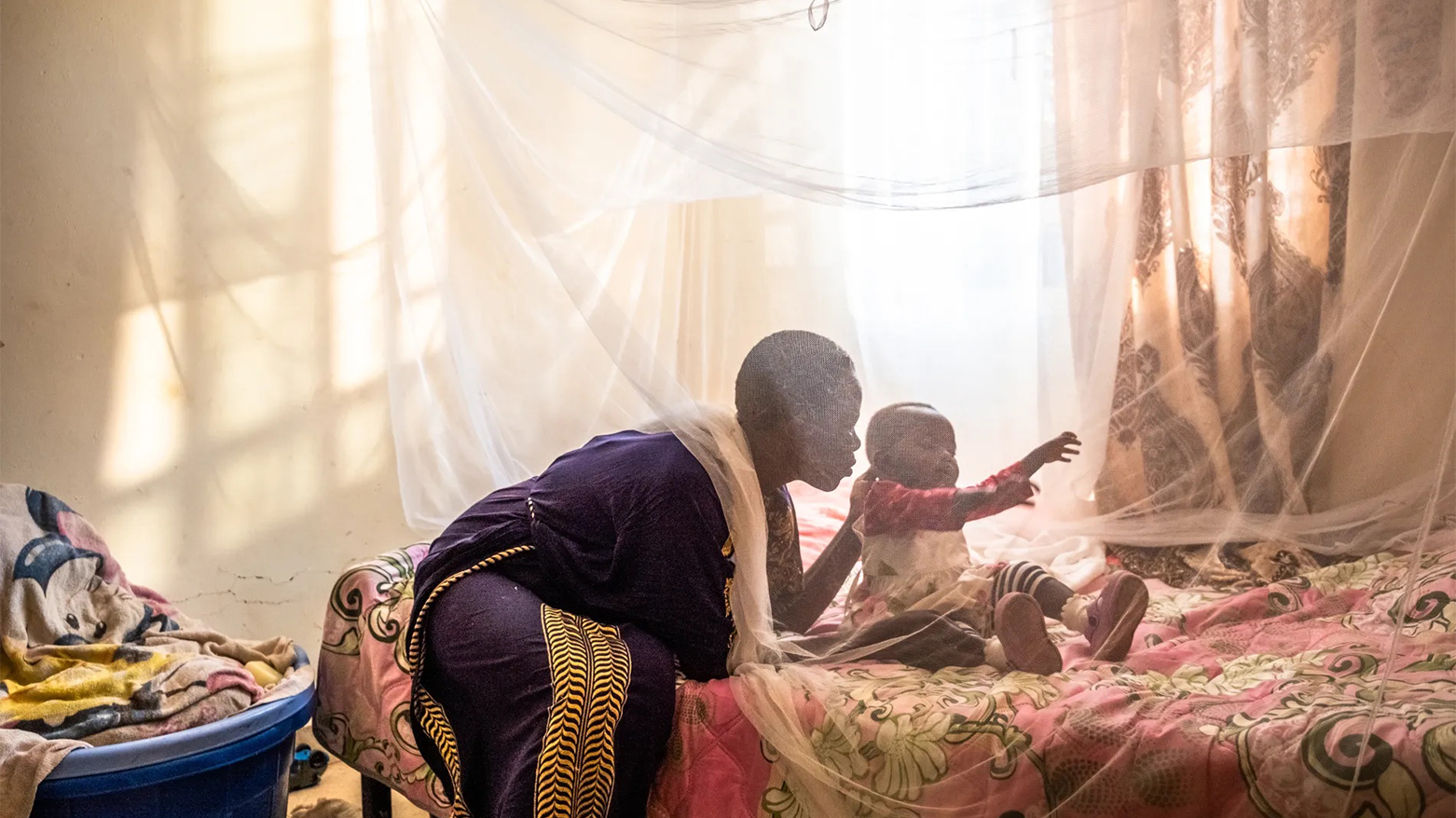
ERBIL (Kurdistan24) — After decades of steady global progress in saving young lives, the world has arrived at a harrowing inflection point, with 2025 projected to be the first year in this century where the number of child deaths will actually increase. According to the Bill & Melinda Gates Foundation’s 2025 Goalkeepers Report, an estimated 4.8 million children are expected to die before their fifth birthday this year—a rise of over 200,000 from 2024—signaling that without immediate intervention and sustained funding, the global community risks abandoning a generation to preventable diseases.
The report, titled "We Can’t Stop at Almost," frames this statistical reversal not merely as an anomaly but as a dire consequence of shifting political and financial priorities.
As high-income nations grapple with tight budgets and debt crises, the threat of reduced development assistance for health (DAH) looms large over the Global South.
The Foundation’s modeling presents a sobering binary for the future: if global health funding decreases by just 20 percent—a scale of cuts currently being considered by some major donor countries—an additional 12 million children could die by 2045. If those cuts deepen to 30 percent, the death toll could swell by 16 million.
Bill Gates, chair of the Gates Foundation, describes the current moment as a choice between two distinct futures. He warns that humanity risks becoming the generation that "almost" ended preventable child deaths and "almost" eradicated polio, only to falter at the finish line.
To avert the projected catastrophe, the report outlines a roadmap that relies on doubling down on the most cost-effective interventions while simultaneously prioritizing innovations that allow health systems to do more with less.
Central to this roadmap is the revitalization of primary health care, which the report identifies as the "quiet workhorse" of survival. For less than $100 per person per year, a robust primary health care system can prevent up to 90 percent of child deaths.
The report highlights real-world examples of resilience amidst fiscal scarcity, such as the leadership of Governor Muhammad Inuwa Yahaya of Gombe State, Nigeria.
Facing a historic budget deficit, Governor Yahaya managed to renovate or build 114 primary health centers and enroll more than 300,000 people in a health insurance scheme not by relying on external donors, but by rooting out inefficiencies, such as removing 500 "ghost workers" from the payroll to reinvest savings into patient care.
However, the fragility of these systems is evident in the testimony of frontline workers like Josephine Barasa, a community health worker in Kenya.
When funding for her position was abruptly cut, Barasa continued to serve her community unofficially and unpaid, screening women for gender-based violence and providing basic care to children. Her experience underscores the report's argument that while human commitment remains high, the financial support structures are dangerously fraying.
The report emphasizes that immunization remains the "best buy" in global health, yielding a return of $54 for every dollar spent. Innovations in vaccine delivery are proving critical in stretching limited budgets.
For instance, the World Health Organization’s recent updated guidance on Pneumococcal Conjugate Vaccines (PCV) allows for a reduced dosing schedule—one primary dose plus a booster, rather than the traditional three doses.
This shift reduces logistical strain and could save eligible countries approximately $2 billion by 2050, funds that can then be reinvested into expanding coverage for other diseases. India serves as a global exemplar in this arena; its "Mission Indradhanush" initiative has utilized digital tools to drive full immunization coverage to over 90 percent, proving that scale and efficiency are achievable even in the world's most populous nation.
The fight against malaria also features prominently in the report as a test case for precision public health. Rather than applying a "one-size-fits-all" approach, countries like Zambia are using subnational tailoring and digital smart maps to deploy interventions exactly where they are needed most, reducing the cost per case prevented by more than 20 percent.
Looking toward the future, the report points to revolutionary technologies such as dual-insecticide bed nets and "spatial repellents"—small squares that can be affixed to walls to repel mosquitoes—as vital tools. Furthermore, research into gene drive technology, which could reduce the population of malaria-transmitting mosquitoes, offers the potential to eradicate the disease entirely by the 2040s, a breakthrough that could save 5.7 million children’s lives.
The report also details promising advancements in maternal vaccines designed to protect infants during their most vulnerable first months of life. With nearly half of all child deaths now occurring in the neonatal period, immunizing pregnant women against threats like Respiratory Syncytial Virus (RSV) and Group B streptococcus acts as a "suit of armor" for newborns.
Scaling these new immunization products could save 3.4 million lives by 2045. Similarly, the trajectory of the HIV/AIDS epidemic could be fundamentally altered by long-acting preventatives. The report envisions a future where daily pills are replaced by injections like Lenacapavir, administered just twice a year, which could drastically reduce new infections and prevent mother-to-child transmission.
Despite these technological horizons, the report’s data section provides a stark reality check on the current state of the Sustainable Development Goals (SDGs).
Progress on maternal mortality has stalled globally since 2016, and the prevalence of childhood stunting remains stubbornly high, with 24 percent of children under five affected in 2024. The data indicates that the world is off track to meet its 2030 targets, and recent disruptions to funding for HIV and tuberculosis have reversed years of gains.
Ultimately, the 2025 Goalkeepers Report serves as an urgent call to action for policymakers and global citizens. It argues that the regression in child mortality is not inevitable but is a direct result of resource allocation.
By protecting foreign aid budgets and embracing the next generation of health innovations, the global community can stop the reversal before it becomes a trend. As Bill Gates asserts, the world has the knowledge and the science to save these lives; the only variable remaining is the collective will to fund the work.