Documents Show Russia Building 16 Su-35 Jets for Iran, Deliveries Expected by 2027
Leaked Russian docs show 16 Su-35s are in production for Iran, with delivery by 2027, marking a major upgrade for Tehran's aging air force.
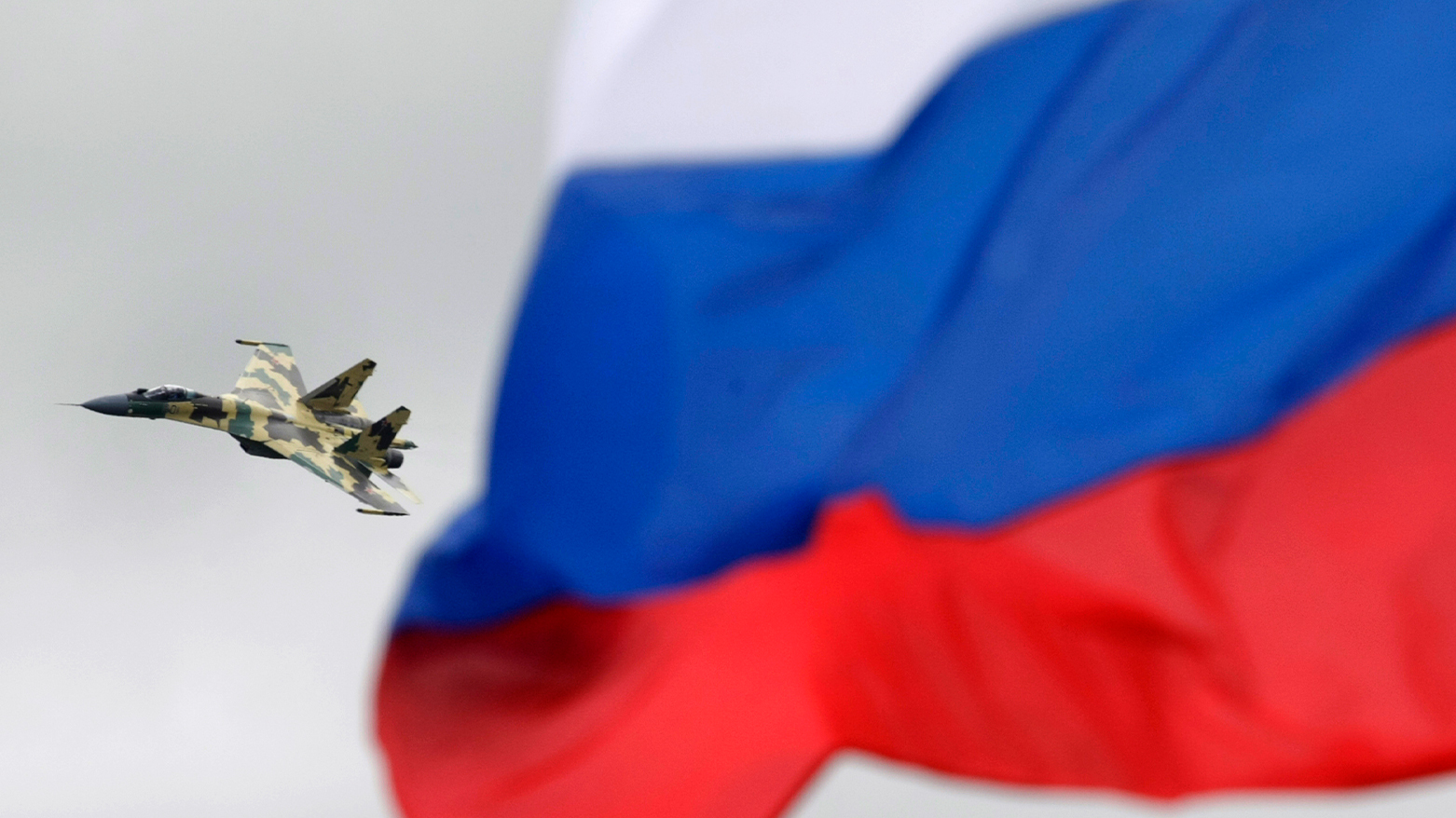
ERBIL (Kurdistan24) – The recently leaked documents from Russia’s military-industrial complex suggest that the long-anticipated transfer of Su-35 fighter jets to Iran is finally moving from the realm of speculation to the assembly line.
According to a detailed report by Al-Monitor, internal correspondence indicates that Russian state plants have begun the production of 16 advanced Su-35s specifically designated for the Islamic Republic of Iran Air Force, with deliveries slated to occur between 2025 and 2027.
If completed, this deal would represent the most significant qualitative upgrade to Iran’s combat aviation capabilities in decades, signaling a deepening of the Moscow-Tehran military axis amid ongoing regional tensions.
The leaked files, first published on November 28 by the Ukrainian investigative outlet UNITED24 and verified by regional media, trace a complex network of orders tied to an export contract coded "R/1936411141768."
The customer is identified in the documents as "K10," a designation explicitly linked to Iran in at least one piece of correspondence.
Dated between March 2024 and September 2025, the papers reveal a coordinated effort across Russia’s defense sector to build a fresh batch of combat aircraft rather than refurbishing older airframes.
The Yuri Gagarin Komsomolsk-on-Amur Aircraft Plant (KnAAZ) in Russia’s Far East is identified as the core production site, supported by component suppliers such as Zvezda near Moscow.
Crucially, the technical annexes of the contract specify that all systems must be "export configured," suitable for all climates, and labeled in English using the "Anglo-Saxon" measurement system—clear indicators that the jets are intended for a foreign client rather than Russia's own aerospace forces.
The documents also confirm that Tehran has already made three tranche payments during 2024, suggesting the program is fully financed and actively progressing despite Russia’s own wartime demands in Ukraine.
For Iran, the acquisition of the Su-35 is not merely a purchase but a strategic necessity born of an aging and depleted air force. Tehran’s current fleet is a patchwork of platforms acquired before the 1979 revolution—including F-14As and F-4Es—or shortly after the Iran-Iraq War.
These aircraft suffer from chronic spare parts shortages and are increasingly vulnerable to modern air defenses.
The Su-35, a deep modernization of the Su-27 Flanker, offers enhanced range, digital fly-by-wire controls, and compatibility with long-range R-37M air-to-air missiles.
While it would not place Iran on equal footing with the F-35s and Rafales flown by Israel and Gulf states, it would force regional planners to revise their assumptions about Iranian air defense capabilities, extending Tehran’s reach far beyond its borders.
The timing of this production push is significant, coming in the wake of a "12-day conflict" between Iran and Israel in June that sharpened tensions and exposed gaps in Iran's defenses. Israeli strikes during that period reportedly targeted command-and-control infrastructure and destroyed at least 15 older platforms.
Moscow's decision to proceed with the Su-35 delivery now appears to be a calculated move to compensate Tehran for its supply of Shahed drones and missiles used in Ukraine, addressing the imbalance that has characterized the relationship.
However, experts remain cautious about the timeline.
Akram Kharief, a defense journalist tracking Russian exports, told Al-Monitor that while the leak is credible, Russia’s industrial constraints are real. "Current production capacity suggests Moscow can build four, at most six, Su-35s per year," Kharief noted, adding that the files confirm the limits of Russia's export capacity.
Nevertheless, the move signals that Russia is intelligently offering a capable platform that meets Iran’s urgent need for beyond-visual-range deterrence without necessarily unbalancing the entire regional security architecture by providing its most advanced stealth fighters.