Japan Summons Chinese Ambassador After Fighter Jet Radar Lock Incident Near Okinawa
Beijing accused Japan of “slandering and smearing” China’s operations and said it filed its own counter-protest.
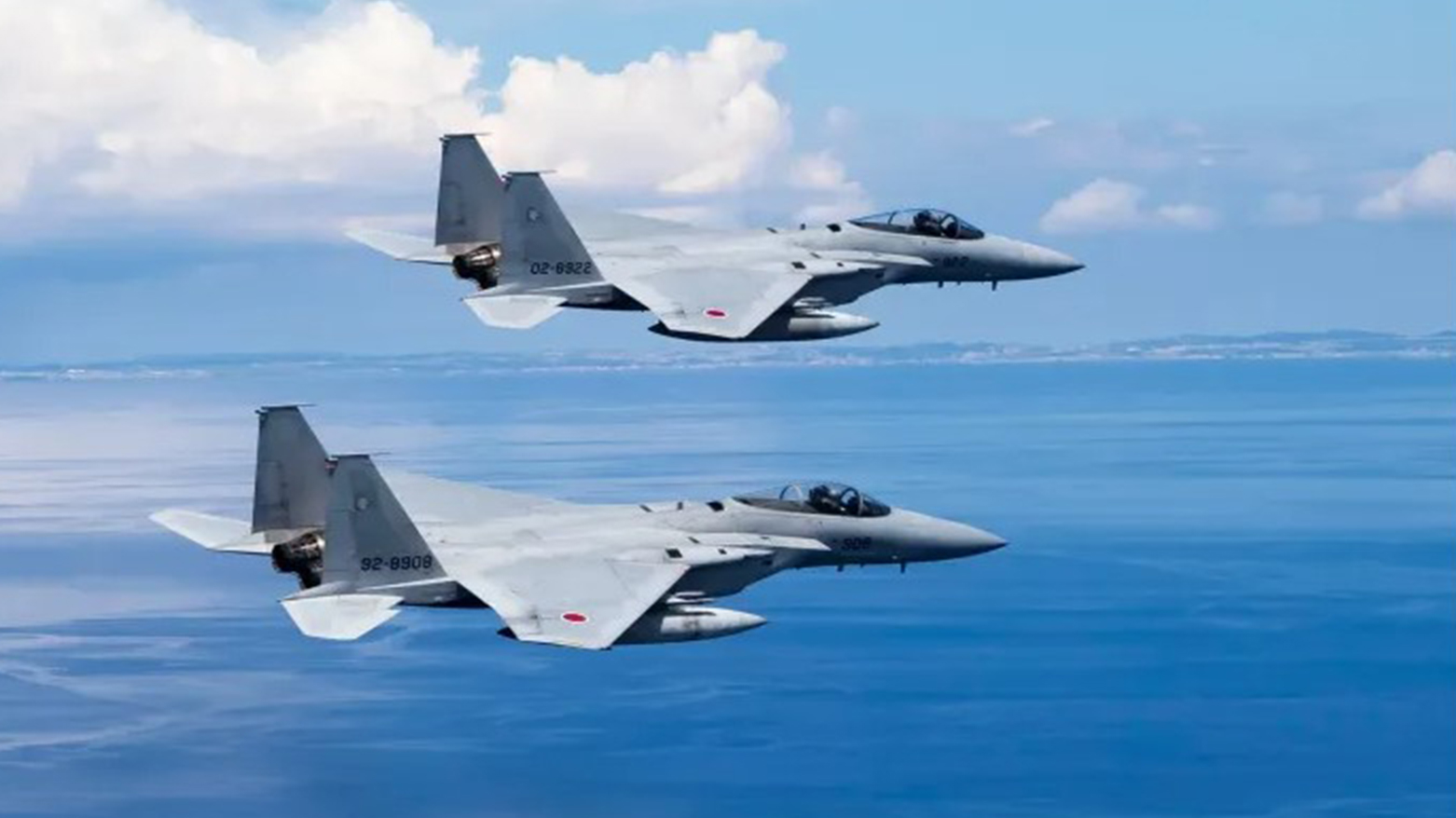
ERBIL (Kurdistan24) — Japan has lodged a strong diplomatic protest with China after Chinese J-15 fighter jets twice locked fire-control radar onto Japanese F-15s in international waters near Okinawa, a move Tokyo condemned as dangerous, unprecedented, and potentially escalatory.
Vice Foreign Minister Takehiro Funakoshi on Sunday summoned Chinese Ambassador Wu Jianghao, calling Beijing’s actions “extremely regrettable” and urging China to prevent any recurrence. Prime Minister Sanae Takaichi said Japan would “respond calmly and resolutely.”
The incident occurred Saturday as fighter jets from China’s aircraft carrier Liaoning conducted takeoff and landing drills in the Pacific. Japan scrambled its F-15s over concerns about possible airspace violations.
According to the Defense Ministry, a Chinese jet intermittently locked its fire-control radar on the Japanese aircraft twice—once for about three minutes in the afternoon, and again for roughly 30 minutes in the evening.
Tokyo said no injuries or damage occurred, but noted this was the first time Japan had publicly disclosed a radar-lock incident involving Chinese fighter jets.
China strongly denied Japan’s claims, insisting the Japanese aircraft “repeatedly approached” the Chinese Navy’s training area and “caused trouble,” according to a statement from the People’s Liberation Army.
Beijing accused Japan of “slandering and smearing” China’s operations and said it filed its own counter-protest.
Foreign Ministry officials in Beijing insisted the Chinese side was engaged in legitimate training and that Tokyo’s version of events was “completely inconsistent with the facts.”
Japanese government spokesman Minoru Kihara dismissed Beijing’s assertions as “unfounded,” saying the Self-Defense Forces maintained a safe distance throughout and avoided any provocative maneuvers.
The radar-lock confrontation dominated previously scheduled defense talks in Tokyo between Japanese Defense Minister Shinjiro Koizumi and his Australian counterpart, Richard Marles.
“We are deeply concerned by the actions of China in the last 24 hours,” Marles said, calling for all interactions between militaries in the region to be “safe and professional.”
Japan and Australia agreed to expand defense cooperation through a new strategic coordination framework, part of Tokyo’s efforts to diversify security partnerships beyond its traditional reliance on the United States.
Marles also toured a Mitsubishi Heavy Industries shipyard in Nagasaki, where he reviewed production of Mogami-class frigates selected by Australia to modernize its navy.
Fire-control radar lock-ons are considered highly provocative due to their link to missile targeting systems, making Saturday’s incident particularly sensitive. A similar episode occurred in 2013 when a Chinese naval vessel locked targeting radar onto a Japanese destroyer.
Japan has also raised concerns over China’s reported delays in granting export permits for rare earth minerals—essential for electronics and electric vehicles. Beijing has already imposed restrictions on Japanese seafood imports.
Kihara said there had been “no significant changes” in rare earth export policies but acknowledged that existing Chinese controls were having a “serious impact on the global supply chain.”
As both sides trade diplomatic protests and defense officials warn of mounting risks, the radar-lock incident underscores the growing volatility across the Indo-Pacific, where even routine military operations can spark dangerous confrontations.