A Year After Assad’s Fall, Syria’s Transitional Leaders Face Unrest at Home and Pressure Abroad
One year after Assad's ouster, President Al-Sharaa calls for unity, but faces sectarian strife, Israeli incursions, and Kurdish demands for decentralization.
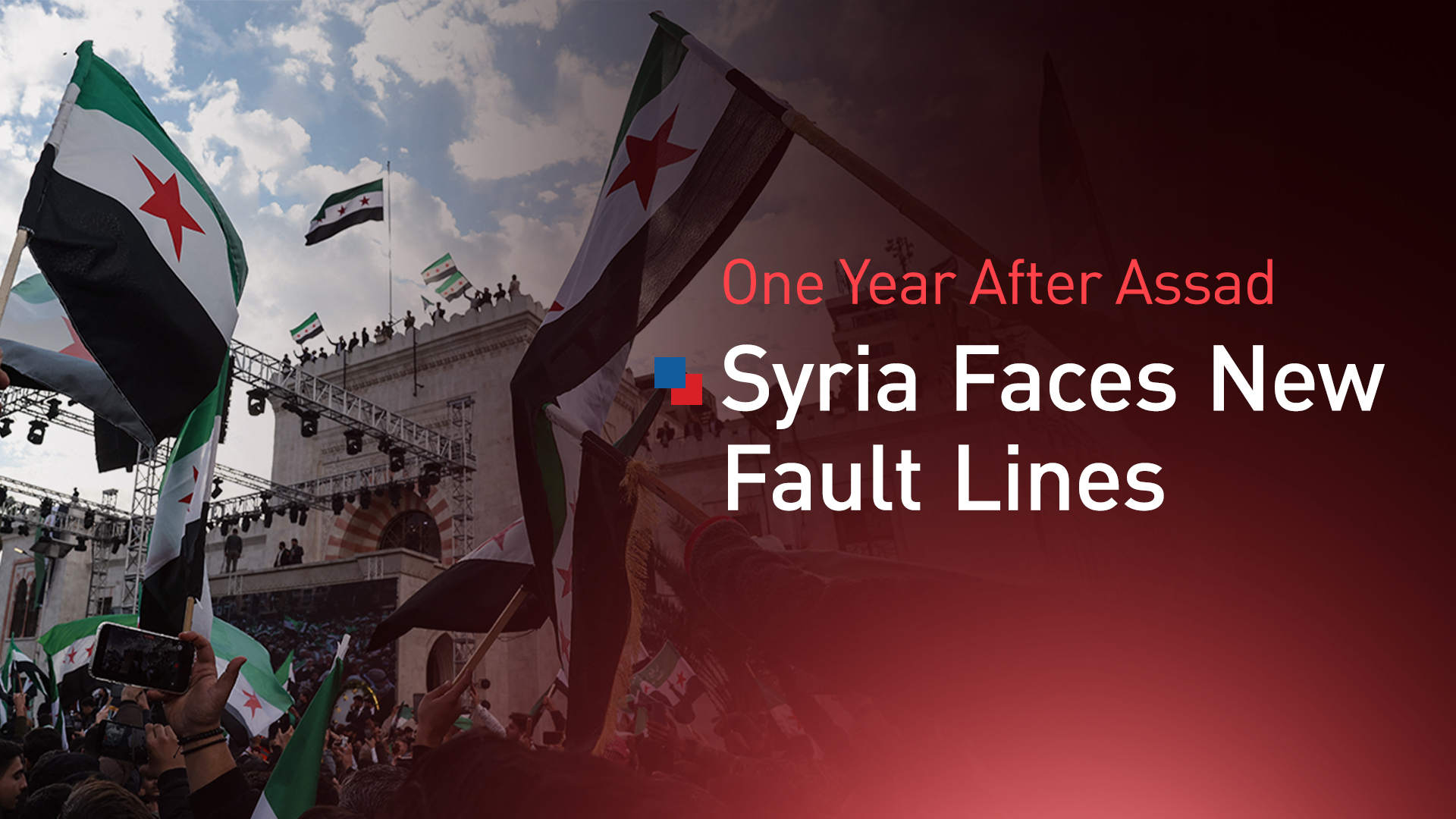
ERBIL (Kurdistan24) – On the first anniversary of the dramatic ouster of Bashar al-Assad, Syria remains a nation precariously balanced between the hope of reconstruction and the peril of fragmentation, as Transitional President Ahmed Al-Sharaa issued a fervent plea for unity amidst deepening sectarian rifts and rising demands for autonomy.
Speaking from Damascus on Monday, Al-Sharaa commemorated the victory of the Islamist-led offensive that toppled the Ba'athist regime a year ago, declaring that the paramount duty of all Syrians is now to safeguard this hard-won freedom.
However, his call to build a "strong state" worthy of the nation's ancient civilization was met with skepticism from powerful regional blocs, including the Kurdish-led Syrian Democratic Forces (SDF) and the Syrian Democratic Council (SDC), both of which warned against reproducing the centralized tyranny of the past.
The commemoration events in the capital, featuring a central military parade and Al-Sharaa’s address following dawn prayers at the Umayyad Mosque, were designed to project strength and stability. Clad in the same green military fatigues he wore during his triumphant entry into Damascus a year prior, Al-Sharaa sought to rally the populace around a vision of national renewal.
"We will restore a strong Syria with a construction befitting its present and past," he proclaimed, according to statements released by the Presidency. Since assuming power and shedding his jihadist past, Al-Sharaa has achieved notable diplomatic successes, including breaking Syria's international isolation and lifting suffocating economic sanctions. Yet, these gains on the global stage have been shadowed by persistent domestic volatility.
The President’s appeal for cohesion comes at a time when his authority is being severely tested by internal dissent and external aggression. The transitional period has been marred by outbreaks of sectarian violence that have claimed hundreds of lives, particularly impacting the Alawite and Druze communities.
This unrest has fueled calls for separation or international protection in the south and coastal regions, where unprecedented demonstrations protesting security failures and deteriorating living conditions have recently erupted. Adding to the tension, prominent Alawite cleric Ghazal Ghazal called on Sunday for a "comprehensive strike" beginning December 8, urging his community to remain in their homes for five days in protest.
While Damascus celebrated, the Kurdish-led Autonomous Administration in northeastern Syria adopted a markedly different posture.
Citing "current security conditions" and increased terrorist activity, authorities there announced a ban on all public gatherings, effectively silencing any celebratory or protest movements in their territories.
This security clampdown coincided with a powerful political statement from Mazloum Abdi, the Commander of the Syrian Democratic Forces. Writing on the X platform, Abdi reiterated the Kurds' demand for a "democratic, decentralized Syria," emphasizing that the current phase requires an inclusive dialogue that prioritizes the interests of all Syrians above partisan considerations.
In a comprehensive statement marking the anniversary, the General Command of the SDF extended congratulations on the fall of the Ba'athist regime but issued a stern warning against the resurgence of its methods.
The SDF criticized the lingering "language of incitement and hatred" used by some parties in power, cautioning that attempting to recycle the discourse of division would lead the country back to disaster.
"The fall of the regime is a historic opportunity for all Syrians to rebuild their homeland on new foundations," the statement read, calling for a "genuine and comprehensive national dialogue" to establish a new social contract guaranteeing rights and freedoms.
The SDF explicitly rejected any return to centralized despotism, asserting that reproducing the mentality of monopolizing power would mean a return to tragedy.
The statement also highlighted the plight of hundreds of thousands of displaced persons from Afrin, Tal Abyad, and Sere Kaniye, declaring their safe and dignified return a non-negotiable national priority. The SDF reaffirmed its role as a fundamental force for defense, drawing inspiration from the sacrifices made in the fight against ISIS and the Ba'athist regime to protect the region's stability.
Echoing these concerns, the Syrian Democratic Council (SDC) released a critical assessment of the Transitional Government’s performance over the past year.
The SDC accused the administration in Damascus of failing to liberate itself from a "factional mentality" and continuing to manage the country with the same centralization that previously crippled the state.
While acknowledging the agreement signed on March 10 between the Transitional Government and the SDF as a positive step, the Council noted that the stalling of its implementation and worsening crises in the Coast and As-Suwayda demonstrated the government's limited capacity.
The SDC called for a clear and binding democratic transition process based on international resolutions, specifically UN Resolution 2254 and Resolution 2799. It advocated for the formation of a transitional authority representing all Syrians, the drafting of a new democratic constitution, and the building of an independent judiciary.
The Council warned against turning the transitional phase into a "cosmetic process" that merely reproduces old centralization, urging instead for a decentralized system that grants local communities management of their affairs and a fair distribution of wealth.
Compounding these internal fractures is the relentless pressure from Israel. Seeking to establish a demilitarized zone reaching the outskirts of Damascus, Israeli forces have conducted daily incursions deep into Syrian territory.
Despite rounds of direct ministerial-level negotiations between the Syrian and Israeli sides, the attacks have continued unabated, posing a direct challenge to Al-Sharaa's sovereignty and further destabilizing the security landscape.
UN Secretary-General António Guterres, in a statement released Sunday night, framed the situation as more than just a political transition, describing it as an "opportunity to rebuild devastated communities and heal deep divisions."
However, as the anniversary events unfolded, the gap between the official narrative of victory in Damascus and the reality of a fragmented, restive nation remains stark.
With the Kurds demanding decentralization, the south and coast agitating for protection, and Israel pressing from the west, President Al-Sharaa’s vision of a unified, strong Syria faces its most critical test yet.