Mine Clearance Progress Advances in Kurdistan Region’s Duhok Province
According to official data, 779 square kilometers of land in the Kurdistan Region were contaminated with mines. So far, 576 square kilometers have been cleared.
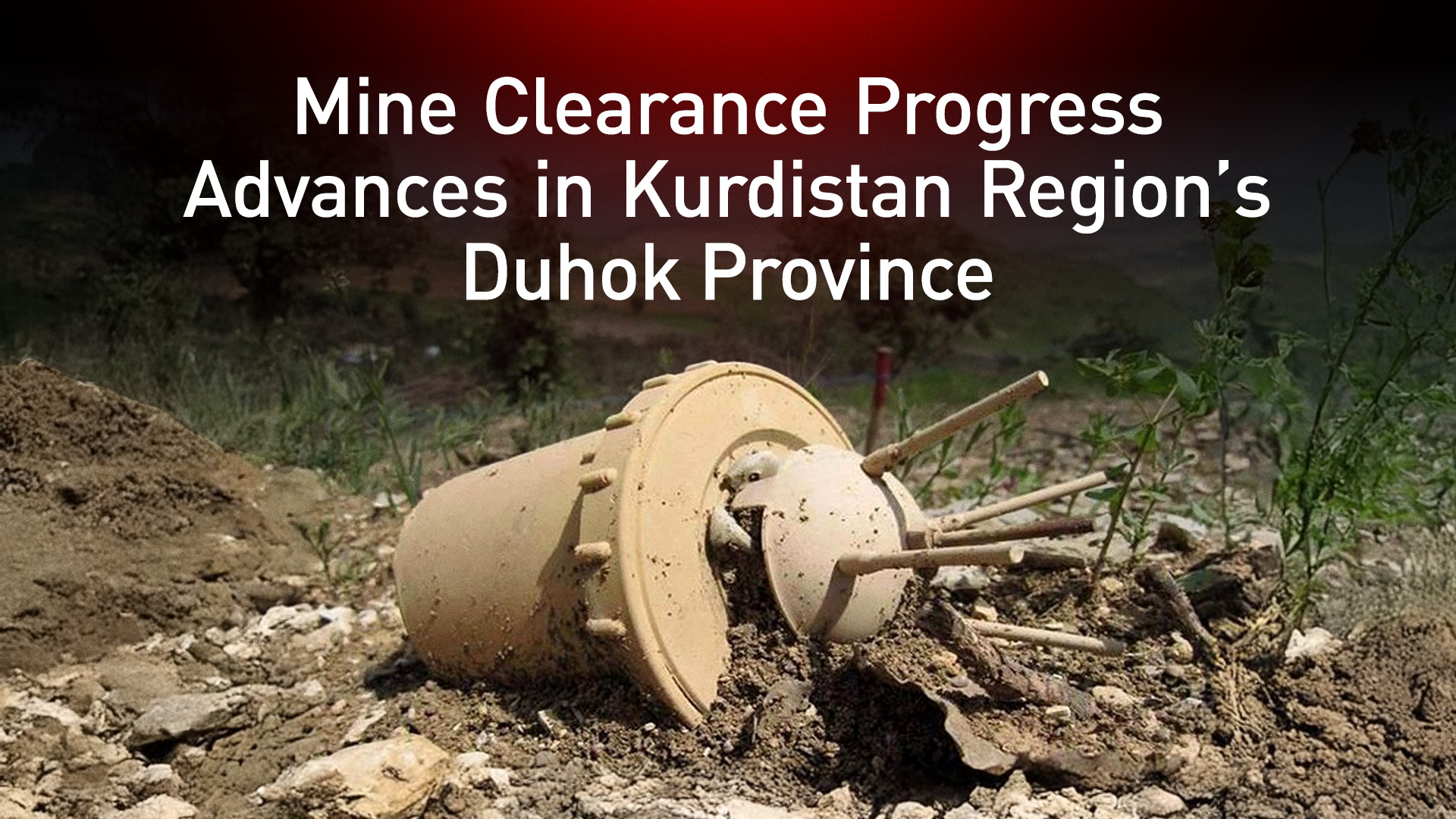
ERBIL (Kurdistan24) – A resident of Duhok’s Mangeshk subdistrict has resumed farming on his land for the first time in 35 years, following the removal of mines and unexploded ordnances (UXOs) that had made the area too dangerous to cultivate.
Local residents say more than 20 farmers in the Mangeshk area have long suffered from the presence of mines and UXOs, which have caused casualties among civilians and livestock. But recent clearance operations have allowed families to return to their fields.
“After clearing the lands of mines and UXOs, excavation has begun, and the situation has returned to normal,” Mangeshk resident Adib Akram told Kurdistan24, expressing relief that agricultural activity can finally resume.
According to official data, 779 square kilometers of land in the Kurdistan Region were contaminated with mines. So far, 576 square kilometers have been cleared. Over the years, mines and UXOs have claimed the lives of more than 13,600 people.
Under the Ottawa Convention, Iraq was expected to complete nationwide mine clearance by 2018. However, the scale of contamination and years of conflict made that timeline unattainable.
On Friday, Jabar Mustafa, head of the Iraqi Kurdistan Mine Action Agency (IKMAA), told Kurdistan24 that Iraq and the Kurdistan Region were unable to meet the original deadline, prompting a 10-year extension to continue demining efforts.
Describing the work as dangerous but essential, Abdulaziz Mohammed Salih, the head of IKMAA’s activities department in Duhok province, said: “It is a hidden enemy. Whenever miners leave their homes, they face the threat of death. Our teams work tirelessly every day to clean mining sites.”
Despite the challenges, progress continues, enabling more families—like those in Mangeshk—to reclaim their land and rebuild their livelihoods.