State Administration Coalition Meets to Address Premiership Dispute as Iraq’s Political Deadlock Persists
The meeting brought together leaders from Iraq’s main political blocs, including the Shiite, Sunni, and Kurdish parties. Representing the KDP were Iraqi Foreign Minister Fuad Hussein and senior party figure Farhad Atrushi.
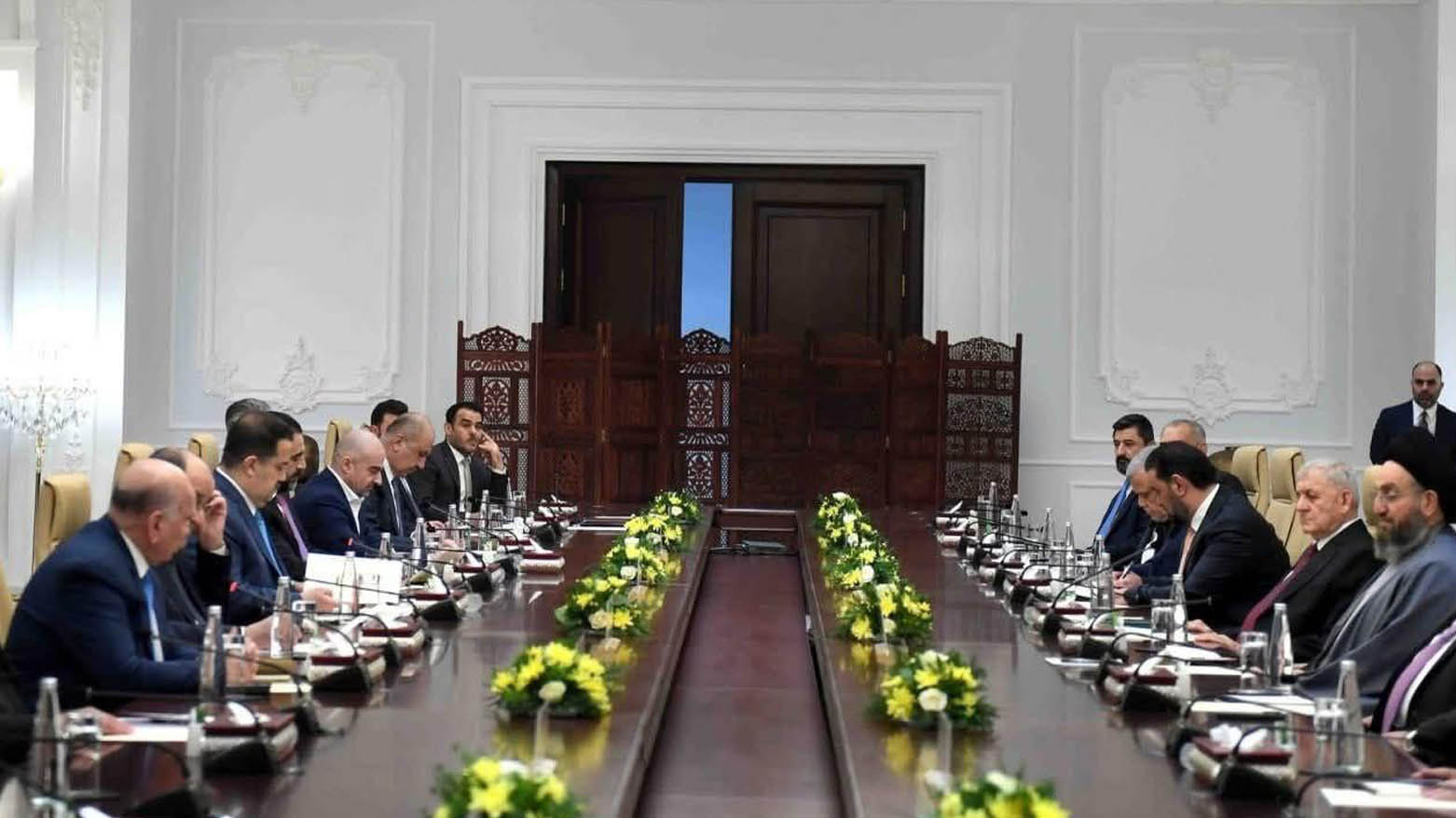
ERBIL (Kurdistan24) – The State Administration Coalition convened on Sunday to discuss several sensitive political issues, most notably the nomination of Nouri al-Maliki for the post of prime minister, Kurdistan24 correspondent Dilan Barzan reported.
According to Barzan, al-Maliki, leader of the State of Law Coalition, maintains that his nomination was secured through consensus and a formal vote within the Coordination Framework. He has reportedly insisted that any withdrawal of his candidacy must follow a new vote within the Framework and be based on a majority decision, rather than external or political pressure.
The meeting brought together leaders from Iraq’s main political blocs, including the Shiite, Sunni, and Kurdish parties. Representing the Kurdistan Democratic Party (KDP) were Iraqi Foreign Minister Fuad Hussein and senior party figure Farhad Atrushi.
The discussions come amid mounting international pressure, particularly from the United States, to resolve Iraq’s prolonged political impasse and move forward with government formation. Barzan noted that the outcome of the meeting is expected to play a crucial role in determining the timing of the next Iraqi parliament session, either to vote on the new government or to decide on candidates for the presidency.
Iraq’s long-delayed presidential election remains stalled due to deepening divisions within the Shiite political bloc, alongside ongoing disagreements between the KDP and the Patriotic Union of Kurdistan (PUK) over a joint presidential candidate. Sources told Kurdistan24 that U.S. pressure has intensified against the nomination of al-Maliki, further complicating efforts to break the deadlock.
Under Iraq’s constitution, the election of the president must precede the designation of a prime minister, who is tasked with forming a government. As a result, the lack of consensus on the premiership has prevented parliament from advancing to the next stages of government formation.
Parliamentary sessions scheduled for Monday are expected to focus on internal parliamentary matters, including restoring the work of committees and finalizing the distribution of seats, rather than addressing the presidential election.
Political sources say the upcoming talks between Kurdish and Shiite leaders will be decisive, as resolving disagreements within both camps is seen as essential to ending Iraq’s political paralysis and setting a clear path toward forming the next government.
In a statement later issued by the office of Iraqi Prime Minister Mohammed Shia al-Sudani, the coalition welcomed the recent U.S.-Iran talks hosted by the Sultanate of Oman, describing them as a positive step toward easing regional tensions.
"Participants further underscored the importance of regulating political statements, media discourse, and public behavior in a manner that serves Iraq's national interests and prevents domestic instability," the statement added.
The statement also revealed that another key topic addressed during the meeting was the issue of ISIS prisoners who have been transferred from Syria to Iraq. The coalition reiterated its support for Iraq's legal and judicial institutions to ensure that justice is served. In this context, it called on the international community to fulfill its responsibilities by repatriating foreign nationals to their countries of origin and prosecuting them for crimes committed.
Updated at 11:40 p.m.