Amid Torrential Rains, Kurdistan Communities Rally to Support Chamchamal Flood Victims
Floods hit Chamchamal as citizens, charities, and officials mobilize rapidly, raising millions and delivering aid amid ongoing rain.
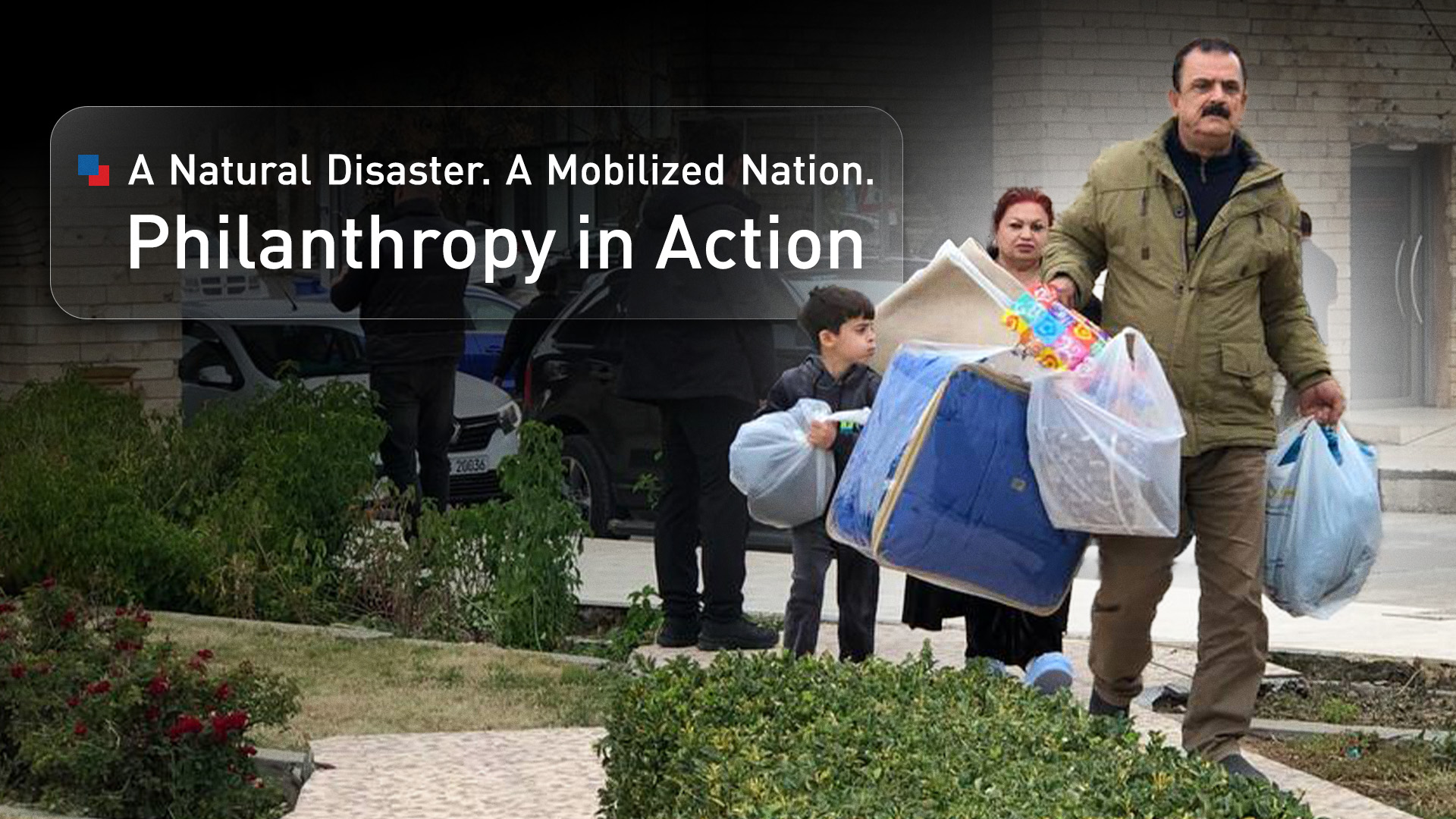
ERBIL (Kurdistan24) — As heavy rains swept across the Kurdistan Region, flooding towns and severing essential services, the crisis in Chamchamal became a measure not only of infrastructure resilience but of communal resolve. In the days following the deluge, a rapid and multifaceted response unfolded—led by local citizens, charitable foundations, municipal authorities, and religious figures—revealing a network of solidarity that moved faster than the waters receded.
Before formal appeals had fully taken shape, residents of all urban centers in Kurdistan Region announced an aid campaign for Chamchamal’s flood victims; only in Darbandikhan alone 100 million Iraqi dinars were collected in donations, underscoring a region-wide mobilization rooted in shared memory and mutual obligation.
The Darbandikhan campaign, supervised by Mamosta Abbas Salih, a religious teacher and community figure, was conceived as a citywide initiative rather than a personal endeavor. Speaking to Kurdistan24, Salih emphasized the collective character of the effort and the intention to reach every charitable citizen through broad outreach.
“This campaign is the campaign of the city of Darbandikhan,” he said, stressing that it was conducted in the name of the city and reflected a diverse, multi-faceted response to the damage inflicted by the Chamchamal flood. The speed with which funds were raised—even before the campaign’s official launch—signaled both urgency and trust in local organizing structures.
That trust is anchored in lived experience. Salih recalled the devastating earthquake that struck Darbandikhan in 2017, when the city itself suffered extensive damage and relied on aid from across Kurdistan.
The memory of that moment, he noted, continues to shape Darbandikhan’s response to crises elsewhere. He expressed gratitude to the people of Kurdistan at large and singled out Chamchamal and the Garmian area for their solidarity during Darbandikhan’s time of need.
The current campaign, in this telling, is not charity as abstraction but reciprocity as practice—an exchange across time and geography within the same social fabric.
Other residents echoed this appeal.
A participating citizen described the campaign as an open call to philanthropists, both within the city and abroad, urging them to support the afflicted people of Chamchamal. The language of the appeal was inclusive and expansive, reflecting an understanding that the scale of the damage required contributions beyond municipal boundaries.
The damage itself has been severe.
Since Sunday, waves of torrential rain swept through cities and towns across the Kurdistan Region, triggering floods that left both human and material losses in their wake. In Chamchamal, the impact was stark.
On Tuesday, December 9, 2025, the Mayor of Chamchamal District, Ramk Ramazan, announced in a press conference that the flooding had resulted in the deaths of two citizens and injuries to 14 others. More than 500 houses and 100 shops sustained damage, and four bridges within the district’s borders collapsed or were damaged, disrupting movement and commerce at a critical moment.
As rescue and relief efforts advanced, another challenge emerged with implications far beyond Chamchamal.
The surge in rainfall raised water levels and increased turbidity in the Little Zab River, creating acute problems for drinking water projects across several cities and towns.
Aras Amin, a Kurdistan24 reporter, explained that while the rainfall caused material and human losses, it also had a positive effect on groundwater levels and dams after a dry year. He noted that without this wave of rainfall, a greater humanitarian disaster could have unfolded. Yet the immediate consequences were unavoidable.
According to Amin, turbidity levels in some areas of the Little Zab exceeded 1,000 nephelometric turbidity units (NTU), far above the threshold of less than 5 NTU required for water to be suitable for drinking.
As a result, water projects in Qaladze, Dukan, Taqtaq, and Koya were unable to filter water adequately.
Continuous rainfall and rising water levels compounded the problem, disrupting operations for projects dependent on the river. In Qaladze, the Water Distribution Directorate was unable to provide water to residents for four consecutive days, highlighting the vulnerability of essential services to extreme weather events.
Administrative officials told Kurdistan24 that efforts to resolve the drinking water crisis and assist affected citizens were ongoing. Meteorological forecasts indicated that the wave of rainfall would continue until late Sunday night, December 14, prolonging pressure on infrastructure and emergency services even as aid distribution expanded.
Among the first organizations to reach Chamchamal was the Barzani Charity Foundation.
Karzan Nuri, a member of the foundation’s administrative board, said that within the framework of a rapid response to the recent floods—especially within Chamchamal’s borders—the foundation’s teams arrived at the scene in less than two hours following an order from President Barzani.
Speaking on Friday, December 12, 2025, during the “Basi Roj” program on Kurdistan24, Nuri framed the response as an expression of the foundation’s operational philosophy, rooted in the words of the Immortal Barzani: “It is an honor for a person to be a servant of his own nation.”
Nuri explained that after President Barzani’s call, teams devised an emergency plan and moved quickly to the flood site. The objective, he said, extended beyond the delivery of food and supplies to conveying a message of presence and support.
In the first three days—the emergency phase of the response—the foundation distributed 4,100 hot meals and 1,000 dry food baskets, sufficient for 500 families.
Household support included 3,000 blankets, 1,600 mattresses, and 500 kitchenware sets, while fuel assistance comprised 25,000 liters of kerosene and 500 heaters for the same number of families.
The scope of assistance extended to sanitation and health. The foundation provided 2,000 cleaning packages and used 320,000 liters of water to wash 135 houses, in addition to supplying 96,000 liters of clean water for household tanks and 3,000 sets of drinking water.
Clothing needs were addressed through the distribution of 3,000 packages of winter clothing, a critical measure as temperatures dropped amid ongoing rainfall.
Nuri rejected claims that obstacles had impeded the foundation’s work, praising the cooperation of local administrations and residents. He emphasized that the Barzani Charity Foundation enjoys international trust and that, in times of crisis, cooperation is extended without discrimination.
His remarks underscored a model of coordination that relies on established credibility and rapid deployment.
At the same time, Nuri leveled criticism at the federal government in Baghdad, accusing it of failing to fulfill its duties even toward its own citizens. He disclosed that more than 700,000 displaced persons and refugees reside in the Kurdistan Region, most from central and southern Iraq, and stated that throughout 2025 the Iraqi government had provided only four food baskets to them.
According to Nuri, the primary responsibility for meeting their needs has fallen to the Barzani Charity Foundation, a burden he implied was neither sustainable nor equitable.
Beyond immediate relief, Nuri outlined the foundation’s longer-term strategic projects, signaling an ambition to translate emergency response into durable social infrastructure.
These initiatives include plans to open the largest center for treating drug addiction by the end of 2026, a special autism center in Zakho to open soon with another under design in Duhok, and preparations for a project to combat cancer. He concluded by assuring that the foundation’s teams would remain with the flood victims until the crisis subsided and conditions normalized.
Parallel efforts unfolded in Sulaymaniyah, where an aid collection campaign for Chamchamal’s victims concluded at the Amna Suraka National Museum. Nadir Ali, a religious teacher and campaign member, announced the final results in a press conference, reporting that philanthropists had contributed 53 million Iraqi dinars, $8,600, and 500 euros in cash.
In addition to monetary donations, 12 trucks loaded with essential items—food, clothing, and heaters—were prepared for delivery to affected families.
As the immediate danger eased, organizations and charitable foundations continued their work.
The Barzani Charity Foundation was identified as the first to reach the scene, while the Kurdistan Foundation undertook the cleaning of the Qandil school in Chamchamal and assumed responsibility for renovating the building and providing all study requirements.
These actions reflected a transition from emergency relief to recovery, even as weather forecasts warned of continued rainfall.
Taken together, the response to the Chamchamal flood reveals a layered system of action: municipal authorities documenting losses, citizens mobilizing resources through local campaigns, reporters tracking infrastructural impacts, and foundations deploying rapid-response teams while planning for long-term needs.
The 100 million dinars collected in Darbandikhan before an official launch, the tens of millions gathered in Sulaymaniyah, and the swift arrival of aid convoys all point to a region that, when tested, draws on shared experience and institutional capacity.
As rain continues to fall and rivers remain swollen, the full cost of the floods is still being measured. Yet the early chapters of this crisis have already illustrated how memory, organization, and public trust converge in moments of danger.
For Chamchamal, the path to recovery will be long. For Kurdistan, the response has reaffirmed a principle articulated by community leaders and aid workers alike: that solidarity, when activated swiftly and sustained deliberately, can bridge the distance between disaster and renewal.