U.S. Justice Department Releases First Batch of Epstein Files
The Justice Dept. released redacted Epstein files, drawing bipartisan criticism for failing to meet a new law's disclosure deadline and for a lack of major revelations.
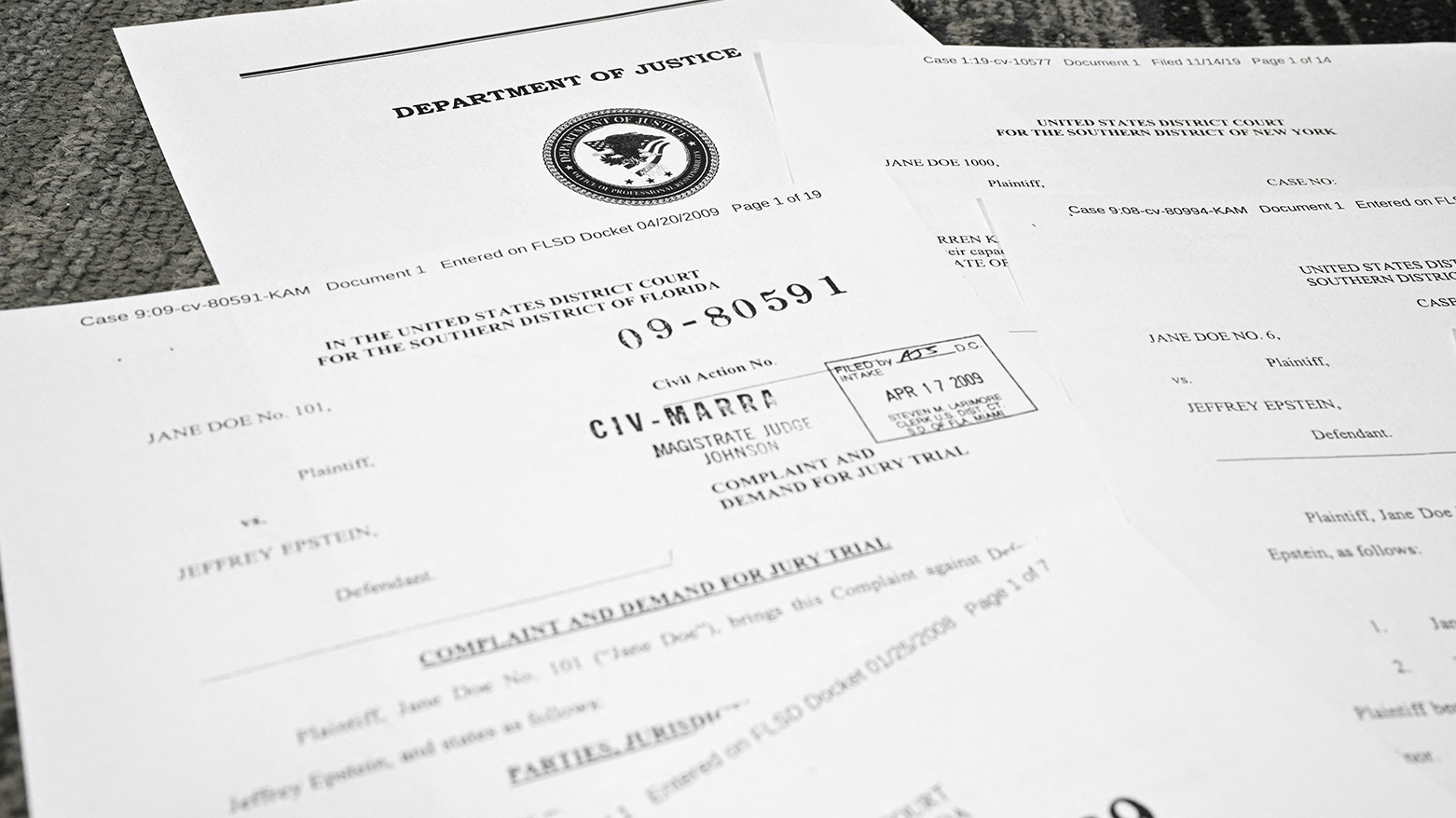
ERBIL (Kurdistan24) — The United States Department of Justice released a substantial but heavily redacted trove of documents on Friday related to its multi-decade investigation into the deceased financier and convicted sex offender Jeffrey Epstein, prompting immediate and bipartisan criticism from members of Congress who argued the disclosure failed to meet the requirements of a recently enacted transparency law.
The release of more than 13,000 files, which included thousands of photographs and investigative records, had been highly anticipated by lawmakers and the public, many of whom believed the materials would finally illuminate the full scope of Epstein’s criminal enterprise and his connections to an array of powerful men.
However, according to both The New York Times and The Wall Street Journal, the initial batch of documents produced no major new revelations and left key questions unanswered.
The Justice Department, facing a 30-day deadline imposed by a law signed by President Donald Trump last month, marshaled a team of over 200 lawyers to review the materials for public release.
The law, which passed the House of Representatives with a vote of 427-1, mandated the full disclosure of all unclassified files related to Epstein and his associate, Ghislaine Maxwell. It passed despite initial objections from President Trump, who had previously called the effort to release the files a Democratic "hoax."
Despite the massive volume of the release, the documents largely added little to the public’s understanding of Epstein’s conduct or his ties to the wealthy and powerful. The materials were drawn from several distinct investigations, beginning with the initial inquiry opened by police in Palm Beach, Florida, in 2005.
They also included files from the subsequent federal investigation in Florida, which concluded with a controversial plea deal in 2008, and the final inquiry by prosecutors in Manhattan in 2019, which was cut short by Epstein’s death in jail.
Heavy Redactions and Muted Reactions
A significant portion of the released files, which included phone records, travel logs, and apparent case files from interviews with victims, were heavily redacted, obscuring names and key details.
One file, a 119-page document titled "Grand Jury NY," was entirely blacked out.
The Wall Street Journal noted that while the release included photos of the cover of a log book detailing trips to Epstein’s private island, the contents of the book itself were not disclosed. Similarly, dozens of photos of young women in various stages of undress were either heavily or entirely redacted.
The lack of new, incriminating information appeared to mute the reaction from some of the most ardent advocates for the files' release.
Right-wing supporters of President Trump, who had long theorized that the documents would expose a cabal of prominent Democrats involved in Epstein's crimes, were largely silent on Friday. Trump himself refrained from commenting on the release, according to The New York Times.
Focus on Bill Clinton
While Trump’s name was mentioned only rarely in the newly released materials, the documents featured former President Bill Clinton prominently. The New York Times reported that many of the photographs included in the files were of Clinton, who is one of Trump’s chief political adversaries.
Among the images released were photos depicting Clinton in a hot tub with a person whose face was blacked out and swimming in a pool with Ms. Maxwell at the Empire Brunei. Another undated photo showed Clinton on a plane with a woman whose face was redacted.
The White House quickly sought to capitalize on the release of the Clinton photos. Abigail Jackson, a White House spokeswoman, posted the image of Clinton in the hot tub on social media with the caption, "We did see something. Just not what you wanted."
This came after Trump ordered the Justice Department last month to investigate any ties between the former president and other Democrats to Epstein. Attorney General Pam Bondi subsequently directed Jay Clayton, the U.S. attorney in Manhattan, to undertake the case.
Angel Urena, a spokesman for Clinton, pushed back against the White House's focus, suggesting the release of the decades-old photos was a calculated distraction.
"The White House hasn’t been hiding these files for months only to dump them late on a Friday to protect Bill Clinton," Urena said, as reported by both newspapers. "This is about shielding themselves from what comes next, or from what they’ll try and hide forever."
Lack of Compliance and Congressional Outcry
The Justice Department’s partial release quickly drew the ire of lawmakers from both parties, who accused the administration of failing to comply with the law.
In an interview on Fox News on Friday morning, Deputy Attorney General Todd Blanche acknowledged that thousands more files would be made public "in the coming weeks," effectively confirming that the department would miss the legally mandated deadline.
Representative Thomas Massie, a Kentucky Republican who broke with Trump to champion the legislation, voiced his discontent on social media.
Sharing a photo of the law with the requirement to release "all" files highlighted, Massie wrote, "Time’s up. Release the files." He later added that the release "grossly fails to comply with both the spirit and the letter of the law."
Representative Ted Lieu, a California Democrat, echoed that sentiment, stating, "This looks more like a coverup than an actual release of the Epstein Files."
The law allows the administration to withhold records that identify victims, contain images of child sexual abuse, are otherwise classified, or could jeopardize an active federal investigation.
However, the extensive redactions and the delayed release of additional files have fueled speculation that the administration may be withholding more than the law permits.
Epstein's Orbit and Trump's History
The released files did offer a glimpse into the remarkably broad spectrum of famous people Epstein attracted, including Michael Jackson, Mick Jagger, Walter Cronkite, Richard Branson, and the magician David Copperfield.
Psychologist Steven Pinker was also pictured with Epstein on a flight in 2002; Pinker told The Wall Street Journal the flight was to a TED conference and occurred years before Epstein's crimes were known.
The New York Times noted, however, that the materials were largely silent on other well-known business figures long associated with Epstein, such as Leon Black and Leslie H. Wexner.
Trump’s own past association with Epstein has been a recurring political issue. He and Epstein were friends for years, and most of the photos of Trump released Friday had been previously publicized, including images of him and his wife, Melania, with Epstein and Ms. Maxwell.
His name also appeared in previously public versions of Epstein’s address book and flight logs.
The release marks another chapter in the long and sordid saga of the Epstein case.
While this first batch of files has failed to deliver the bombshell revelations many had anticipated, the promise of more documents to come ensures that the case, and its connections to the highest echelons of power, will remain a subject of intense public and political scrutiny.