Iraq’s Armed Factions Agree to Coordinate on Restricting Weapons to State Control, Supreme Judicial Council Chief Says
Kataeb Hezbollah resists disarmament until foreign troops leave, while other pro-Iran groups signal partial compliance.
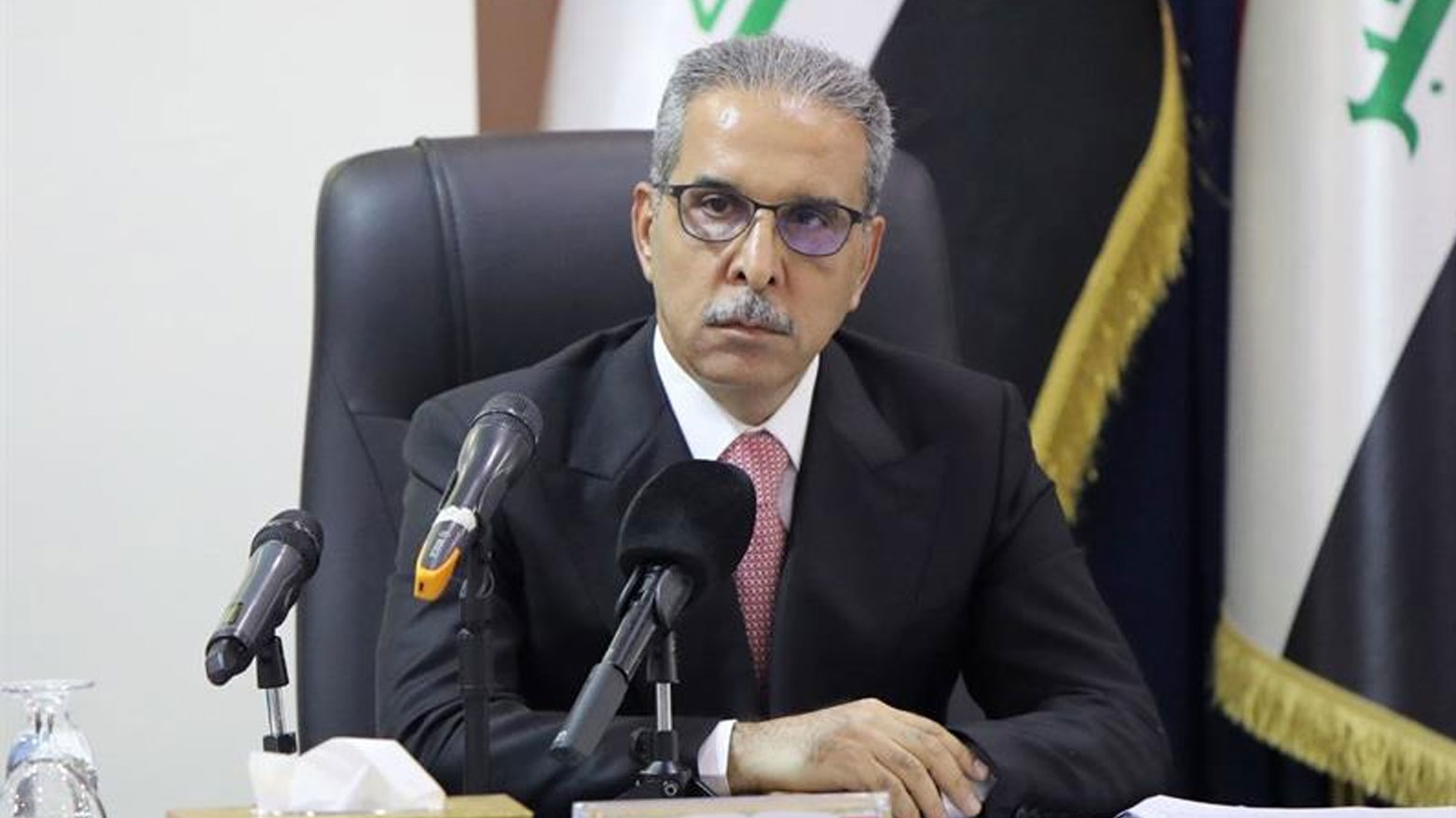
ERBIL (Kurdistan24) — The head of Iraq’s Supreme Judicial Council, Faiq Zidan, announced on Saturday that leaders of armed factions in the country have agreed to coordinate on the sensitive issue of restricting weapons to state control.
In a statement, Zidan thanked faction leaders “for heeding his advice to coordinate together to enforce the rule of law, restrict weapons to state control, and transition to political action after the national need for military action has ceased.”
However, Kataeb Hezbollah, one of the most powerful pro-Iran factions, declared that it will only consider relinquishing arms once foreign troops have left Iraq.
“The resistance is a right, and its weapons will remain in the hands of its fighters,” the group said in a separate statement.
Other pro-Iran armed factions designated as terrorist groups by Washington—including Asaib Ahl al-Haq, Harakat Ansar Allah al-Awfiya, and Kataeb Imam Ali—signaled that it is time to restrict weapons to state control, though none made a binding commitment to disarm, a longstanding U.S. demand.
The announcement follows Iraq’s November general elections, after which the United States urged the new government to exclude six blacklisted groups and dismantle their militias, according to Iraqi officials and diplomats.
Yet some of these groups have increased their parliamentary presence and remain active within the Coordination Framework, a ruling Shiite alliance with close Iranian ties that controls the parliamentary majority.
These blacklisted factions are part of the Popular Mobilization Forces (PMF), a former paramilitary alliance now formally integrated into Iraq’s armed forces. Despite this integration, they have at times acted independently and remain a key component of Tehran-backed “axis of resistance” forces, calling for U.S. troop withdrawal and carrying out attacks against coalition forces.
Asaib Ahl al-Haq, led by Qais al-Khazali, one of the Coordination Framework’s influential figures, won 27 seats in the November elections. Earlier this week, al-Khazali stated that his group “believes in the slogan to restrict weapons to the state” and emphasized that “we are now part of the state.” Similarly, Harakat Ansar Allah al-Awfiya and Kataeb Imam Ali publicly supported limiting weapons to the state authority.
Iraq’s struggle over militia integration and weapons control has deep roots. Following the 2003 U.S.-led Operation Iraqi Freedom (OIF), numerous paramilitary and sectarian militias emerged, some of which were later formalized under the PMF (Hashed al-Shaabi) umbrella.
While the Iraqi state has worked to consolidate military authority under the Ministry of Defense and the Interior Ministry, these groups have maintained autonomous command structures, extensive weapon stockpiles, and influence over local and regional politics.
The post-election environment has intensified tensions between national sovereignty and militia influence. U.S. policymakers have long pressed Baghdad to enforce state monopoly over armed forces, seeing independent militias as a threat to stability and democratic governance.
The recent coordination initiative among armed faction leaders, led by judicial intervention, represents a rare convergence of interests in support of state authority. Yet the continued reluctance of groups like Kataeb Hezbollah underscores the ongoing challenge of disarming entrenched militias without addressing the political and security conditions that sustain their influence.