KRG Nears Completion of National Bank Establishment and Consolidation of Specialized Financial Institutions
KRG nears final stage of establishing a National Bank with 250 billion dinar capital and unifying 28 specialized banks to reform the financial sector.
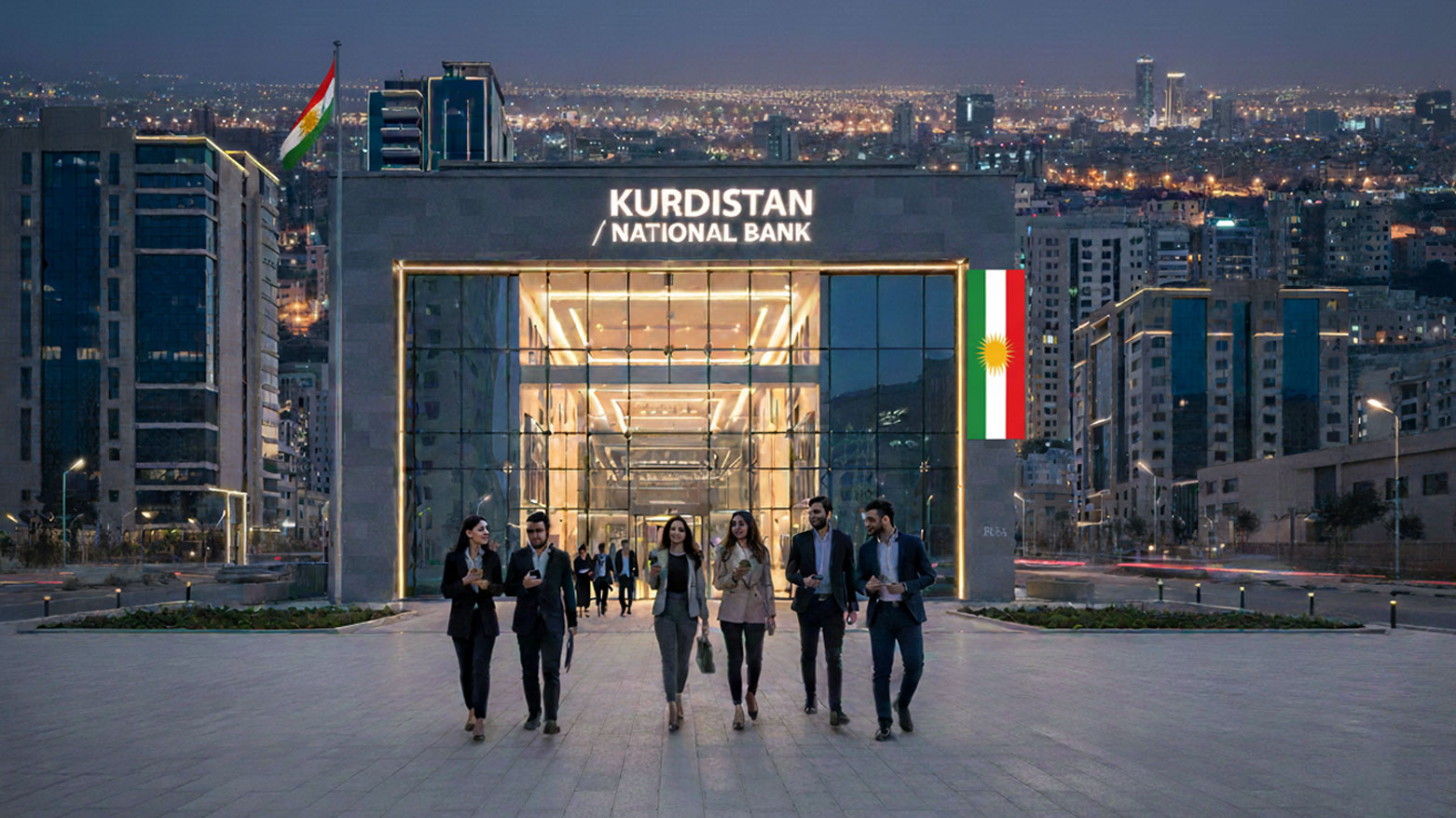
ERBIL (Kurdistan24) — The Kurdistan Regional Government (KRG) is entering the final stages of a significant restructuring of its financial sector, a move that includes the imminent establishment of a National Bank and a sweeping consolidation of specialized banking institutions across the region. The initiative, confirmed by officials on Tuesday, represents a central pillar of the administration’s broader economic reform agenda aimed at modernizing the region’s banking architecture and aligning it more closely with federal standards in Baghdad.
On Tuesday, a source within the Ministry of Finance and Economy of the Kurdistan Regional Government provided detailed updates regarding the status of these reforms to Kurdistan24.
According to the official, the procedural steps required to formally establish the National Bank are nearly complete, marking a pivotal moment for the financial governance of the Kurdistan Region. The new entity is designed to function as a branch of the Central Bank in the Kurdistan Region, ensuring a direct institutional linkage between Erbil and the federal financial authorities in Baghdad.
The Ministry source indicated that the technical and administrative preparations have advanced to the point where only "routine procedures" remain to be finalized with the Central Bank of Iraq.
This coordination highlights the administration's intent to ensure that the new National Bank operates within the federal regulatory framework, thereby facilitating smoother financial interactions between the regional and federal governments.
The establishment of this institution is not an isolated event but is described as a key component of the Ninth Cabinet of the Kurdistan Regional Government's efforts to reform the banking sector and develop an advanced banking system.
Parallel to the creation of the National Bank, the Ministry of Finance and Economy is executing a comprehensive reorganization of the region’s specialized financial institutions.
The official stated that the government is currently undertaking the unification of specialized banks—specifically those focused on sectors such as agriculture and real estate—across the various governorates and independent administrations of the Kurdistan Region.
This consolidation effort is set to impact 28 separate banking entities, which will undergo significant structural changes to streamline operations and reduce administrative redundancy.
The source provided a granular breakdown of how this unification will be implemented across the region’s geography.
In Erbil, the capital of the Kurdistan Region, the reform plan dictates that only one specialized bank will remain operational, centralizing services that were previously dispersed. In the surrounding districts, the operational footprint of these institutions is being recalibrated.
Specifically, in the districts of Koya and Shaqlawa, the existing real estate and agricultural banks are to be converted into offices rather than full-fledged independent banks. However, the banking facility in the Soran administration is slated to remain, preserving its current status within the new framework.
The reorganization strategy extends to the governorate of Sulaimani, where the consolidation is particularly extensive. The Ministry source confirmed that all specialized banks within Sulaimani will be unified into a single banking entity.
A similar approach is being applied in the Duhok governorate, where banks serving the districts of Shekhan, Bardarash, and Akre are to be merged into one consolidated bank. Meanwhile, the central bank in the city of Duhok will remain as is, maintaining its current operational structure amidst the changes in the outlying districts.
In addition to the structural reorganization, the government is moving forward with the administrative staffing of the new National Bank.
Work is currently underway to establish the administrative board that will oversee the institution. The Ministry source noted that the process of receiving "CVs" from potential employees has begun, signaling the start of the recruitment phase.
The hiring strategy outlined by the official is specific and targeted: the administration plans to hire one person in each directorate and governorate, while allocating two positions for Erbil, reflecting the capital's central role in the new financial infrastructure.
The financial scale of the new National Bank is substantial.
According to the information provided to Kurdistan24, the bank will be established with a capital of 250 billion dinars. This capitalization is intended to provide the institution with the necessary liquidity and financial weight to operate effectively as a government bank directly linked to the Central Bank of Iraq.
The government views this capital injection as a foundational step in securing the bank's stability and operational capacity.
The Ministry of Finance and Economy anticipates that the opening of the National Bank will yield several distinct economic benefits for the Kurdistan Region.
First, the source emphasized that the bank will enable the provision of advances to citizens, offering financial services similar to those available through other Iraqi banks. This move aims to expand access to credit for the local population, addressing a long-standing demand for equitable financial services.
Second, the establishment of the bank is expected to strengthen the trust of foreign investors. By creating a National Bank that is directly linked to the federal Central Bank and capitalized at 250 billion dinars, the KRG aims to signal a commitment to regulatory stability and financial transparency.
This, in turn, is projected to improve the investment climate by providing a more reliable banking partner for international commercial interests operating in the region.
Third, the official highlighted that the new institution would facilitate international banking transactions.
As a government bank integrated with the Central Bank of Iraq, the National Bank is expected to streamline cross-border financial flows, making it easier for businesses and individuals in the Kurdistan Region to engage in global commerce. This capability is seen as essential for the region’s economic development and its integration into the wider global economy.
The reforms described by the Ministry source reflect a systematic approach by the Ninth Cabinet to overhaul the legacy banking systems in the region.
By reducing the number of specialized banks from 28 down to a consolidated network and simultaneously launching a well-capitalized National Bank, the government is attempting to correct structural inefficiencies while expanding the range of financial services available to its citizens.
As the process enters its final stage, the focus remains on clearing the last procedural hurdles in Baghdad to bring the new system online.
Kurdistan24 correspondent Azar Faruq contributed to this report.