U.S. Congress Examines Syria's Future, Stabilization Tools, and Protection for Kurds and Other Minorities
US lawmakers heard testimony on Syria’s humanitarian crisis, minority violence, and security failures, as officials urged accountability, stabilization, and sustained engagement during debate over the Save the Kurds Act.
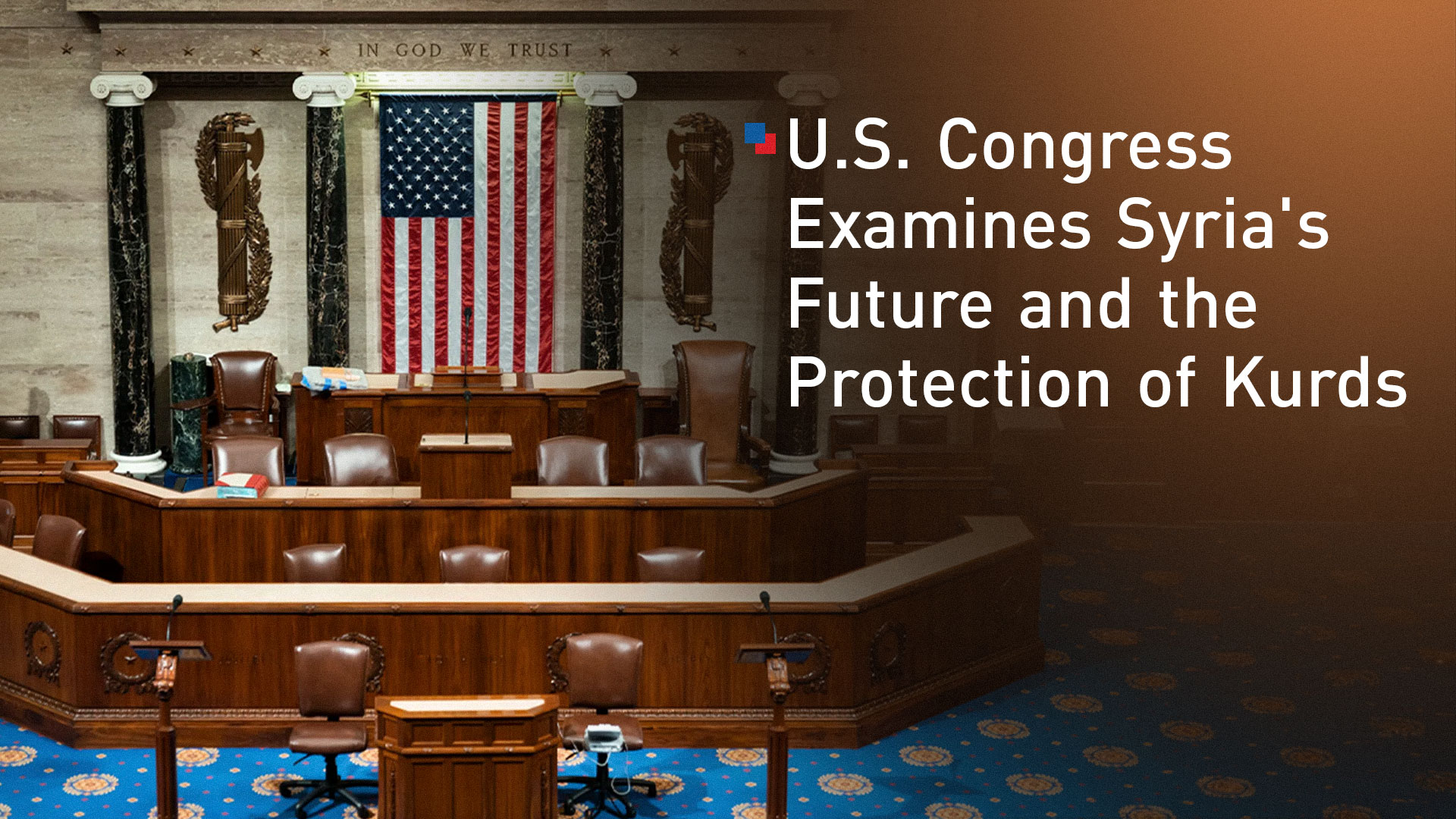
ERBIL (Kurdistan24) - The chamber of the U.S. Congress became a stage for raw testimony and charged exchanges on, as lawmakers examined the humanitarian collapse in Syria, the treatment of minorities, and the future of stabilization efforts under the Save the Kurds Act.
Speaking before the House Foreign Affairs Committee, Mara Karlin, Former Assistant Secretary of Defense for Strategic Affairs, Plans and Capabilities, described a country fractured beyond its capital. “The humanitarian situation is pretty daevastating,” she said. “As I noted, inside Damascus, you don't see it as much. You drive not terribly far away, and it's just skeletons of buildings, unexploded ordinance, and folks trying to figure out, what is their livelihood in this new Syria? Millions have returned; millions just aren't sure. What does returning look like? Will they be secure? Will they have jobs? What—what could that—could that be? So there is a whole lot to be done on that humanitarian front.”
Karlin told Ranking Member Meeks that previous US tools for stabilization no longer exist. She cited the Office of Transition Initiatives in USAID as “a perfect case study” of support for fragile states, adding that it “doesn't exist anymore because of decisions made by this administration.”
She said the US still has options. “We can work with the State Department to see what stabilization resources they have maintained and the extent to which they are prioritizing Syria,” Karlin said. She added that US leadership could convene allies and partners, “in particular from across Europe,” who also have an interest in a stable and secure Syria.
Ranking Member Gregory W. Meeks, Democrat of New York, asked what else Congress should be paying attention to. Karlin replied that security is the other top priority, pointing to violence “particularly against minorities,” and questioned what the government is doing to hold violators accountable. “Otherwise, they are either going to destabilize the country or they're going to leave and potentially ultimately destabilize other—other places as well,” she said.
Meeks then asked whether the Trump administration could take additional actions to protect communities and ensure implementation of the January 30th agreement. Karlin responded: “This agreement seems right. The question is less the words on the page and more what are the actions that are taken, what is the reality. The United States has been a crucial—has played a crucial role in shaping this agreement coming together, in the progress that has been made to date. So I would really urge this to be a very high priority…This agreement has to work. Frankly, if it does not, we will see profound fragmentation, and can perhaps push aside dreams of a newer and prosperous Syria.”
Representative Darrell Issa later questioned Ambassador James Franklin Jeffrey about Türkiye’s role. “Türkiye's influence today is renewed and significant. Is that fair to say?” Issa asked. Jeffrey replied that while it is an Arab country, there are “inherent tensions between Turks and Arabs.”
Issa said the treatment of Kurds appeared to be a common denominator and linked it to Türkiye’s handling of minorities. Jeffrey responded: “There have been problems in the past. I would say that over the last 15 years, particularly in the last two years, there has been an extraordinary reconciliation between the Kurdish population and the Turkish government.”
The diplomatic role of Kurdistan Region’s leaders was also highlighted when U.S. Congressman Joe Wilson praised Prime Minister Masrour Barzani for his efforts in supporting the dialogue between Syrian President Ahmed al-Sharra and SDF commander-in-chief Mazloum Abdi, calling the resulting agreement a significant step toward stability in Western Kurdistan.
Issa asked whether Syria’s reunification is impeded by how it deals with minorities. Jeffrey said the two largest are the Druze in the south and the Kurds in the north, calling the Kurdish issue “the biggest project that we're looking at” across Iraq, Syria, Türkiye, and Iran.
Representative Jim Costa then asked where US focus should be in 2026. Jeffrey said the immediate priority is to keep a few US troops in Syria, particularly in the northeast, to manage ISIS prisoners and continue the campaign. Long term, he said the US should ensure verifiable agreements for minority integration supported by the international community.
Asked about Europe’s role, Jeffrey said coordination is important but emphasized Arab states, naming Qatar, Saudis, and the Turks. He said he was encouraged by developments, citing a preliminary Syria-Israel agreement on January 9 and ongoing back-and-forth with moderate Arab states.
Karlin added that about 2,000 ISIS prisoners have been moved to Iraq, with plans to move more, and questioned the mission and rules of engagement of US forces in Syria. She highlighted US efforts in bringing Syria and Israel, and Lebanon and Israel, together, calling a quiet border and trust in Damascus crucial for stability in the Levant.
Costa asked about Hezbollah’s capacity. Karlin said the group has been devastated at the leadership and operational levels and has largely permitted the Lebanese military to disarm it south of the Litani River. She said money from Iran and other systems remains a concern.
In a later exchange, Representative Scott Perry presented graphic videos and claimed minorities in Syria are being targeted, describing the footage as people “rejoicing over—over these women that they have killed,” and said, “This is life in Syria for minorities.” He then challenged Madam Maenza, asking her to prove him wrong.
Representative Brian Mast also said that the world and the Syrian people “are all hungry for Syria to turn the page from years of Syrian conflict and despot leaders to a country that adds to the region, adds to the world instead of detracting from it.”
Mast said the transition from Bashar al-Assad to Syrian President Ahmed al-Shara was never expected to be without incident, but added that “we've already seen too many incidents…too many incidents of sectarian violence against religious and ethnic minorities.”
He said there are wide-ranging challenges to peaceful democratic governance, including “the presence of foreign fighters within the security forces, many of them backed by Turkey,” and said recent actions against the Syrian Democratic Forces, which he described as “our long-standing counter-terrorism partner and Kurdish ally,” are “unacceptable.”
Mast said actions against the SDF forced CENTCOM to relocate 7,000 ISIS fighters from detention facilities across Syria into Iraq. He also said Russia has maintained a continual presence, adding that it may be harboring Bashar al-Assad.
He said President al-Shara is a former Al-Qaeda fighter, adding that when he asked him why they were no longer enemies, al-Shara said he wanted to “liberate himself from his past” and pursue a noble future for his people.
Mast said a meeting between al-Shara and President Trump and Syria’s joining the global coalition to defeat ISIS was “a glimmer of hope,” but added that “Syria is nowhere close to where they need to be today.”
He said recent actions against Druze, Kurds, and Alawites “are all steps in the wrong direction” and do not build confidence in al-Shara’s intentions.
Mast said the United States repealed the Caesar Sanctions because the reason for them to exist, the presence of Bashar al-Assad, no longer existed, but said conditions were set in exchange, including military integration, protection of minorities, and cooperation with the US to combat terrorists.
He said Congress was pleased by the recent integration deal signed by al-Shara and SDF General Mazloum, calling it a step in the right direction, but added, “This is the third of its kind to be signed, and the United States expects action, not empty words.”
He concluded that the goal of the hearing was to examine the challenges Syria faces and the implications for US national security if Syria chooses the wrong path.The hearing focused on the humanitarian and security situation in Syria, the protection of minorities, and Congressional consideration of the Save the Kurds Act, alongside questions about US military presence, regional diplomacy, and stabilization strategies.
Across party lines, lawmakers and witnesses returned to the same warning: without security, accountability, and real integration of minorities, the vision of a stable and prosperous Syria will remain out of reach.
Updated on Feb. 10, 2025, at 11:20pm, the remarks of Representative Brian Mast was also added.