Yemen’s Southern Separatists Say They Won’t Be Deterred by Saudi Air Strikes
Riyadh weighs military option as talks falter, with 15,000 Saudi-backed forces massed near border.
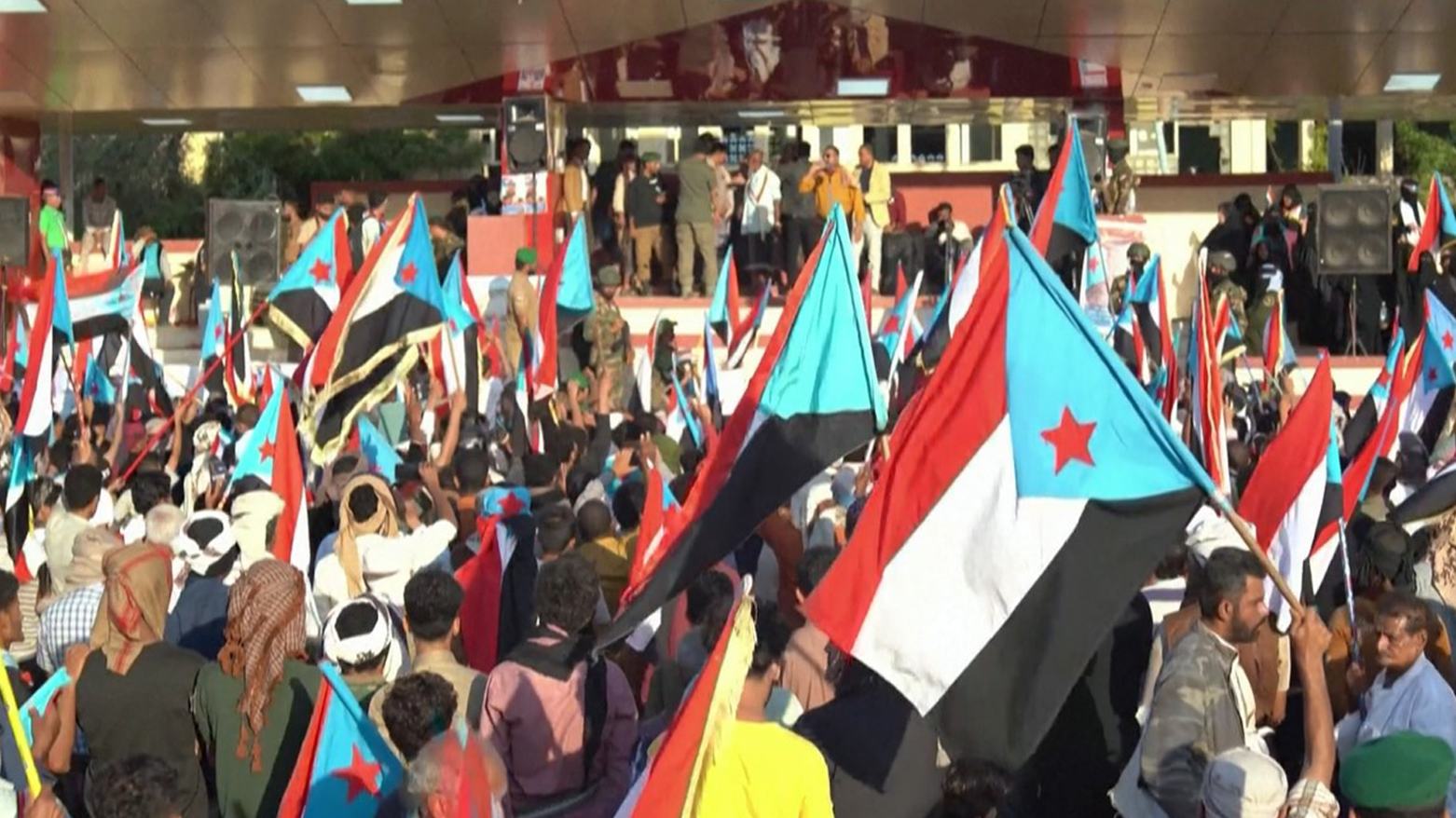
ERBIL (Kurdistan24) — Yemen’s southern separatists said on Friday they would not be deterred from pursuing their objectives after air strikes they blamed on Saudi Arabia hit their positions, marking the latest escalation following their seizure of large swathes of territory last month.
The Emirati-backed Southern Transitional Council (STC), which seeks to revive the formerly independent state of South Yemen, said the strikes would not alter its course.
“The Council affirms that such actions will not serve any path of understanding and will not deter the people of the South from continuing to move forward toward restoring their full rights,” the STC said in a statement, referring to the alleged Saudi strikes.
There were no immediate reports of casualties from the air strikes, which came amid heightened tensions in a conflict that has, for more than a decade, plunged Yemen into a devastating humanitarian crisis.
A Yemeni government official based in Riyadh told Agence France-Presse (AFP) that Saudi Arabia may be considering military action against the separatists if ongoing talks fail.
Separately, a Yemeni military official said around 15,000 Saudi-backed fighters had been amassed near the Saudi border, though they had not been ordered to advance on separatist-held territory.
“All the areas where they were deployed are located at the edges of territory seized in recent weeks by the UAE-backed STC,” the official said, adding, “We have not received military instructions to move towards the two provinces.” The official spoke on condition of anonymity due to the sensitivity of the situation.
Recent STC advances have added strain to relations between Saudi Arabia and the United Arab Emirates, close allies that nonetheless back rival factions within Yemen’s internationally recognized government.
That government is a loose coalition of groups united primarily by their opposition to the Iran-backed Houthis, which control much of northern Yemen.
Separatist-affiliated media aired footage showing plumes of smoke rising from a desert area following the reported strikes. The Saudi-led coalition, which backs the Yemeni government, did not immediately respond to AFP requests for comment.
The air strikes followed clashes on Thursday between separatist fighters and a tribal leader allied with Saudi Arabia, which the STC said killed two of its fighters. A separatist military official in Hadramawt told AFP that the tribal leader had since left the country. The STC said Saudi Arabia had carried out two strikes in the area.
Earlier this week, a Yemeni government official said Riyadh viewed military action as a “last resort” should efforts to persuade the STC to withdraw from newly seized territory fail.
The head of Yemen’s Presidential Leadership Council, Rashad al-Alimi, has held meetings with Western ambassadors and Saudi Arabia’s defense minister and dispatched envoys to Aden in an effort to convince the STC to pull back from Hadramawt and Mahra.
A joint Saudi-Emirati military delegation also visited Aden earlier this month to press the separatists to return the two provinces, with Saudi officials saying de-escalation efforts remain ongoing.
The separatists’ territorial gains have highlighted the complex and often competing roles of Yemen’s regional backers. On Friday, the UAE welcomed Saudi efforts to support security in Yemen, as both Gulf states sought to present a united front despite backing different actors.
Oman, which borders Yemen and has played a mediating role, called for avoiding escalation and urged all sides to engage in comprehensive political dialogue. The United Nations has also warned of the risks. UN Secretary-General Antonio Guterres said last week that the STC’s advances raised the danger of “wider escalation and further fragmentation,” cautioning that a full resumption of hostilities could have serious consequences for regional peace and security.
Yemen has been divided by conflict since 2014, when the Houthis overran the capital Sanaa and forced the government into exile. A Saudi-led coalition intervened in 2015, but the war has killed hundreds of thousands of people and left millions dependent on humanitarian aid.
Although fighting eased significantly after a UN-brokered truce in 2022, recent developments have raised fears that the fragile calm could unravel.