Renewed Clashes Erupt Between SDF and Syrian Army in Aleppo
Clashes resumed between the SDF and Syrian Army in Aleppo on Friday, involving RPGs and snipers, violating a US-brokered truce. Both sides reported injuries and blamed the other, raising fears of renewed conflict.
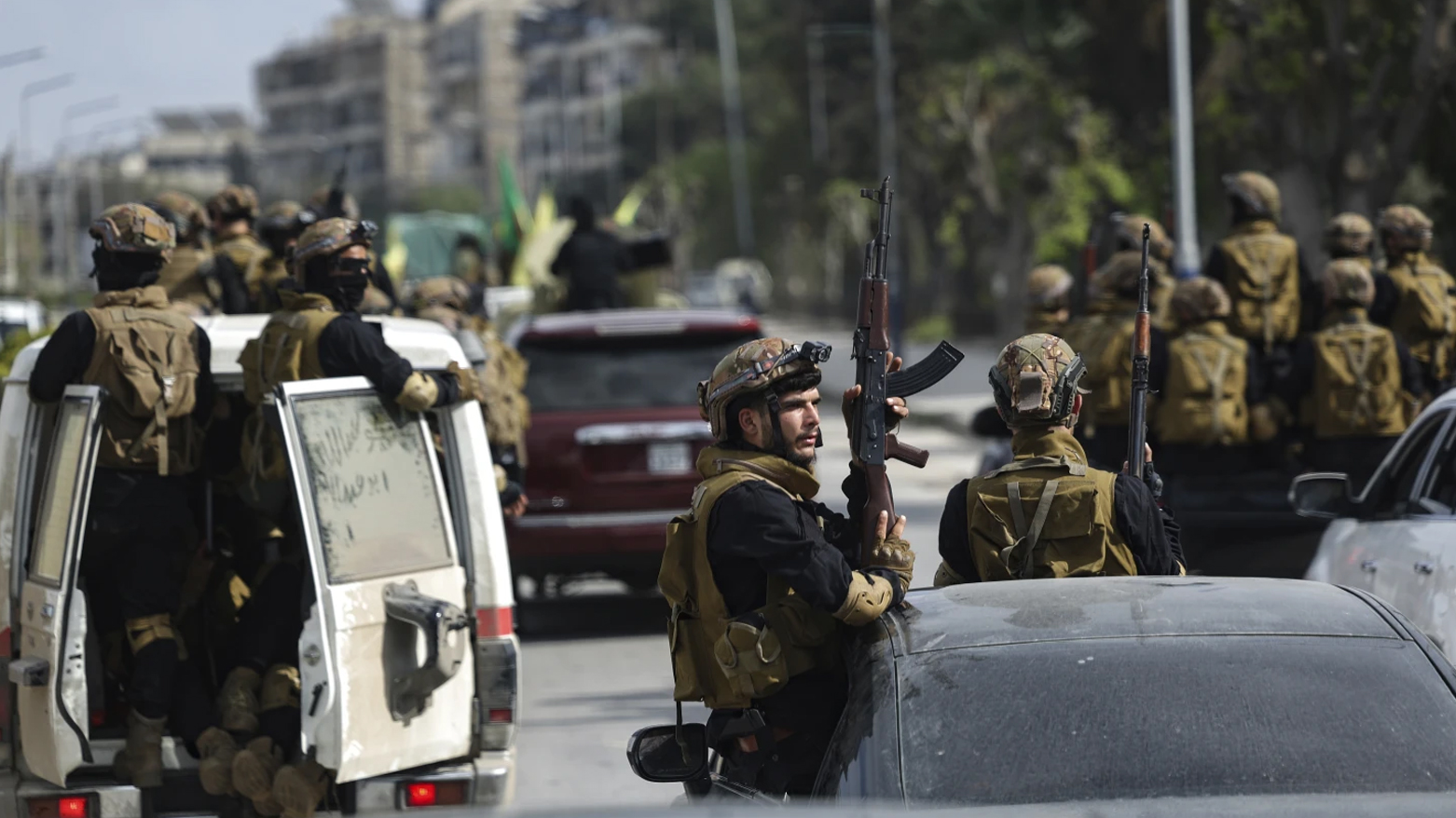
ERBIL (Kurdistan24) – A fragile truce in northern Syria appeared to unravel on Friday as fresh hostilities erupted between the Kurdish-led Syrian Democratic Forces (SDF) and the Syrian Army in Aleppo, with both sides trading accusations of ceasefire violations involving heavy weaponry, sniper fire, and drone incursions. The renewed violence, which included rocket-propelled grenade attacks and the closure of key transit routes, comes just days after a cessation of hostilities was established under American diplomatic pressure following a week of deadly clashes.
The skirmishes on Friday were concentrated around strategic checkpoints in the city of Aleppo and extended into the eastern countryside, marking a significant escalation in tensions between the two uneasy factions.
According to reports from the Internal Security Forces, also known as the Asayish, as well as Syrian state media and international broadcasters, the violence resulted in multiple injuries among security personnel on both sides, prompting fears that the instability could spiral into a resurgence of the bloody fighting that claimed civilian lives earlier this week.
The Internal Security Forces, which operate in areas under the administration of the SDF, reported a direct assault on their positions near the Sheikh Maqsood roundabout, a pivotal intersection in the city.
In a formal statement released following the incident, the security forces detailed that one of their checkpoints was targeted with two rocket-propelled grenade (RPG) shells. The statement explicitly attributed the attack to "groups affiliated with the Damascus government," signaling a direct confrontation with state-aligned forces rather than rogue actors.
In their announcement, the Internal Security Forces described their military response as calculated and restrained. The forces stated that they returned fire in a "limited manner," asserting their right to self-defense while attempting to prevent a broader escalation.
The statement emphasized that, despite the attack, the SDF-aligned security apparatus remains committed to the principle of restraint.
It further noted that high-level contacts with relevant parties are currently ongoing in an effort to de-escalate the situation and restore calm to the volatile sector, though the effectiveness of these communications remains uncertain given the day’s events.
Countering this narrative, the Syrian government offered a conflicting account of Friday’s violence through its official channels.
The Syrian Arab News Agency (SANA) reported that personnel from the government’s customs police were targeted on the Aleppo-Raqqa road.
SANA stated that several members of the customs unit were wounded in the attack, which the agency attributed to "unknown persons," refraining in that specific instance from naming a perpetrator but placing the incident within the context of the broader security deterioration.
However, Syrian state television was more explicit in its accusations regarding a separate incident at the "Shihan" checkpoint.
State broadcasters reported that a member of the government’s internal security forces stationed at the checkpoint was wounded by gunfire. The report directly accused snipers affiliated with the Syrian Democratic Forces of carrying out the shooting, characterizing the incident as a deliberate provocation by the Kurdish-led group.
Adding another layer to the complex security picture, the Al Jazeera news channel provided reporting that indicated casualties on the opposing side at the same location. according to the network's report, two members of the security forces stationed at a checkpoint at the "Shihan" roundabout were wounded.
The report attributed these injuries to gunfire originating from "Syria's security forces," suggesting a reciprocal exchange of fire in the contested zone.
The physical ramifications of these skirmishes were felt immediately by the local population.
Al Jazeera reported that, as a direct result of the spiking tensions and the exchange of fire at the checkpoints, security forces have moved to close the road connecting the Sheikh Maqsood neighborhood to Layramoun.
Additionally, the report noted that security measures around the Shihan roundabout have been significantly tightened, effectively locking down parts of the city as authorities brace for potential further escalation.
The violence was not confined to the city limits of Aleppo. In a development that suggests the conflict is spreading geographically, SANA announced that the Syrian Army had engaged aerial targets in the countryside.
The agency reported that government forces shot down several drones near the Tishrin Dam, located in the villages of eastern Aleppo. The government’s report alleged that these drones were directed from areas under the control of "opposing forces," a term utilized by Damascus to describe the SDF and its affiliates in this context.
The Syrian government characterized the drone activity near the Tishrin Dam as a "new violation" of the "March 10" agreement.
While the specific terms of the March 10 agreement were not detailed in the immediate reports, the invocation of the accord by Damascus highlights the legal and diplomatic framework that is currently being tested by the renewed hostilities.
The accusation suggests that the government views the drone operations as a breach of established demarcation lines or operational protocols agreed upon in previous negotiations.
These rapid-fire developments on Friday represent a severe setback for stability in the region, coming in the wake of a particularly violent week. Reports indicate that the days leading up to the ceasefire had witnessed bloody fighting and clashes in Aleppo that resulted in several civilian victims.
The intensity of that earlier round of fighting had necessitated intervention by the United States, whose diplomatic pressure was credited with bringing both the SDF and the Syrian Army to the negotiating table to agree on a ceasefire.
However, the events of Friday—ranging from the RPG attack at Sheikh Maqsood to the drone interceptions in the east—indicate the inherent instability of that truce. The mutual exchange of fire, the wounding of security personnel on both sides, and the activation of air defense systems suggest that the underlying drivers of the conflict remain unresolved.
As noted in the reports surrounding Friday's violence, the resumption of hostilities points to the high possibility of a resurgence of broader fighting and clashes, threatening to undo the brief diplomatic progress achieved earlier in the week.