Panama Demolishes China Friendship Monument Near Canal Amid Rising U.S.-China Tensions
Move sparks diplomatic backlash as Trump renews threats over canal control and Beijing warns of damage to bilateral ties.
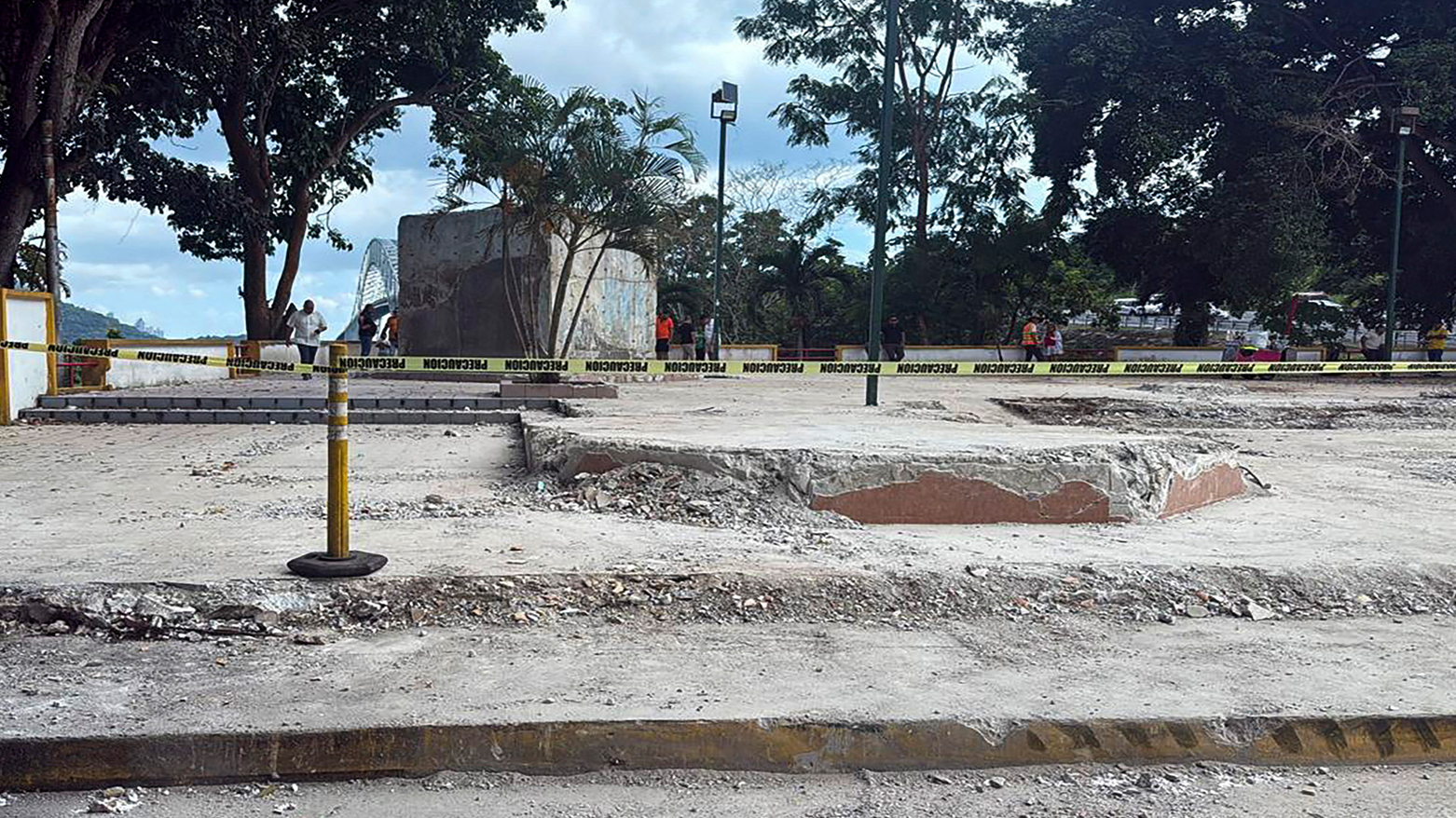
ERBIL (Kurdistan24) — A monument honoring China’s contributions to the Panama Canal was torn down late Saturday near the waterway’s Pacific entrance, a move ordered by local authorities that has triggered sharp criticism from Panama’s president and an angry response from Beijing, against the backdrop of intensifying U.S.-China rivalry over the strategic passage.
The monument, erected in 2004 to symbolize friendship between Panama and China, stood near the Bridge of the Americas overlooking the canal. Its demolition was ordered by the mayor’s office of the western locality of Arraijan, which said the structure had suffered damage and posed a public safety risk.
Panamanian President Jose Raul Mulino rejected that justification, condemning the act in unusually strong language. “There is no justification whatsoever for the barbarity committed,” Mulino said Sunday, calling the demolition “an unforgivable act of irrationality.”
China’s ambassador to Panama, Xu Xueyuan, described the incident as a serious blow to bilateral relations after personally inspecting the site. He said the demolition caused “great pain for bilateral friendship” and amounted to an insult to Panama’s Chinese community, which numbers around 300,000 people.
Videos published by local media showed members of the Chinese community gathering near the site as the monument was destroyed, though police prevented them from reaching the lookout in an apparent effort to avoid clashes.
In a statement posted on X, the Chinese embassy demanded a “thorough investigation” and called for those responsible to be “severely sanctioned,” describing the demolition as “illegal, improper and vandalistic.”
The incident comes at a sensitive moment for Panama, which has found itself increasingly caught between Washington and Beijing. U.S. President Donald Trump has repeatedly claimed in recent months that China wields excessive influence over the Panama Canal and has threatened to retake control of the strategic waterway, a statement that has alarmed Panamanian officials and drawn international attention.
The 80-kilometer canal, one of the world’s most important maritime chokepoints, handles about five percent of global trade. The United States and China are its two largest users, underscoring its central role in global commerce and geopolitics.
The canal was under U.S. control from its opening in 1914 until the end of 1999, when it was formally handed over to Panama under treaties signed decades earlier. While Panama maintains full sovereignty over the canal, Trump has demanded preferential conditions for U.S. vessels, reviving a debate long considered settled.
Concerns in Washington have also focused on the role of Hong Kong-based Hutchison Holdings, which operates ports at both the Atlantic and Pacific entrances to the canal. The company has agreed to sell those port operations to U.S.-based investment firm BlackRock, a deal that has been closely watched as part of broader efforts by the United States to curb perceived Chinese influence in critical infrastructure.
Against this backdrop, the demolition of the China Friendship Monument has taken on symbolic significance, highlighting how global power competition is increasingly playing out in Panama, a country whose canal remains indispensable to world trade and international politics.