Israel, Greece, Cyprus Deepen Defense Ties Amid Rising Tensions With Türkiye
Israel, Greece, and Cyprus signed a 2026 military pact to deepen defense ties and deter Türkiye, including joint drills and a potential rapid-response force.
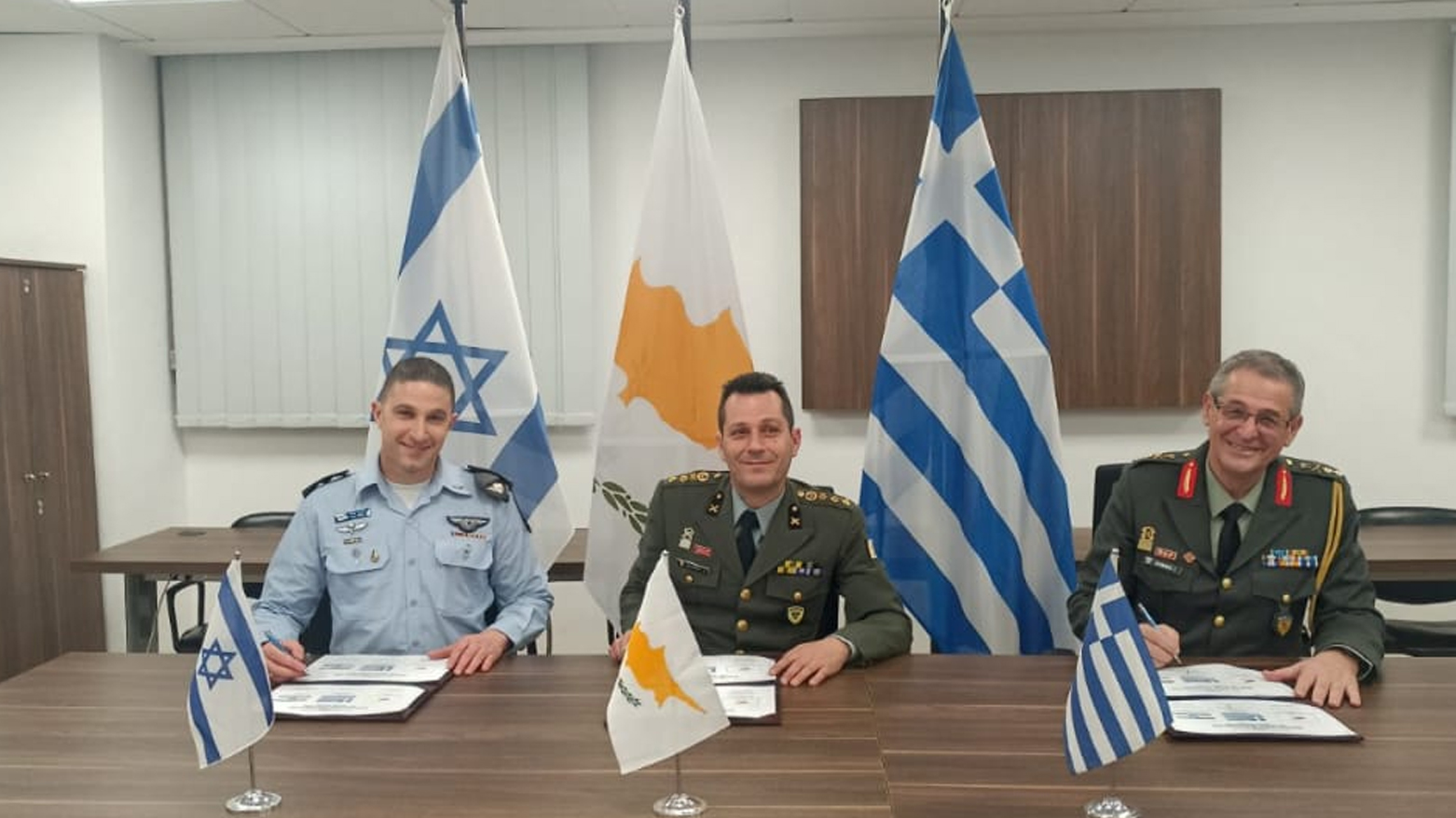
ERBIL (Kurdistan24) — In a significant escalation of military cooperation in the Eastern Mediterranean, Israel, Greece, and Cyprus have signed a comprehensive trilateral work plan for 2026, aimed at bolstering regional security and deterring what the countries perceive as growing aggression from Türkiye.
The agreement, formally announced on Monday by the Hellenic National Defense General Staff, includes joint operational activities, special forces training, and the potential creation of a rapid-response military force, solidifying a geopolitical bloc that has emerged as a counterbalance to Ankara’s ambitions.
The “Joint Action Plan (JAP) between Greece, Cyprus and Israel” and the “Military Cooperation Programme (MCP) between Greece and Israel” were signed during meetings in Nicosia on December 22 and 23, according to the Greek military statement released Monday.
The initiatives are designed to enhance the role of the three nations as "pillars of peace, stability and security in the Eastern Mediterranean region," the statement said.
While the official announcement focused on operational readiness and staff-level consultations, the strategic implications of the pact are clear.
The agreement comes amid heightened friction with Türkiye, whose President, Recep Tayyip Erdogan, has increasingly threatened military action against all three states and has suspended trade with Israel following the outbreak of the war in Gaza.
A United Front Against Ankara
The trilateral accord was finalized just days after a high-profile summit in Jerusalem last week, where Israeli Prime Minister Benjamin Netanyahu hosted Greek Prime Minister Kyriakos Mitsotakis and Cypriot President Nikos Christodoulides.
The leaders used the occasion to present a unified front, delivering thinly veiled warnings to Türkiye.
Standing alongside his counterparts, as reported by The Times of Israel (ToI), Netanyahu declared, “To those who fantasize they can reestablish their empires and their dominion over our lands, I say: Forget it. It’s not going to happen. Don’t even think about it.” His comments were widely interpreted as a direct response to Erdogan’s neo-Ottoman rhetoric and Ankara’s expansionist maritime claims in the region.
The newly signed military plan operationalizes this political alignment. According to the Israel Defense Forces (IDF), the agreement covers joint exercises across land, air, and sea domains, as well as strategic dialogue on shared security challenges.
The pact also includes bilateral work plans between the IDF, Greece’s Hellenic Armed Forces, and the Cypriot National Guard.
Reports from Greek media indicate that the three nations are actively discussing the establishment of a joint rapid-response force to protect critical infrastructure in the Mediterranean.
The proposed unit would comprise approximately 2,500 personnel—1,000 troops each from Israel and Greece, and 500 from Cyprus. Unlike a permanent standing army, this force would be designed for rapid deployment during crises, utilizing assets from the Israeli Air Force and Navy.
Energy and Security Intertwined
The deepening military ties are inextricably linked to the region’s energy landscape. The discovery of significant natural gas deposits in the Eastern Mediterranean over the past decade has been a primary driver of the tripartite alliance.
Israel, Greece, and Cyprus have long collaborated on ambitious energy projects, including the proposed EastMed pipeline, designed to transport gas from Levantine fields to Europe, and the EuroAsia Interconnector, an underwater electricity cable linking their power grids.
Türkiye has aggressively challenged these developments.
In 2019, Ankara signed a maritime border agreement with Libya’s Tripoli-based government that ignored the continental shelves of Greece and Cyprus, effectively claiming vast swathes of the Mediterranean waters where the proposed pipeline would run.
Türkiye has also deployed drillships into Cypriot waters, sparking condemnation from Nicosia and Athens.
The new military cooperation plan is seen as a necessary shield for these economic interests.
"By bolstering the alliance with Greece and Cyprus, Israel is securing a regional security architecture for the Eastern Mediterranean," said Enia Krivine, Senior Director of the Israel Program at the Foundation for Defense of Democracies (FDD). "Defense partnerships are critical for Jerusalem as the threats to Israel’s security continue to evolve."
A Shift in Israeli Foreign Policy
For Israel, the formalization of this alliance represents a significant shift in its foreign policy doctrine.
Historically, Israel sought alliances with non-Arab regional powers under its "periphery doctrine," which included close ties with Türkiye. However, the deterioration of relations with Ankara under Erdogan’s leadership compelled Jerusalem to pivot westward.
According to a 2020 policy analysis by the Institute for National Security Studies (INSS), the Israel-Greece-Cyprus triangle constitutes a new element in Israeli strategy.
"The triangle is capable of changing the regional architecture in a way that contributes to Israel’s national strength," wrote Orna Mizrahi of the INSS.
The analysis noted that the alliance provides Israel with strategic depth, potentially allowing the IDF to utilize Greek and Cypriot air and sea ports in wartime—a critical asset given the threat of missile attacks from Iranian proxies in Lebanon and Syria.
The United States has also thrown its support behind the trilateral framework, viewing it as a stabilizing force against Russian influence in the Mediterranean and a check on Türkiye’s erratic behavior within NATO.
"The fact that Greece is a NATO member is an important aspect of this," noted Edmund Fitton-Brown, a senior fellow at the FDD. "It cannot be long before the United States notices that Türkiye is at odds with American allies."
Operational Details and Future Prospects
The signed agreement outlines specific areas of cooperation for 2026, including Special Operations Forces (SOF) joint training and intelligence sharing. The Israeli delegation in Nicosia was led by Brig. Gen. Amit Adler, chief of the IDF’s International Cooperation Division, highlighting the high-level engagement involved.
While the rapid-response force remains a concept under discussion, the joint exercises are already a reality.
The Israeli Air Force has conducted drills in Greek airspace for years, simulating long-range strikes and dogfights against advanced air defense systems—training that is often viewed as preparation for potential conflict with Iran.
However, challenges remain. The alliance must navigate complex regional dynamics, including the fragility of relations with Egypt and Jordan, which are partners in the Eastern Mediterranean Gas Forum but face domestic pressure over ties with Israel.
Furthermore, any escalation with Türkiye carries significant risks, given Ankara’s military capabilities and its leverage over migration flows to Europe.
Despite these hurdles, the signatories appear committed to the partnership. The joint declaration from the Jerusalem summit emphasized the leaders' intent to "reinforce our ongoing trilateral cooperation on security, defense, and military matters."
As tensions in the region continue to simmer, the solidified bloc of Israel, Greece, and Cyprus is poised to play a central role in defining the future security architecture of the Eastern Mediterranean.
"This trilateral meeting should be a wake-up call to Ankara," said Sinan Ciddi of the FDD. "This is not a threat but an opportunity for Türkiye to reconsider its posture."