Solar Energy Adoption Surges in Duhok as Households Turn to Renewables for Stability
Over 500 Duhok homes installed solar systems, generating 7MW and cutting costs. Officials cite environmental benefits, noting reduced grid strain and carbon emissions.
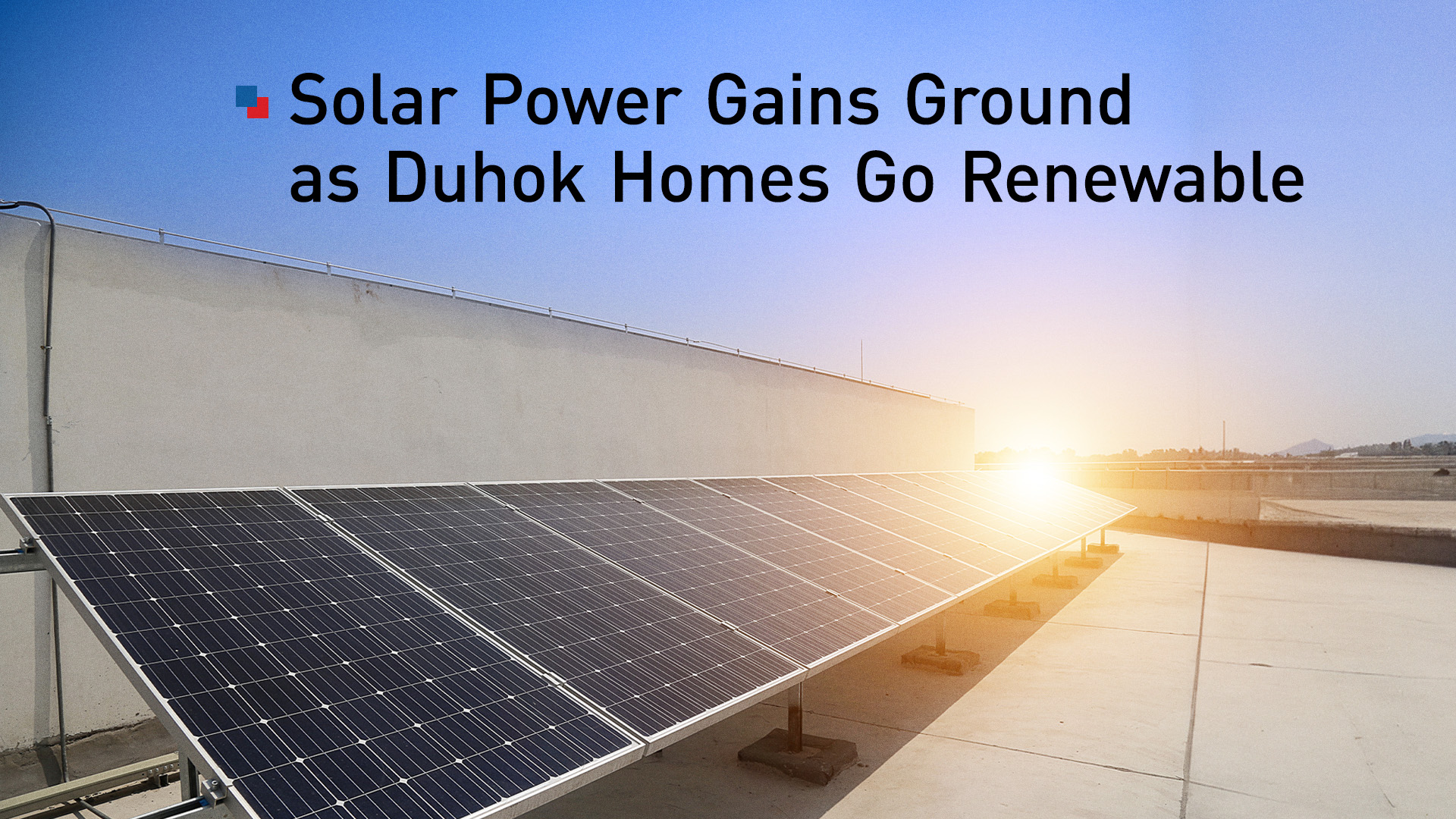
ERBIL (Kurdistan24) — More than 500 households in the Duhok Governorate have installed solar energy systems, a trend that is rapidly accelerating as citizens seek alternatives to the national grid’s instability and the rising costs of private diesel generators. According to official statistics released on Saturday, the adoption of photovoltaic technology is not only alleviating financial burdens for families but also reducing strain on the public electricity infrastructure and curbing carbon emissions.
The shift toward renewable energy in Duhok mirrors broader developments across the Kurdistan Region, where government initiatives and private sector engagement are driving a transition away from fossil fuel dependency.
In Duhok alone, more than 530 electricity subscribers have formally installed and registered solar systems. Hazim Mohammed, the Deputy Director General of Duhok Electricity, confirmed that these installations are now generating approximately 6.8 megawatts of power.
When accounting for broader usage, the total solar output in the governorate is estimated at around 7 megawatts.
Economic Relief and Energy Independence
For residents, the primary driver of this transition is economic relief coupled with energy security. Shamil Qaduri, a Duhok resident who installed a solar system over a year ago, described the impact as transformative.
"Previously, I used to pay about 200 to 250 thousand dinars monthly for 10 amperes of generator electricity," Qaduri told Kurdistan24. "But now, thanks to the solar system, we have electricity 24 hours a day and we do not pay any amount of money."
Qaduri noted that his system has the capacity to provide more than 40 amperes of electricity, a significant increase from the limited supply often available through private generators.
This capacity allows families to meet their daily needs without interruption, effectively insulating them from the chronic power cuts that have long plagued the region.
The demand is creating a robust market for installation services. Ahmed Qasim, an engineer at a local solar installation company, indicated that the sector is seeing rapid growth.
"Due to electricity problems, the demand for solar energy systems has increased greatly," Qasim said. He noted that his company alone has installed systems for more than 150 homes and public places.
The technology is being applied across various sectors, including commercial, industrial, and agricultural operations, such as powering water wells.
Environmental Impact and Grid Stability
Beyond the immediate benefits to consumers, officials emphasize the systemic advantages of solar adoption.
Mohammed, the Deputy Director General, highlighted the environmental dividends of the 7 megawatts currently being produced.
"If this amount of energy were produced through diesel or gas, it would cause the emission of about 5,000 tons of carbon dioxide annually; therefore, this system is an important factor for protecting the environment," he stated.
Furthermore, the distributed generation of power helps stabilize the national grid by reducing peak load pressures. As more households generate their own electricity, the demand on the central utility decreases, potentially allowing for more consistent service to areas still reliant on the grid.
Regional Context: Sulaimani and Beyond
The developments in Duhok are part of a wider regional trend.
In Sulaimani, solar adoption has reached even higher levels. According to official data released on January 5, 2026, solar energy production within the Sulaimani governorate has formally exceeded 76 megawatts.
The Sulaimani Electricity Directorate reported 2,590 registered subscribers, with the vast majority—2,173—being residential households.
Sirwan Ahmed, Spokesperson for the Sulaimani Electricity Directorate, noted that these figures likely underrepresent the total capacity, as many systems remain unregistered.
The data from Sulaimani also revealed growing interest from the commercial sector, with 337 businesses adopting solar power, followed by 70 agricultural subscribers and 15 industrial entities.
Government Support and Policy Shifts
The acceleration of solar adoption is being supported by targeted government policies and financial mechanisms.
In May 2025, the Kurdistan Regional Government (KRG), in coordination with the German development agency GIZ, launched a loan program to assist households in financing solar installations.
Amanj Harki, head of the Renewable Energy Committee in the Iraqi Parliament, announced that citizens could obtain loans ranging from 7 million to 30 million Iraqi dinars.
These loans, available to salaried individuals including public employees and security personnel, are designed to remove the barrier of upfront costs. "The total money is spent directly on implementing the project," Harki explained at the time. "Once the solar system is installed, the money is released to the company."
This financial support aligns with the KRG’s broader strategic goals. The region has been actively diversifying its energy portfolio, moving beyond its traditional reliance on hydrocarbons.
Significant infrastructure projects, such as the Deralok Dam in Duhok—a $168 million hydroelectric project financed by the Japan International Cooperation Agency (JICA)—underscore this commitment. The dam, initiated in 2016 and designed to support a 37.6 MW power station, represents the KRG's first major foray into hydropower.
A Sustainable Trajectory
The convergence of household adoption, financial incentives, and large-scale infrastructure projects signals a maturing renewable energy sector in the Kurdistan Region.
The "Runaki" project, cited by officials as a successful model of clean energy implementation, has demonstrated the viability of 24-hour electricity supply through sustainable means.
As awareness grows and the economic benefits become more tangible, the trajectory in Duhok suggests that solar energy is transitioning from a niche solution to a mainstream utility.
With officials like Mohammed pointing to the reduction of thousands of tons of carbon emissions, the shift is increasingly framed not just as a solution to power cuts, but as a critical component of environmental stewardship and economic resilience.