Iraq’s New Trade Rules and Environmental Lapses Deepen Economic and Public Health Strain
Federal tax hikes have paralyzed trade and spiked prices in Iraq and Kurdistan, while illegal waste dumping in Diyala creates a health crisis for locals.

ERBIL (Kurdistan24) – A convergence of tightening federal economic regulations and persistent environmental mismanagement is placing significant strain on civilians and businesses across Iraq and the Kurdistan Region.
New directives from the Iraqi government regarding customs implementation have triggered a paralysis in trade movement at key border crossings and sparked a sharp rise in consumer prices, according to merchant unions and local officials.
Simultaneously, a new investigation has exposed a deepening health crisis in Diyala Governorate, where illegal waste management practices are subjecting women and children to hazardous labor conditions.
Import Regulations Stifle Markets
The implementation of new federal customs decisions has created an immediate and negative impact on markets within the Kurdistan Region and broader Iraq.
The central government has moved to enforce a "100 percent implementation" of import regulations, a shift that fundamentally alters the financial logistics of cross-border trade.
Under the new directive, merchants are now required to pay customs duties before their imported goods arrive, a procedural change coupled with a hike in the customs rate to 30 percent.
Mustafa Rahman, the Head of the Kurdistan Importers and Exporters Union, outlined the logistical and political dimensions of these changes.
He noted that the flow of goods into the region follows distinct geographic lines, with European and Turkish products entering through the Ibrahim Khalil border crossing, while Iranian goods are processed through the Bashmakh border crossing.
In contrast, merchandise from China and several other nations typically enters Iraq via the southern port of Basra.
Rahman characterized the new federal policy not merely as a fiscal adjustment but as a maneuver to centralize control. "If we adhere to that decision of the Iraqi government, then the prices of goods will rise significantly," Rahman said.
He argued that the Iraqi government’s intent is to assert control over all border crossings in both federal Iraq and the Kurdistan Region. "In reality, it attempts to reduce the authority of the Kurdistan Region so that everything is under its own authority," he added.
The economic repercussions of this power struggle are already visible in local markets, where the costs are being passed directly to consumers.
Ranja Mohammed, an electronics merchant, told Kurdistan24 that the volatility of the regulatory environment has forced business owners to reconsider their import strategies. "We now dare not import many goods," Mohammed said.
He explained the catch-22 facing importers: if the federal decision is fully implemented, the increased costs will force them to sell goods at prohibitively high prices.
Conversely, if they stock up now and the policy shifts, they could be left with inventory they are forced to sell at a loss. "Even if the decision is implemented, we will be left with a lot of goods and forced to sell them cheaply, causing us loss again," he noted.
In response to the disruption, the Kurdistan Importers and Exporters Union has issued a call to Kurdish political parties.
As discussions regarding the formation of the new Iraqi government proceed, the union is urging negotiators to insist on resolving this economic file to prevent further market instability.
Trade Paralysis at Trebil Crossing
The economic strain is not confined to the Kurdistan Region. In Iraq's western governorate of Anbar, the Trebil International Crossing—the primary land route between Iraq and Jordan—has seen a dramatic decline in activity due to the same federal tax hikes.
Once a bustling hub of commerce, the crossing now appears largely silent as merchants have halted operations in response to the increased financial burdens.
Local officials in Anbar have expressed alarm over the stagnation.
Saad Muhammadi, a member of the Anbar Provincial Council, told Kurdistan24 that the trade exchange has "decreased significantly."
He appealed to federal authorities to consider the impact on the local population's livelihood. "Ultimately, citizens pay the price for this price hike," Muhammadi said.
The disruption at the border has rippled into the province's markets, with businessmen reporting that the prices of certain staple goods have doubled.
The breakdown in the supply chain has inflated costs for basic necessities, with merchants citing the example of tomatoes.
"Bringing a kilo of tomatoes costs the merchant two thousand dinars; this ruins the market and people cannot buy things," local businessmen stated.
Stakeholders in Anbar are currently waiting for Baghdad to review the decision, hoping to avert a deepening crisis in market stability and public livelihood.
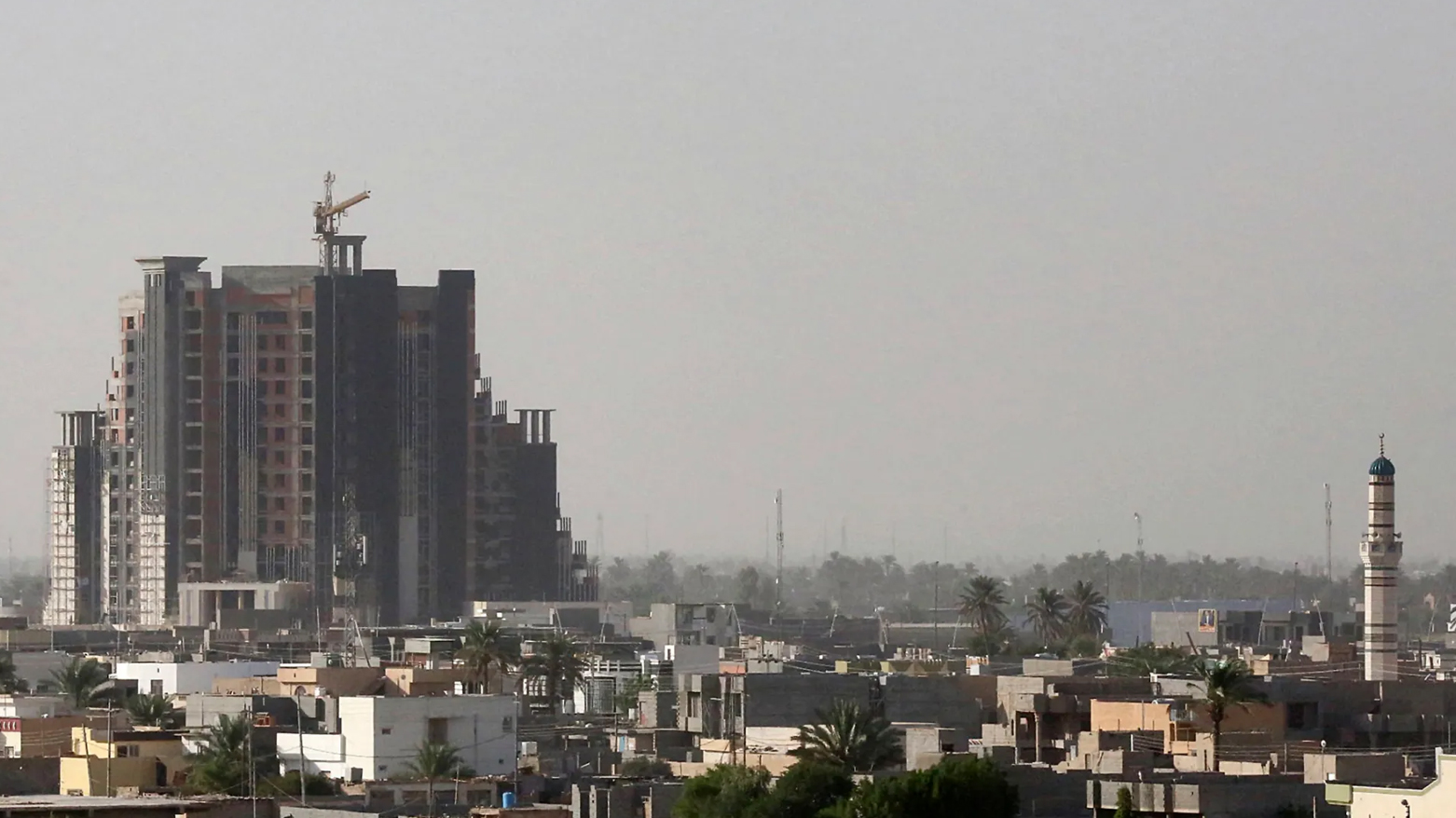
Health and Environmental Crisis in Diyala
While economic regulations tighten, a separate crisis of deregulation and negligence is unfolding in Diyala Governorate.
A new investigation published by the Iraqi Green Observatory has revealed severe health risks associated with illegal garbage dumps in the "Khalis" and "Canaan" areas. Despite official government decisions to close these sites, they remain active, serving as breeding grounds for disease and posing a direct threat to nearby residents.
The investigation highlights a stark failure of enforcement.
The Canaan landfill has been subject to a closure decision since 2016 and lacks the necessary environmental license to operate. Nevertheless, waste continues to be dumped at the location. Compounding the hazard is the practice of randomly burning waste, an activity prohibited by law since 2009.
The toxic smoke generated by these fires has resulted in a spike in asthma cases among villagers living near the Khalis landfill, with reports indicating that children are sent to hospitals on a daily basis due to respiratory distress.
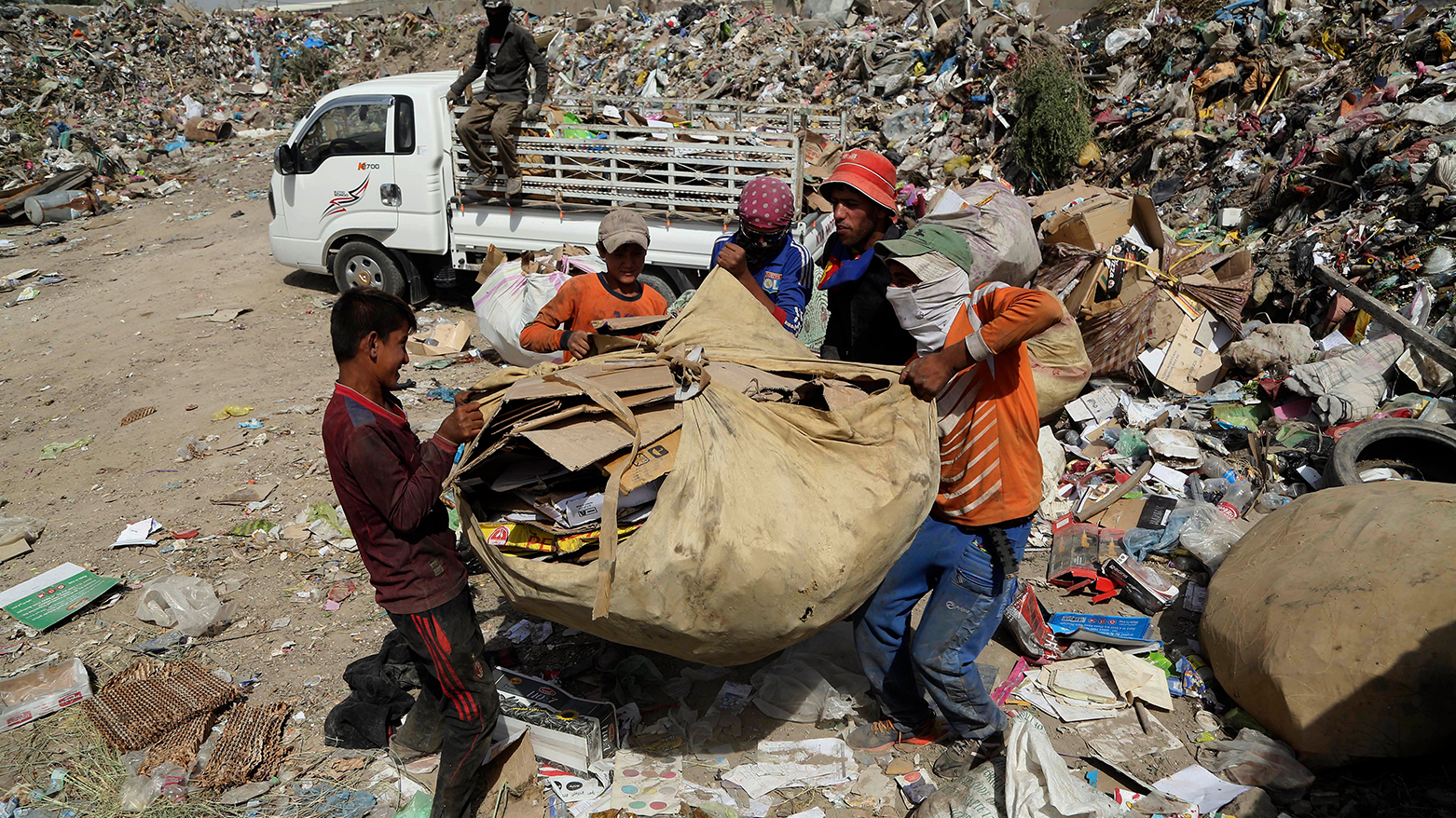
Women and Children in Hazardous Labor
The investigation further exposed the exploitation of vulnerable demographics within these hazardous zones. Contrary to laws prohibiting their presence in such environments, women and children are actively employed inside the landfills.
The management of certain dump sites has reportedly institutionalized this practice by creating special badges that allow these individuals to enter as "scavengers."
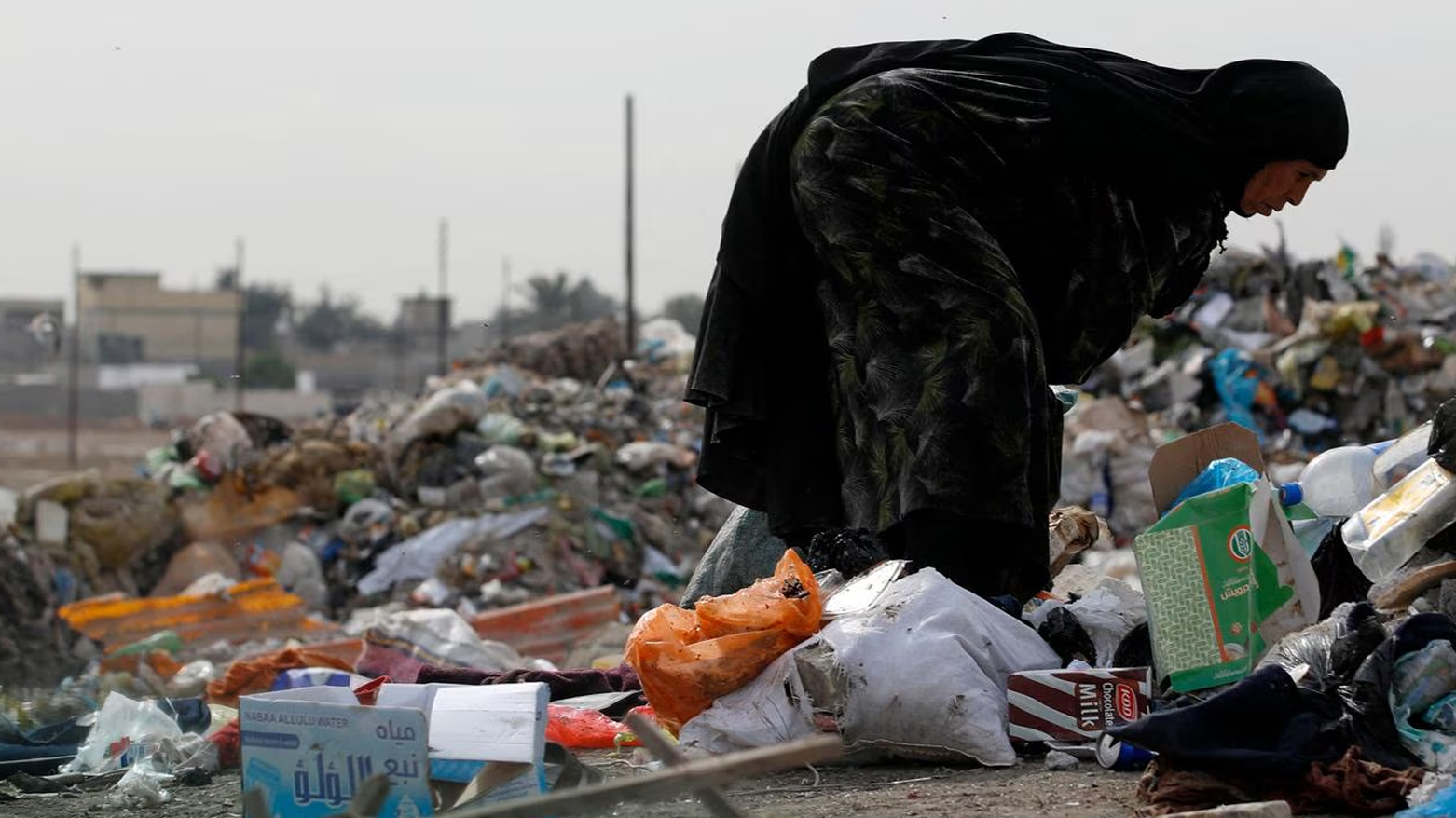
The human cost of this system is exemplified by the account of Shayma Alwan, a 46-year-old widow and mother of seven.
Alwan recounted the dangers she faces daily while working in the refuse piles to support her family. "I work for only 15 dollars and have faced danger several times," she said. She described a near-fatal incident where she was almost struck by a vehicle while working inside the landfill.
The Iraqi Green Observatory’s findings point to systemic negligence by the federal government.
The investigation asserts that the Ministry of Environment has largely abandoned the issue, resorting to imposing financial penalties rather than taking strict legal action against the responsible government entities.
Furthermore, the report notes that fines imposed as far back as 2020 have yet to be paid, rendering the punitive measures ineffective.
The situation in Diyala is symptomatic of a broader national waste management crisis. Iraq generates approximately 50,000 tons of garbage daily.
Of the 221 landfills operating across the country, 149 lack the required environmental licenses.
Additionally, the rate of waste recycling remains negligible, standing at less than 10 percent. The investigation concludes that there is a "large gap" between Iraq’s environmental laws and their actual implementation, a discrepancy that the citizens of Diyala are paying for with their health.
Fishing Ban Announced
Amid these economic and environmental challenges, the Iraqi Ministry of Agriculture has moved to enforce resource management regulations in the fisheries sector.
The Ministry announced a ban on fishing during the breeding season, framing the measure as essential for food security and ecological balance.
The Department of Animal Wealth at the Ministry called on all fishermen to adhere to the restrictions to ensure the continuity and growth of fish stocks.
"This measure allows fish to reproduce and also ensures the protection of fish wealth as an important resource for future generations," the Ministry stated.
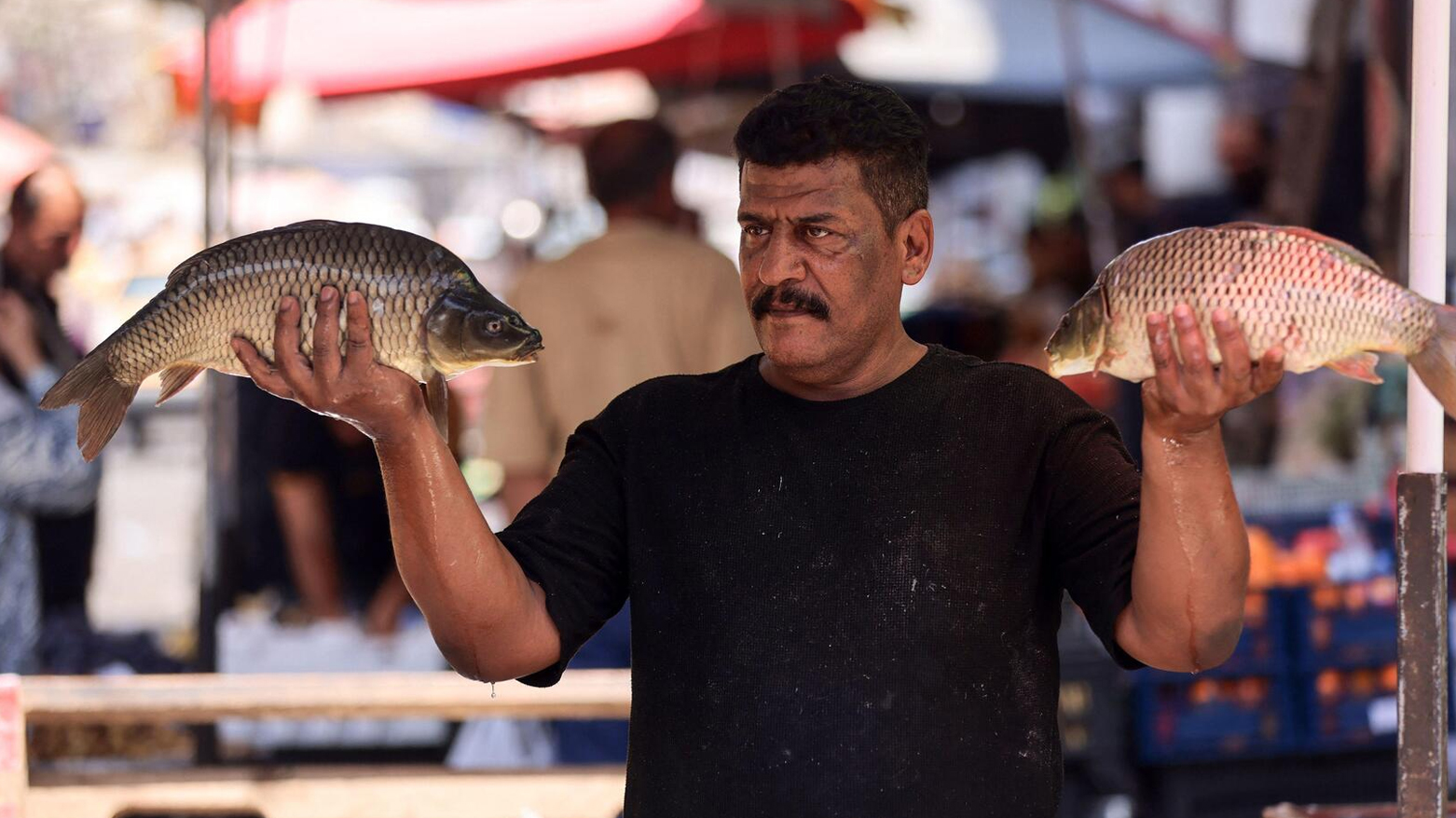
The schedule for the ban varies by geography. In the cities of southern and central Iraq, the restriction begins annually in mid-February.
In the northern governorates of Kirkuk and Nineveh, the ban commences in mid-March and continues until July.
The Ministry emphasized that adherence to the ban is a "joint national responsibility" requiring cooperation to develop national resources and serve the public interest.
While the government attempts to regulate natural resources through the fishing ban, the concurrent crises in trade policy and waste management suggest a volatile landscape where the enforcement of law varies significantly, often to the detriment of economic stability and public health.