KRG Expands ‘My School’ Digital Platform to Include Middle School Students
Kurdistan’s Education Ministry and the Kurdistan Foundation launched the third phase of the “My School” platform, expanding digital lessons to middle-school grades and advancing full basic education digitization.
ERBIL (Kurdistan24) – The Kurdistan Regional Government (KRG) Ministry of Education announced on Tuesday the operational launch of the third phase of the "My School" (Qutabixanekem) digital platform, a significant milestone that extends e-learning resources to students in the final three years of basic education.
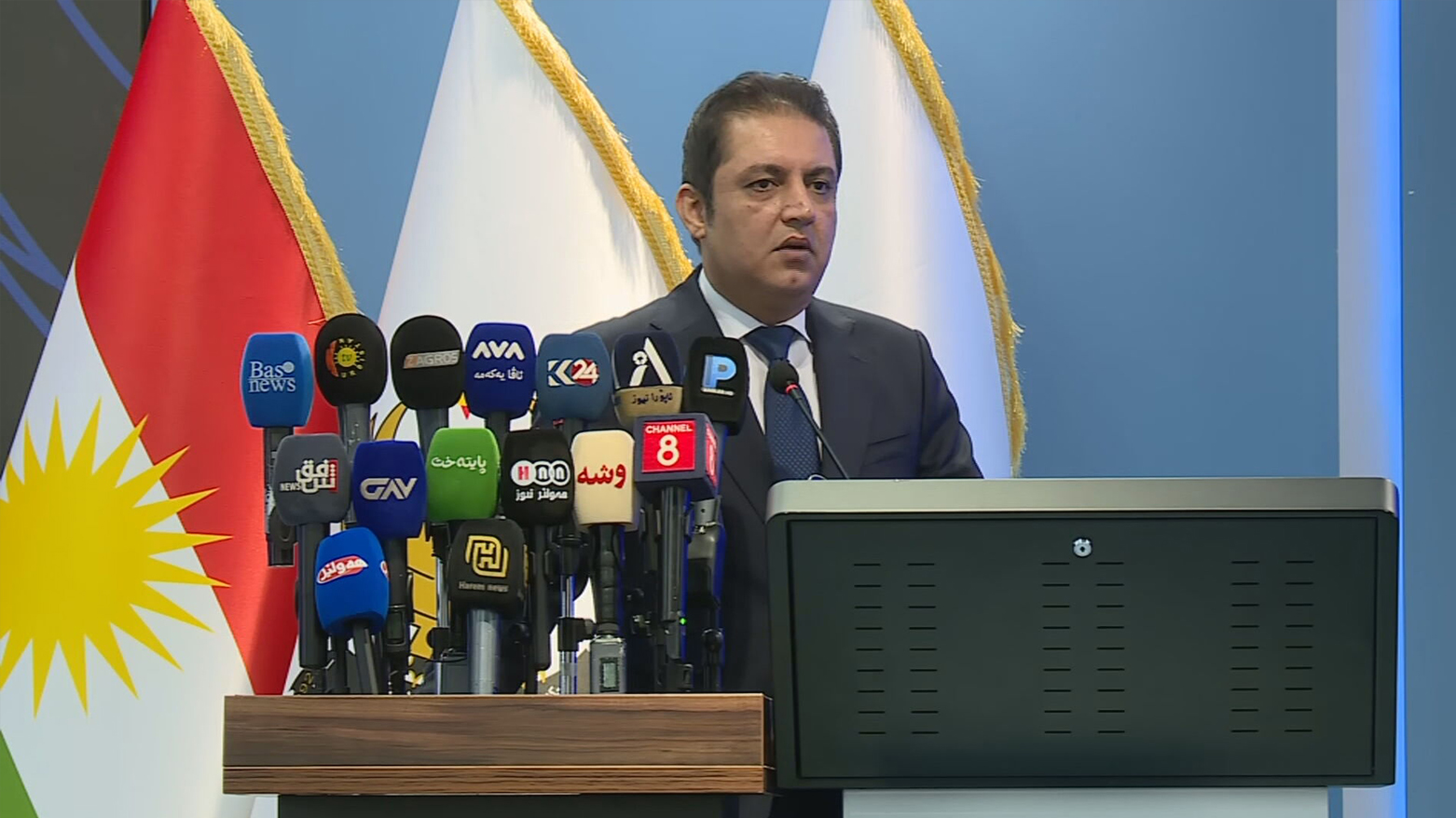
The announcement was made by Minister of Education Alan Hama Saeed during a press conference in Erbil on Tuesday. The new phase, implemented in coordination with the Kurdistan Foundation, covers grades seven, eight, and nine, effectively bringing the entirety of the region’s basic education cycle into the digital age.
This development marks a pivotal step in the KRG’s broader strategy to modernize its educational infrastructure and ensure equitable access to learning materials across the Kurdistan Region.
A Milestone in Digital Transformation
Speaking to reporters, Minister Hama Saeed outlined the scope of the new initiative, which builds upon years of incremental progress in digitizing the region’s curriculum.
The "My School" platform serves as a centralized digital repository and learning management system, designed to provide students with high-quality educational content, video lessons, and supplementary resources accessible through modern technology.
"This foundation has undertaken the duty of supporting and financially sponsoring the project for the third cycle of study, which covers grades seventh, eighth, and ninth basic," Minister Hama Saeed said, referring to the partnership with the Kurdistan Foundation. "With this, we are taking a major step toward the complete digitization of basic education."
The inclusion of these three grades is particularly significant within the KRG’s educational structure. In the Kurdistan Region, the "Basic Education" system comprises grades one through nine and is compulsory for all students.
By finalizing the digital resources for the seventh, eighth, and ninth grades—often referred to as the "third cycle"—the Ministry has effectively closed the digital gap for the compulsory schooling years, ensuring that students transitioning from primary to secondary education have continuous access to digital support.
Strategic Partnerships and Funding
The successful rollout of the third phase underscores the growing importance of public-private partnerships in the Kurdistan Region’s development strategy.
While earlier phases of the project saw heavy involvement from international organizations, the current expansion is being driven by local institutional support.
Minister Hama Saeed highlighted the critical role of the Kurdistan Foundation in bringing this phase to fruition. The foundation, a non-profit organization focused on youth empowerment, education, and capacity building, assumed the financial responsibility for this specific expansion.
"This project comes as part of the Ministry of Education's plan to provide modern learning resources and easy access for students to their lessons through technology," the Ministry stated.
The collaboration with the Kurdistan Foundation represents a shift toward sustainable, locally-led solutions for public sector challenges.
Established with a vision to foster youth potential and educational excellence, the Foundation’s sponsorship of the "My School" platform aligns with its broader mission to equip the next generation of Kurdish students with the tools necessary to compete in a technology-driven world.
Building on Previous Success
During the press conference, Minister Hama Saeed provided a retrospective on the platform's development, noting that the groundwork for today’s launch was laid throughout the previous year. He acknowledged the contributions of international partners in the earlier stages of the initiative.
"In August of last year, in cooperation with UNICEF, we completed the first, second, and third phases of the work, and the process continued for other phases," the Minister explained, referring to the technical development and content creation that preceded the public rollout.
The Minister also addressed the government’s adherence to its previous commitments regarding educational modernization. "Last year, we promised to make the entire basic education stage available on this platform," Hama Saeed said. "Fortunately, the lessons for the fourth and fifth grades of basic education are now complete."
The completion of materials for grades four and five, followed by the current launch for grades seven through nine, creates a comprehensive digital ecosystem.
Students can now access a standardized curriculum online, a feature that is expected to be particularly beneficial for those in remote areas or students requiring additional review outside the classroom.
The "My School" Platform and the Ninth Cabinet’s Vision
The "My School" initiative is a flagship component of the KRG’s digital transformation agenda under the Ninth Cabinet.
Since its inception, the Cabinet has prioritized the digitization of government services—known as the "E-Government" strategy—to improve transparency, efficiency, and public service delivery.
In the education sector, this has manifested as "E-Parwarda" (E-Education), a broad umbrella of initiatives aimed at integrating technology into the classroom and administrative processes.
The "My School" platform is the student-facing pillar of this strategy, complementing other systems that handle teacher management, student data, and examination grading.
By digitizing the curriculum for the full nine years of basic education, the Ministry of Education aims to standardize the quality of instruction across the region.
The platform ensures that a student in a rural village has access to the same high-quality explanations and lesson structures as a student in downtown Erbil or Sulaimani. This democratization of educational resources is seen as a key mechanism for reducing disparities in educational outcomes.
Looking Ahead
As the "My School" platform becomes fully operational for basic education, Ministry officials have indicated that the focus may soon shift to the "Preparatory" stage, covering grades 10, 11, and 12.
These final three years of high school are critical for university admissions, and digital support at this level remains a high priority for students and parents alike.
For now, the launch of the third phase represents a promise kept by the Ministry.
With the financial backing of the Kurdistan Foundation and the technical groundwork laid in coordination with UNICEF, the KRG has successfully erected a digital infrastructure capable of supporting the majority of its student population.
"We are taking a major step toward the complete digitization of basic education," Minister Hama Saeed concluded, signaling that while the immediate goal has been met, the evolution of digital learning in Kurdistan is far from over.
The platform is accessible to students immediately, with login credentials managed through their respective schools.
The Ministry has urged parents and guardians to encourage their children to utilize the platform as a primary resource for study and revision as the academic year progresses.