Marking International Mother Language Day, Abdi Urges Recognition of Kurdish Education in Western Kurdistan
SDF Commander Urges Families to Enroll Children in Kurdish Schools as Talks Continue with Damascus
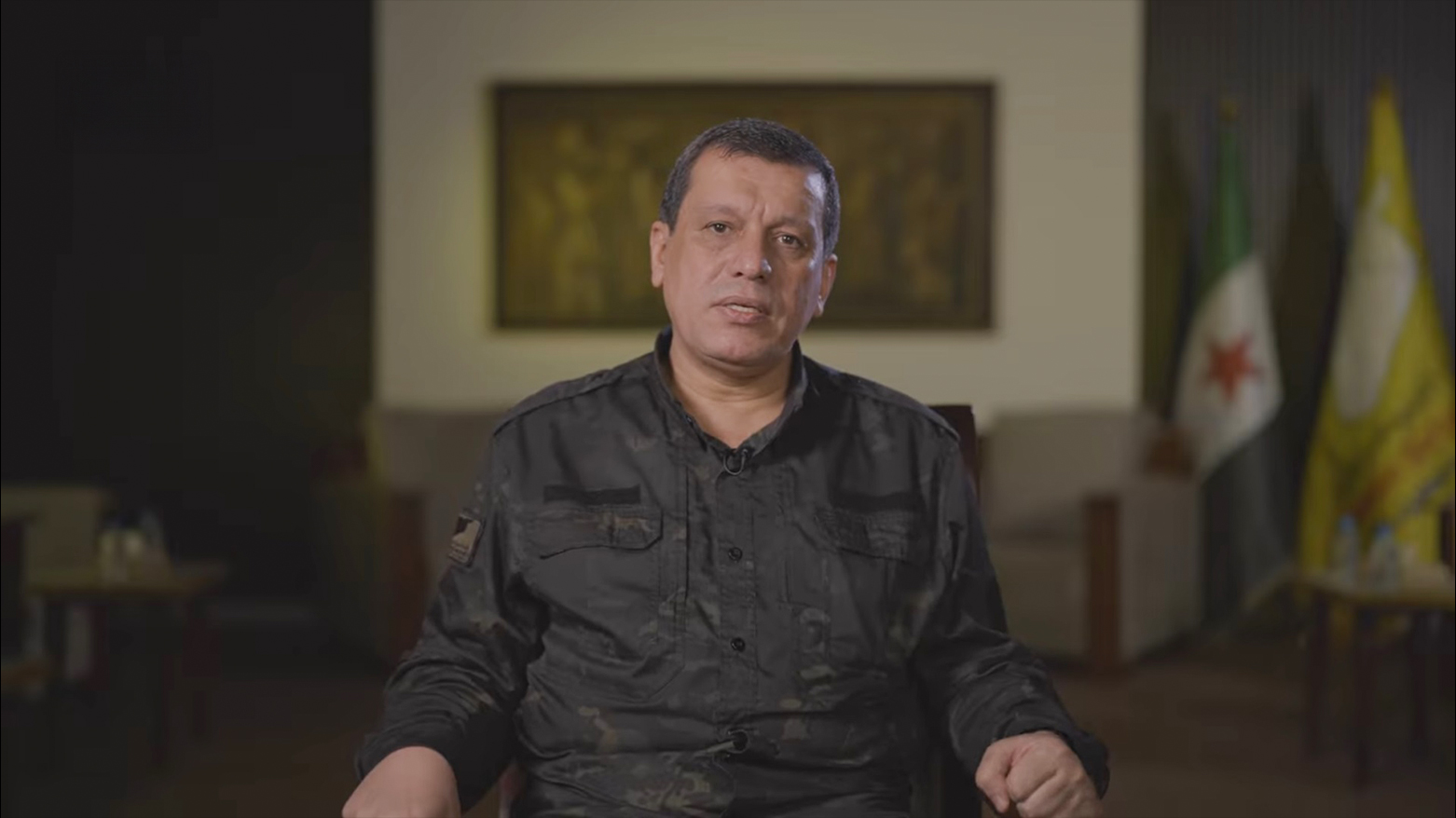
ERBIL (Kurdistan24) — Mazloum Abdi, General Commander of the Syrian Democratic Forces (SDF), announced on Saturday that the Kurdish language in Western Kurdistan in Syria has passed a “dangerous phase” and has now become a language of education, while confirming that dialogue with the Syrian government is ongoing to formalize Kurdish-language education in the region.
In a message marking International Mother Language Day, annually celebrated on Feb. 21, Abdi extended congratulations to all people and particularly to Kurdish language teachers.
He stated that the revolution in the West of Kurdistan created a “golden opportunity” for the Kurdish people to reclaim ownership of their mother tongue and rescue it from the risk of extinction.
Abdi recalled that during the rule of the Arab Socialist Ba'ath Party, the Kurdish language was subjected to policies of Arabization and prohibition.
He noted that individuals were previously detained for learning or teaching their native language. However, he said that following 14 years of struggle and sacrifice, thousands of students are now studying in Kurdish and have progressed to the university level.
The SDF commander also highlighted the issuance of Decree No. 13 by the current Syrian presidency, describing it as a historic achievement and an important step toward recognizing Kurdish as a national language within Syria’s constitutional framework.
According to Abdi, in recent weeks, discussions have taken place with Syria’s Ministry of Education aimed at translating the principles of Decree No. 13 into practical measures. The objective, he said, is to take serious steps to ensure that Kurdish becomes the official language of education in predominantly Kurdish areas and that this status is formally institutionalized.
Abdi called on families to enroll their children in Kurdish-language schools and to attach greater importance to mother tongue education. He also urged linguists and academics to work toward strengthening and standardizing the Kurdish language and to build robust educational institutions capable of advancing to a more developed stage.
The expansion of Kurdish-language education in northeastern Syria has been one of the defining features of the Autonomous Administration established after the outbreak of the Syrian conflict in 2011.
While the SDF—backed by the United States in the fight against ISIS—consolidated control over large swathes of territory in the northeast, it simultaneously introduced new educational curricula in Kurdish, Arabic, and Syriac, reflecting the region’s multi-ethnic composition.
However, the status of Kurdish-language education has remained politically sensitive, particularly in the context of negotiations between the Autonomous Administration and Damascus.
For decades under the rule of the late Syrian president Hafez al-Assad and later his successor Bashar al-Assad, Kurdish cultural and linguistic rights were heavily restricted, and many Kurds were denied citizenship.
Recent dialogue between the SDF leadership and the Syrian government reflects broader efforts to redefine governance arrangements in the country’s northeast, including issues of administrative decentralization, security coordination, and cultural recognition.
The formalization of Kurdish as a language of education would mark a significant shift in Syria’s long-standing language policy and could serve as a cornerstone in any future political settlement concerning the status of Kurdish-majority areas.