Trump Unveils ‘Board of Peace’ at Davos as Ukraine Talks and Global Skepticism Persist
Several Middle Eastern and Muslim-majority states back the initiative, while allies question its scope and implications.
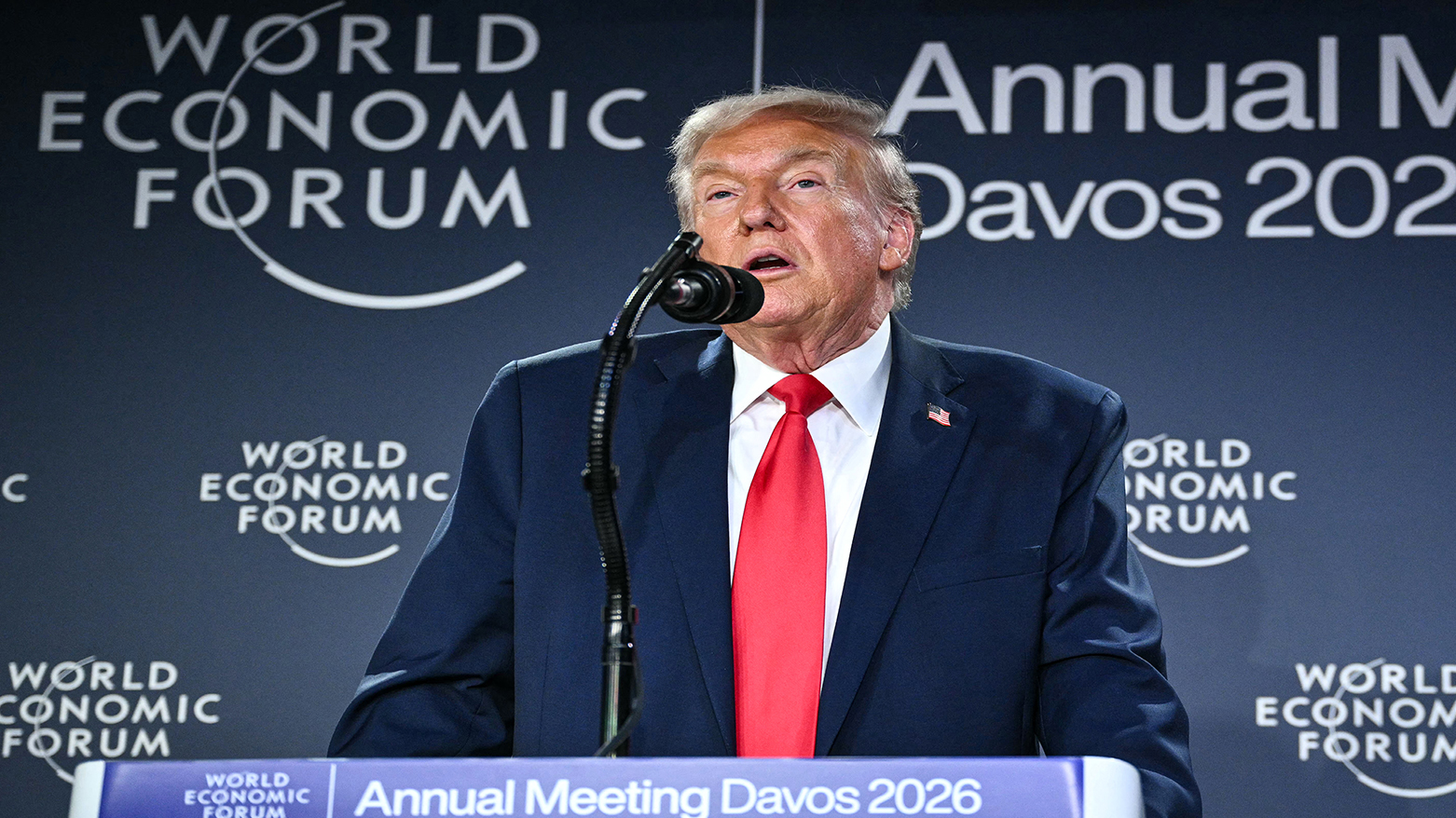
ERBIL (Kurdistan24) — US President Donald Trump is set to formally unveil his controversial new “Board of Peace” at the World Economic Forum in Davos on Thursday, positioning the initiative as a central pillar of his foreign policy as he also prepares to meet Ukrainian President Volodymyr Zelensky amid ongoing efforts to end the war in Ukraine.
On his second day at the Swiss resort, Trump will preside over a signing ceremony for the board’s charter, promoting what he describes as a new global mechanism for resolving international conflicts.
The launch comes one day after the US president abruptly reversed course on threats to impose tariffs on Europe and to use military force to seize Greenland from Denmark, moves that had unsettled allies and dominated discussions among global leaders in Davos.
Trump announced on Wednesday that he would scrap the proposed tariffs and rule out military action against Greenland, partially defusing a crisis that had overshadowed the forum.
He said the decision followed talks with NATO Secretary General Mark Rutte, describing the outcome as a “framework of a future deal,” although Rutte cautioned that “there is still a lot of work to be done” on the Greenland issue.
The “Board of Peace,” initially conceived as a body to oversee the reconstruction of Gaza following the war between Hamas and Israel, has since expanded in scope. Its charter does not limit its mandate to Gaza, fueling concerns among some governments and analysts that Trump intends for it to rival the United Nations. Permanent membership reportedly carries a price tag of $1 billion.
“I think it’s the greatest board ever formed,” Trump said on Wednesday as he met Egyptian President Abdel Fattah al-Sisi, one of the leaders who has agreed to join.
Trump has also invited figures such as Russian President Vladimir Putin, Israeli Prime Minister Benjamin Netanyahu, and Hungarian Prime Minister Viktor Orban to participate.
According to a senior Trump administration official, around 35 world leaders have committed to the board so far, out of roughly 50 invitations issued. Trump claimed on Wednesday that Putin had agreed to join, although the Kremlin has said it is still studying the proposal.
Key US allies, including France and Britain, have expressed skepticism about the initiative. However, the board has drawn significant support from the Middle East and parts of the Muslim world.
In a joint statement dated January 21, 2026, the foreign ministers of Saudi Arabia, Türkiye, Egypt, Jordan, Indonesia, Pakistan, Qatar, and the United Arab Emirates welcomed Trump’s invitation and announced a shared decision to join the Board of Peace.
The ministers said their countries would complete the necessary legal and procedural steps to formalize their participation, noting that Egypt, Pakistan, and the UAE have already announced their intention to join.
The statement reaffirmed support for Trump-led peace efforts and endorsed the board’s role as a transitional administration under the Comprehensive Plan to End the Gaza Conflict, which is backed by United Nations Security Council Resolution 2803.
The plan aims to consolidate a permanent ceasefire, support Gaza’s reconstruction, and advance a just and lasting peace based on Palestinian self-determination and statehood under international law.
The launch of the board also reflects Trump’s long-stated frustration at failing to secure the Nobel Peace Prize, despite his disputed claims of having ended eight conflicts.
Alongside the Davos ceremony, Trump is expected to hold talks with Zelensky as negotiations over a ceasefire in Ukraine remain stalled nearly four years into Russia’s invasion. The inclusion of Putin on the Board of Peace has heightened concerns among US allies, particularly in Kyiv.
Trump said on Wednesday that Russia and Ukraine would be “stupid” not to reach a peace deal, repeating his assertion that he could have resolved the conflict within a day of taking office. “I believe they’re at a point now where they can come together and get a deal done,” he said, adding that blame for the lack of progress lay with both sides.
While Trump has repeatedly argued that NATO and Europe should take greater responsibility for supporting Ukraine, his confidence in a personal rapport with Putin has so far failed to produce a breakthrough.
His special envoy, businessman Steve Witkoff, is expected to travel to Moscow from Davos with Trump’s son-in-law, Jared Kushner, to hold talks with the Russian president on Thursday.
Zelensky has meanwhile warned that Trump’s recent focus on Greenland risked diverting attention from "Russia’s invasion of Ukraine". Trump, however, insists that the mineral-rich Arctic island is strategically vital for US and NATO security in the face of perceived threats from Russia and China, even as he seeks to reframe his agenda around diplomacy and peacemaking on the world stage.