Five Children Die in Besieged Kurdish City as Extreme Cold and Aid Blockade Intensify
The Kurdish Red Crescent reported that five children died in Kobani due to a military siege and extreme cold. Officials are calling for a humanitarian corridor to deliver urgent medical and fuel aid.
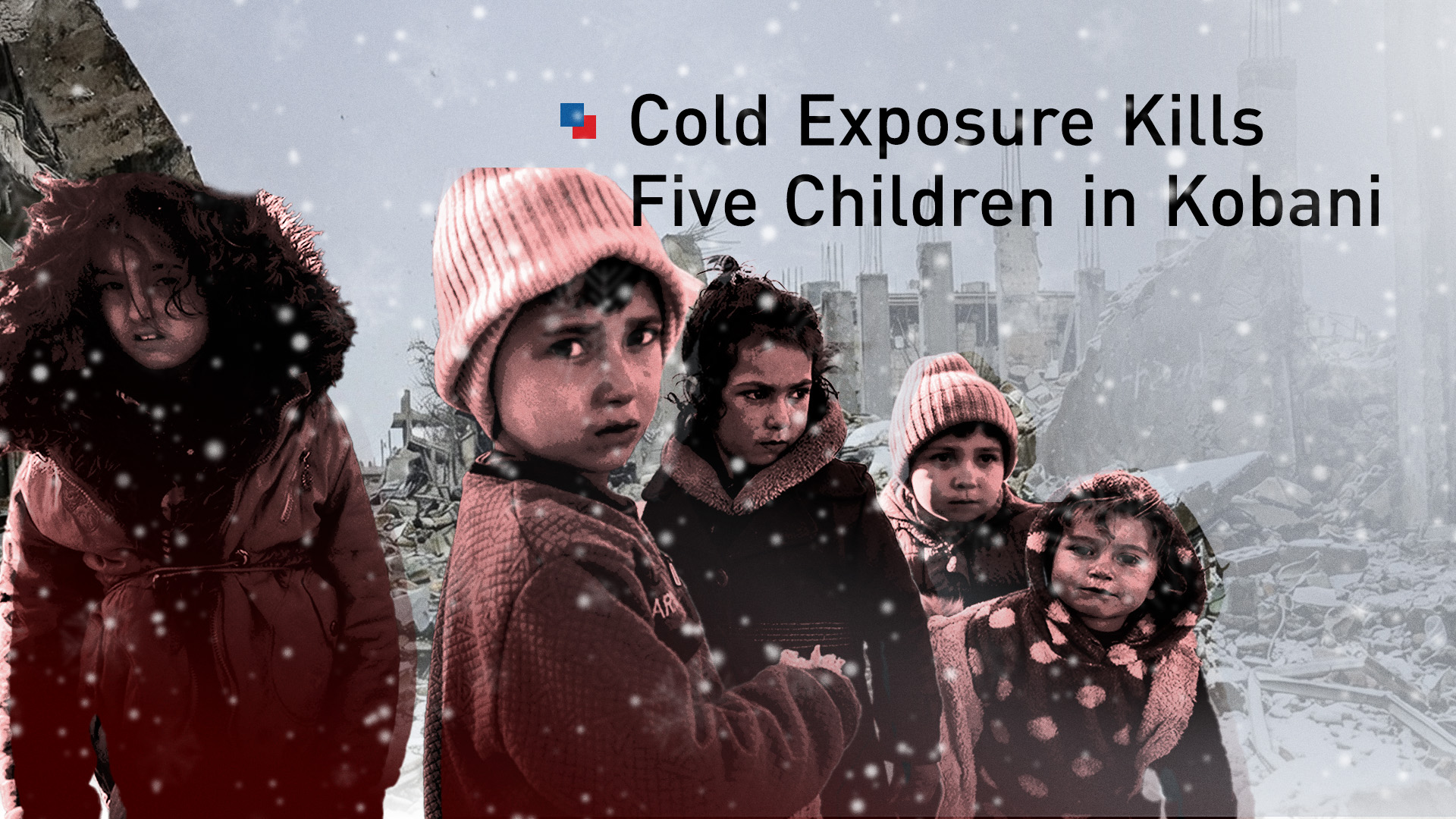
ERBIL (Kurdistan24) - The Kurdish Red Crescent reported on Saturday that five children, including an infant, have died in the Kurdish city of Kobani as a result of a military siege and a severe winter storm that has paralyzed the region. The humanitarian organization stated that the fatalities were a direct consequence of a significant drop in ambient temperatures, a total lack of heating fuel, and a critical shortage of essential medical supplies within the encircled territory.
In a communique issued on Saturday, Jan. 24, 2026, the Kurdish Red Crescent characterized the deaths as a symptom of the broader humanitarian crisis gripping the city and its surrounding countryside. The organization emphasized that the continuation of the blockade by military forces has created a lethal environment for the city’s most vulnerable inhabitants.
According to the statement, the lack of energy resources has left families unable to heat their homes during a period of record-breaking weather, while the scarcity of medication has rendered local health providers unable to treat exposure-related illnesses.
The organization issued an urgent appeal to the international community and global human rights bodies, demanding immediate intervention to facilitate the delivery of relief materials. The statement warned that unless the siege is broken and humanitarian access is granted, the risk of further loss of life remains imminent, particularly among children, the elderly, and the infirm.
The Kurdish Red Crescent noted that its relief teams and transport vehicles are currently in a state of full readiness to mobilize aid, but they remain stationary pending the establishment of a secured passage into the city.
Kobani and its environs have been subjected to an intensive siege by Syrian government forces and affiliated paramilitary groups for several days. This military encirclement followed the withdrawal of the Syrian Democratic Forces (SDF) from several surrounding areas and the reported breakdown of previous negotiations between regional actors.
The resulting blockade has effectively cut off all essential public services. Local sources indicate that the city is currently operating without water, electricity, or internet services, while landlines and mobile communication networks have also been severed, hindering the ability of relief workers to coordinate emergency responses.
Independent monitors, including the Syrian Observatory for Human Rights, have corroborated the severity of the situation, warning of a "major humanitarian catastrophe" currently unfolding in the district. The Observatory reported that the city's inhabitants are facing acute shortages of basic food items, specialized medicine, and infant formula.
The logistical challenges are compounded by a wave of extreme cold and what meteorologists have described as "unprecedented" snowfall. Reports indicate that the region has not experienced a winter storm of this magnitude in at least 50 years, making the lack of heating fuel a primary driver of mortality.
The humanitarian burden within Kobani has been further strained by the arrival of a large number of displaced persons from neighboring villages. These individuals, fleeing the advance of government-affiliated forces, have sought refuge within the city center, often arriving with few possessions and minimal protection from the elements. This influx has increased the demand for already depleted food and medical reserves, according to monitoring groups.
While diplomatic efforts aimed at securing a permanent ceasefire and opening humanitarian corridors are reportedly ongoing, the security environment remains highly volatile. The Kurdish Red Crescent has called on all international powers to exert immediate pressure on the parties involved to open a secured humanitarian corridor without further delay.
Simultaneously, other charitable entities, such as the Barzani Charity Foundation, have initiated aid collection campaigns in neighboring regions. These organizations have stated they are currently waiting for a viable opportunity or a diplomatic breakthrough that would allow them to deliver their accumulated assistance to the people of Kobani.
For the time being, however, the city remains isolated, with its residents facing a winter disaster that has already proven fatal to its youngest citizens.
The situation in Kobani has drawn concern from the United Nations.
Farhan Haq, the Deputy Spokesperson for the UN Secretary-General, said the organization was alarmed by the deteriorating humanitarian conditions in the city. He stated that all access routes to Kobani were closed and that the situation was worsening by the day.
“There is no electricity, water [quality] is poor, and people cannot access basic services,” Haq said. While he noted that health centers in the city remain operational, he warned that medicine and medical supplies have become very scarce.
Haq said the United Nations is in discussions with officials in Aleppo in an effort to find a mechanism to deliver urgent humanitarian aid to Kobani. He added that while the UN has already delivered assistance to other areas in northeastern Syria, including Hasakah, Raqqa, and Deir ez-Zor, it has formally requested facilitation to allow aid deliveries to Kobani.
The deaths reported on Saturday come after several days of siege and clashes that have left the city increasingly isolated. According to reports cited by Kurdistan24, approximately 150,000 civilians are currently trapped inside Kobani under these conditions.
The suspension of water, electricity, fuel, food, and internet services has paralyzed daily life in the city, contributing to a wave of internal displacement. Families from surrounding villages and neighborhoods have moved toward the city center in search of relative safety, only to find limited shelter and no reliable access to heat or essential supplies.
Many of those displaced are reportedly sleeping outdoors in the cold or sheltering inside their vehicles, according to information provided by the Kurdish Red Crescent and cited in earlier reports. These conditions have significantly increased the risk to children, the elderly, and other vulnerable groups.
The humanitarian emergency in Kobani has unfolded despite broader regional aid efforts. In a separate report published earlier by Kurdistan24, the Barzani Charity Foundation announced that it had expanded its humanitarian mission in Rojava, delivering 102 trucks of aid and 300,000 liters of fuel to areas in northeastern Syria.
According to that report, the foundation transported more than 850 tons of food and non-food items and deployed over 160 staff members to assist with distribution. A specialized medical team operating under the foundation examined and treated hundreds of civilians in other parts of Rojava.
However, UN officials and aid organizations have stressed that Kobani remains inaccessible. Farhan Haq previously said that all primary and secondary routes into the city were closed, preventing humanitarian convoys from reaching the population trapped inside.
The Barzani Charity Foundation’s fuel distribution efforts have focused on areas such as Qamishlo, Amuda, Girkê Legê, and Tirbespi, where 40 liters of kerosene per family have been allocated to support heating needs during the cold season. No such distribution has been reported in Kobani due to the blockade.
Earlier Kurdistan24 reporting noted that the foundation’s aid campaign was launched following directives from President Masoud Barzani and under the supervision of Kurdistan Region Prime Minister Masrour Barzani, with support from the Kurdistan Regional Government. Officials emphasized that the effort was intended to continue throughout the winter.
Despite these initiatives, UN assessments have identified Kobani as the most critical gap in regional humanitarian access. Haq said that while some health facilities remain open, the lack of medicine and medical supplies has left residents vulnerable, particularly as cold-related illnesses increase.
The Kurdish Red Crescent team stationed in Kobani has issued urgent appeals to international organizations and the UN High Commissioner for Refugees, calling for immediate intervention. In its communications, the team said the city and surrounding villages had been subjected to a heavy siege for several days, with essential supplies blocked despite announcements of a regional ceasefire.
According to information cited by Kurdistan24, the combination of siege conditions and winter weather has turned the humanitarian situation lethal. The reported deaths of children from cold exposure underscore the severity of the crisis and the risks facing families without shelter, heating, or access to aid.
Residents sheltering in mosques and schools are doing so without adequate bedding, fuel, or insulation, Barzan reported. Those staying in cars or outdoors face even greater exposure as temperatures remain low and services remain suspended.
The UN has reiterated that it is seeking cooperation from relevant authorities to allow aid to reach Kobani. Haq said the organization has formally requested facilitation to extend its humanitarian operations to the city, similar to assistance already delivered elsewhere in the region.
As of Saturday, no aid convoys had entered Kobani, according to Kurdistan24’s correspondent. The continued closure of access routes remains the central obstacle to alleviating conditions inside the city.
The humanitarian crisis in Kobani has thus continued to deepen even as regional and international actors attempt to scale up relief operations elsewhere in Rojava. Aid organizations and UN officials have warned that without immediate access, the risk of further loss of life remains high.
For residents trapped in the city, the deaths of the five children have become a stark indicator of the consequences of prolonged isolation during winter conditions. With basic services cut off and humanitarian access blocked, families remain exposed to the cold with limited means of protection.