President Barzani Marks 11th Anniversary of Kobani Liberation
President Barzani commemorated the 11th anniversary of the ISIS defeat in Kobani, calling it a "victory of humanity" and praising the unity between Peshmerga, Kurdish Fighters (Sharvan), and the International Coalition.
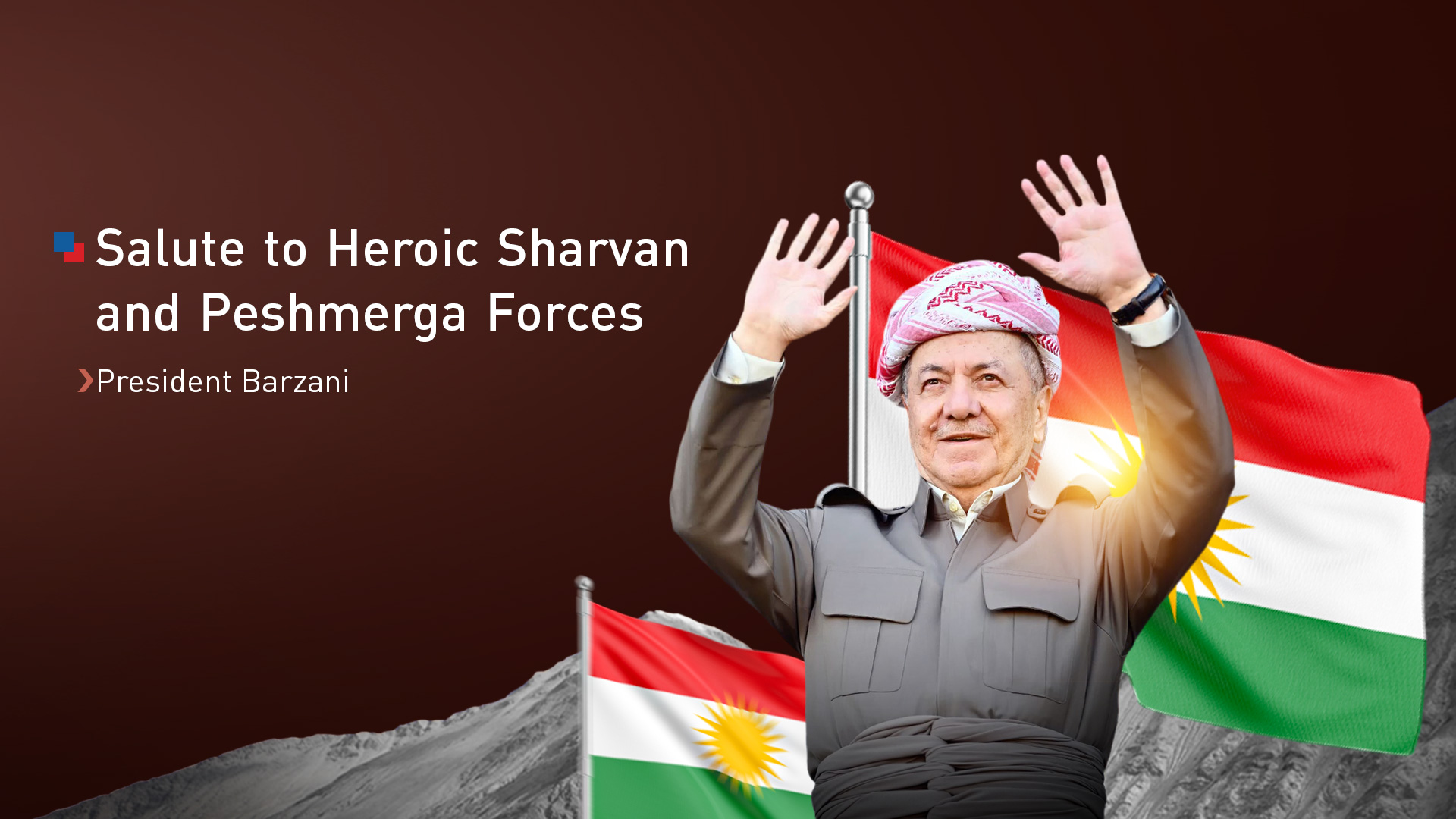
ERBIL (Kurdistan24) - President Masoud Barzani on Monday commemorated the 11th anniversary of the liberation of Kobani, characterizing the historic defeat of the Islamic State in the northern Syrian city as a universal triumph for human values over extremist ideologies. In a statement addressing the milestone, the President praised the coordinated efforts of Kurdish forces and the international coalition, which ended a protracted siege that had become a global focal point of the war against terrorism.
In a message published on the social media platform X on Jan. 26, 2026, President Barzani extended formal greetings to the Peshmerga forces and the local fighters who conducted the city's defense. The President stated that the victory was not limited to a single faction but represented a collective achievement for the Kurdish people and a broader defense of humanitarian principles.
"On the eleventh anniversary of the defeat of the terrorists in Kobani, we send our greetings to the heroic fighters and Peshmerga who, with the support of the Coalition and through a heroic defense, prevented Kobani from falling into the hands of ISIS terrorists and recorded a great victory in the history of the Kurdish people," the statement read. President Barzani further emphasized that the outcome of the battle served as "the victory of humanity over terror and darkness."
لە یازدەهەمین ساڵیادی تێكشكاندنی تیرۆریستان لە كۆبانێدا، سڵاو بۆ شەڕڤان و پێشمەرگە قارەمانەكان دەنێرین كە بە پشتیوانیی هاوپەیمانان لە بەرگرییەكی قارەمانانەدا ڕێگەیان نەدا كۆبانێ بكەوێتە دەست تیرۆریستانی داعش و سەركەوتنێكی گەورەیان لە مێژووی گەلی كورد تۆمار كرد. ئەو سەركەوتنە…
— Masoud Barzani (@masoud_barzani) January 26, 2026
The Battle of Kobani is regarded by regional analysts and military historians as a pivotal turning point in the campaign against the Islamic State, also known as ISIS or Daesh.
The conflict began on Sept. 13, 2014, when the extremist organization launched a massive offensive to seize the strategic border city. The ensuing 134-day defense of the city ended with its full liberation on Jan. 26, 2015, transforming the urban landscape into a symbol of Kurdish resilience and unified military action.
The initial stages of the defense were spearheaded by the People’s Protection Units (YPG) and the Women’s Protection Units (YPJ).
These groups maintained a fierce resistance against the advancing Islamic State militants, despite being equipped primarily with light weaponry. However, the operational dynamic of the conflict underwent a fundamental shift with the intervention of the Kurdistan Region’s military forces.
Under the direction of President Barzani and following a formal authorization by the Kurdistan Parliament, a contingent of Peshmerga forces was deployed to support the defenders of Kobani. This force, equipped with heavy weaponry, reached the city on Oct. 30, 2014.
The logistics of the deployment were notable for the transit of the Peshmerga convoy through Turkish territory, an arrangement that allowed the reinforcement of the city at a critical juncture. The arrival of the Peshmerga is credited with changing the balance of the war, providing the heavy support necessary to repel the Islamic State’s conventional advances.
The report highlights that the military victory was further enabled by the intervention of the U.S.-led international coalition. Systematic airstrikes targeted Islamic State positions, weakening their tactical capabilities and facilitating the ground advance of the combined Kurdish forces.
The coordination between ground units and the coalition became a definitive feature of the campaign, ultimately resulting in the expulsion of the terrorist group from the city limits.
For the Islamic State, the control of Kobani was viewed as a strategic necessity intended to link its disparate territories across northern Syria. The organization's failure to capture the city marked its first major territorial defeat following its 2014 declaration of a self-styled "Caliphate."
Conversely, for the Kurdish forces and their allies, the victory provided a significant boost to morale and established a blueprint for future cooperation.
The success in Kobani served as the functional foundation for the subsequent alliance between Kurdish forces and the International Coalition. This partnership eventually enabled the liberation of other major population centers in Syria, including Raqqa and Manbij.
Beyond its military implications, the battle is cited as a preeminent example of Kurdish unity in the face of an existential threat, demonstrating that the willpower of local populations could prevail over superior numbers of extremist militants.
The 11th anniversary observations on Monday reflect the enduring significance of the 2015 victory in the contemporary archives of the war against terror. As the region continues to handle the legacy of the conflict, the defense of Kobani remains a recognized milestone where, as President Barzani noted, a unified front succeeded in turning back what he described as the forces of darkness.
This article was updated on Monday, Jan. 26, 2026, at 02:03pm.