Drone Strike Near Kobani Kills Six Civilians as Ceasefire Violations Persist
A drone strike on a family home in Kharab Ashk killed six civilians on Monday. The attack occurs despite a 15-day ceasefire as Kobani faces a deepening humanitarian crisis and regular shelling.
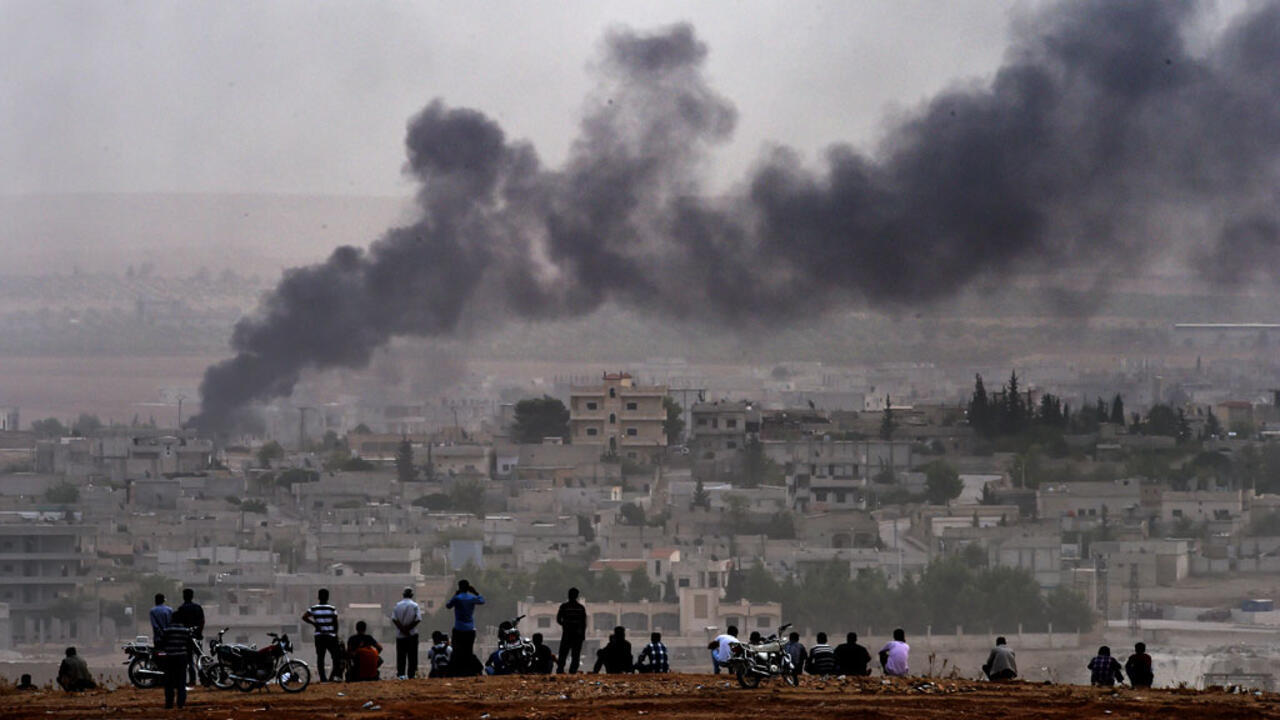
ERBIL (Kurdistan24) - A drone strike targeted a residential structure in a village on the outskirts of Kobani on Monday, resulting in the deaths of six civilians and the wounding of six others. The attack, which struck a private family home in the village of Kharab Ashk, occurred amid a sensitive period of escalating regional tensions and reported breaches of a recently brokered ceasefire agreement.
According to data provided by the Syrian Observatory for Human Rights, the victims of the strike included members of a single civilian family. Among the six individuals wounded in the blast, four were identified as children. Due to the severity of their injuries, the survivors were transported to various medical centers within the region for urgent treatment.
The strike represents a significant escalation in kinetic activity near the city, which has been grappling with both military pressure and a deteriorating humanitarian landscape.
The aerial assault took place despite the formal announcement of a 15-day ceasefire, established under the framework of a January 18 agreement between the Syrian government and the Syrian Democratic Forces (SDF).
While the truce was intended to stabilize the region and protect non-combatants, the Syrian Observatory for Human Rights reported that violations of the agreement have been recorded on a near-continuous basis throughout the Hasakah and Kobani regions.
The Observatory’s monitoring of the conflict zones has identified a pattern of military activity that appears to challenge the durability of the current truce. These reported violations include the systematic shelling of villages such as Kharab Ashk and Jalabiya with heavy weaponry.
Additionally, the monitor documented military raids on the village of Tel Ahmar, located on the outskirts of Kobani.
The use of drones and various other weapons systems has not been limited to the immediate vicinity of Kobani; similar incidents have been reported across several villages in the Hasakah governorate, resulting in further casualties and extensive damage to civilian property.
The lethality of the recent instability was further illustrated by a separate incident involving the village of Qasimliya, situated near Kobani. According to the Syrian Observatory for Human Rights, artillery shelling directed at the village resulted in the death of one child and left three other children wounded.
These repeated strikes on inhabited areas have fostered an environment of profound fear and anxiety among the civilian population, as residents find themselves increasingly caught in the crossfire of the regional standoff.
Beyond the immediate threat of military strikes, the city of Kobani and its surrounding countryside are currently navigating an acute humanitarian crisis. Local infrastructure has been severely compromised by the ongoing sieges and frequent clashes. Residents have been subjected to a total cutoff of essential services, including electricity and drinking water.
Furthermore, internet and communication lines have been severed, isolating the population and complicating the efforts of humanitarian actors to assess the full extent of the needs on the ground.
The humanitarian emergency in Kobani is unfolding as various armed factions and the central government continue to struggle for control over the strategic northern regions.
The reported breakdown of negotiations and the withdrawal of the SDF from certain areas have left a vacuum that government-affiliated forces and other armed groups have moved to fill, often involving the use of siege tactics that prioritize military objectives over civilian safety.
As of Monday afternoon, the Syrian Observatory for Human Rights continues to track the fallout from the strike on Kharab Ashk.
The persistent nature of these violations, particularly the targeting of residential homes and the resultant casualties among children, underscores the fragility of the diplomatic efforts aimed at maintaining the ceasefire. With essential services remaining suspended and military activity continuing to fluctuate, the civilian population around Kobani remains in a state of high vulnerability.
This article was updated on Monday, Jan. 26, 2026, at 02:38pm.