DEM Party Calls for 'Immediate End' to Siege on Western Kurdistan
DEM Party spokesperson Ayşegül Doğan demanded an end to the siege on Western Kurdistan, calling for dialogue as drone strikes near Kobani killed six civilians, including children, on Monday.
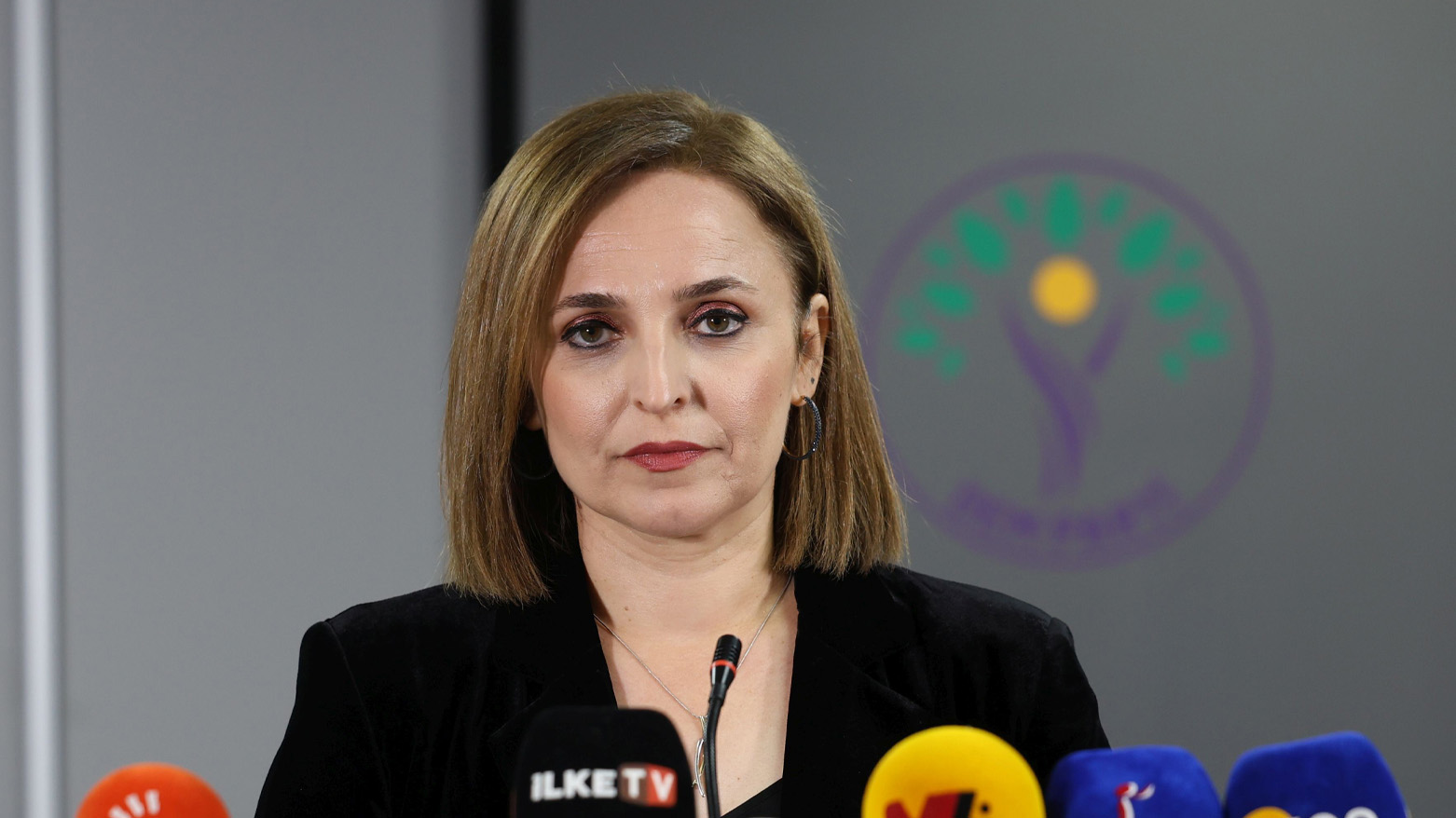
ERBIL (Kurdistan24) - Ayşegül Doğan, the spokesperson for the Peoples' Equality and Democracy Party (DEM Party), issued a formal demand on Monday for the prompt cessation of the military blockade of Western Kurdistan, characterizing a return to diplomatic dialogue as the sole viable path toward resolving the protracted Syrian conflict.
The call for an end to the siege arrives as regional monitoring groups reported a lethal drone strike on a civilian residence near Kobani, highlighting a series of persistent violations that have threatened to undermine a recently brokered 15-day ceasefire.
In a press conference conducted on Monday, Jan. 26, 2026, Doğan delivered a series of high-level communications regarding the deteriorating humanitarian and security landscape in northern Syria. The spokesperson emphasized that the lifting of the siege on Western Kurdistan, also known as Rojava, is a prerequisite for regional stability.
According to Doğan, the primary objective of the DEM Party remains the establishment of a comprehensive peace throughout the Middle East, a goal she asserted is currently being jeopardized by the maintenance of military pressure on Kurdish-majority territories.
“The solution to the Syrian issue can only be achieved through dialogue,” Doğan stated during her address. Her remarks suggested that the ongoing tensions between Kurdish regional authorities and the central government in Damascus require a shift away from kinetic operations in favor of structured political negotiations.
The spokesperson’s appeal for de-escalation aligns with a broader diplomatic effort to preserve the humanitarian integrity of the region, which has been severely compromised by weeks of encircling military maneuvers and essential service cutoffs.
Lethal Strike in Kharab Ashk
The urgency of the DEM Party’s diplomatic appeal was underscored by reports from the ground detailing a fatal escalation of violence on Monday morning.
According to data provided by the Syrian Observatory for Human Rights (SOHR), a drone strike targeted a private residential structure in the village of Kharab Ashk, located on the outskirts of Kobani. The attack resulted in the deaths of six civilians and left six others wounded.
The Syrian Observatory for Human Rights reported that the strike specifically hit a family home, impacting non-combatants during a period of supposed cessation of hostilities. Among the six individuals wounded in the blast, four were confirmed to be children.
Due to the critical nature of their injuries, the survivors were transported to regional medical centers for emergency treatment. This strike is being characterized by monitors as a significant escalation in the use of unmanned aerial systems against civilian infrastructure.
The aerial assault took place within the window of a 15-day ceasefire agreement that had been formally established on Jan. 18. This truce, negotiated between the Syrian government and the Syrian Democratic Forces (SDF), was intended to provide a period of calm to facilitate political transition and humanitarian relief.
However, the Syrian Observatory for Human Rights has consistently recorded breaches of this agreement, particularly in the Kobani and Hasakah regions, suggesting that the formal cessation of hostilities has not fully translated into safety for residents on the front lines.
Systematic Ceasefire Violations
The strike on Kharab Ashk appears to be part of a broader pattern of military activity that challenges the durability of current diplomatic understandings.
The Syrian Observatory for Human Rights documented several other specific violations occurring concurrently with the drone program. These include the heavy shelling of the villages of Kharab Ashk and Jalabiya with conventional weaponry, which has reportedly targeted residential neighborhoods.
Further documentation from the monitor indicated that armed factions have conducted raids on the village of Tel Ahmar, also situated on the outskirts of Kobani. Similar military operations involving various weapons systems and drones have been reported in multiple villages across the Hasakah governorate.
These incidents have resulted in a cumulative toll of civilian casualties and extensive damage to private property, fostering an environment of what local residents describe as profound fear and anxiety.
The human cost of the recent instability was further evidenced by a separate incident in the village of Qasimliya.
According to reports from the Syrian Observatory for Human Rights, artillery shelling directed at the village resulted in the death of one child and the wounding of three other children. The recurrence of such strikes on inhabited areas has placed a severe psychological burden on a population already contending with a historic winter storm and an aid blockade.
Humanitarian Collapse in Kobani
Beyond the immediate threat of bombardment, the city of Kobani and its surrounding countryside remain trapped in an acute humanitarian crisis. Local sources have confirmed that essential services have been systematically cut off due to the ongoing military sieges.
Residents currently lack access to electricity and drinking water, while internet and communication networks have been severed, effectively isolating approximately 150,000 people from international oversight.
This infrastructure collapse is occurring as the region faces record-breaking winter weather, with snowfall levels reported to be the highest in 50 years. The combination of extreme cold and the total lack of heating fuel has created a lethal environment for the city’s most vulnerable inhabitants.
The gathering of large numbers of displaced persons from surrounding villages into the city center of Kobani has further exhausted the city’s dwindling food and medical reserves.
Human rights organizations, including the Syrian Observatory for Human Rights, have warned that the region is on the brink of a "major humanitarian catastrophe."
The reported breakdown of negotiations and the withdrawal of the SDF from certain strategic positions have created a vacuum that government-affiliated forces and other armed groups have attempted to fill through the use of siege tactics.
These methods, which prioritize the acquisition of territory and military leverage over civilian welfare, have left the population of Kobani in a state of high vulnerability.
As of Monday afternoon, the DEM Party continues to advocate for a diplomatic resolution, while the Syrian Observatory for Human Rights continues to track the fallout from the latest strikes.
The persistent nature of the violations, particularly those involving casualties among children and the targeting of private homes, serves as a stark reminder of the fragility of the Jan. 18 agreement. For the thousands of civilians caught in the crossfire, the demand for a prompt lifting of the siege remains the most critical factor in their immediate survival.
This article was updated on Monday, Jan. 26, 2026, at 02:51pm.