Venezuela’s Interim Leader Pushes Back Against US Pressure as Prisoner Releases Begin
"Enough orders from Washington on politicians in Venezuela. Let Venezuelan politics resolve our differences and internal conflicts. Enough of foreign powers," said Venezuela’s interim president, Delcy Rodriguez.
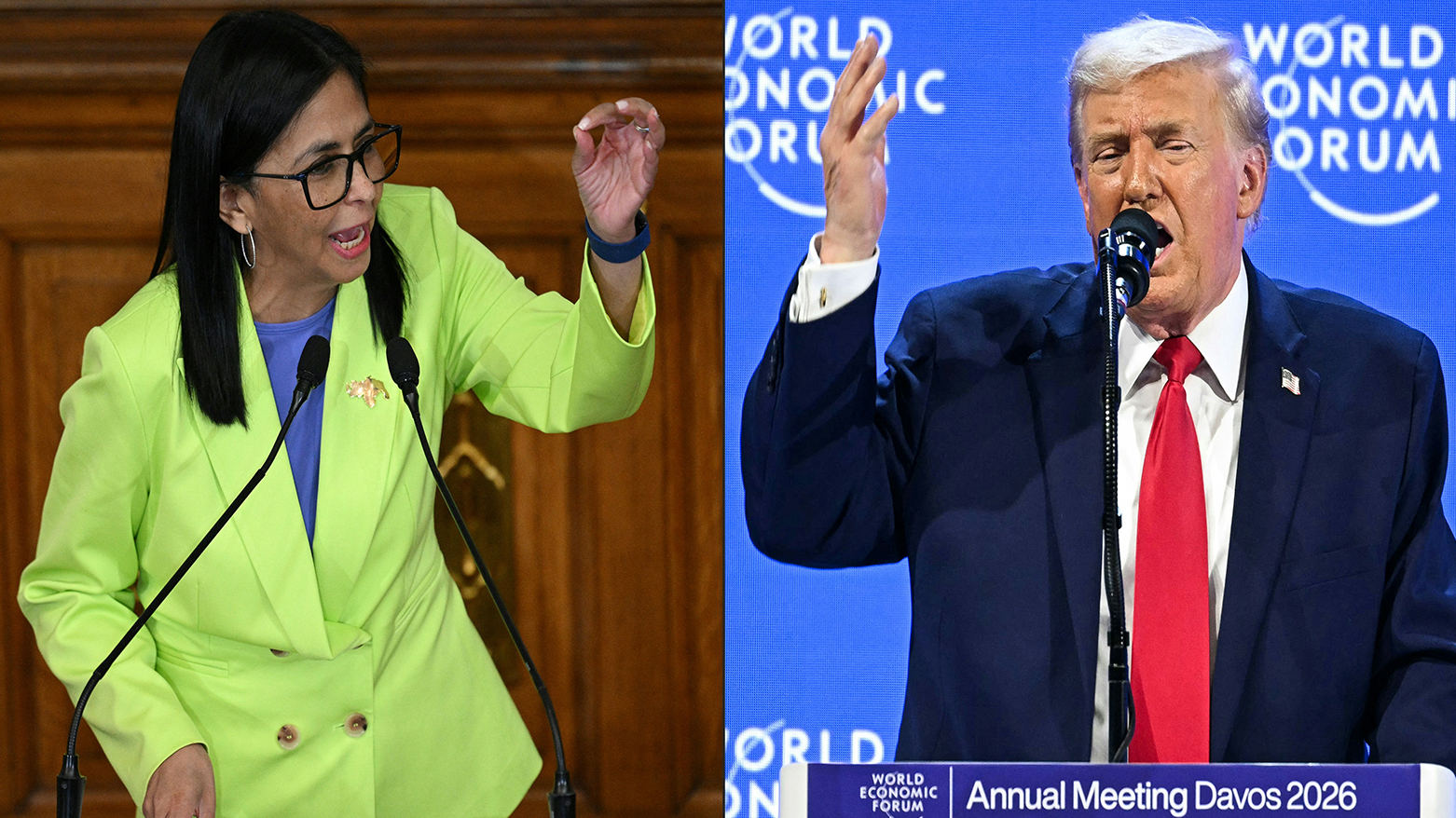
ERBIL (Kurdistan24) — Venezuela’s interim president, Delcy Rodriguez, on Sunday openly rebuked what she described as mounting pressure from the United States, declaring that Caracas would no longer accept “orders from Washington,” even as her government oversaw the release of dozens of political prisoners and advanced far-reaching reforms to the oil sector following the ouster of Nicolas Maduro.
Speaking to oil workers in the eastern state of Anzoategui, Rodriguez struck a defiant tone, urging Venezuelans to resolve their political differences without foreign interference. “Enough orders from Washington on politicians in Venezuela. Let Venezuelan politics resolve our differences and internal conflicts. Enough of foreign powers,” she said in a public address.
Her remarks came as the non-governmental organization Foro Penal reported a new wave of releases of political detainees. The group said it had verified the freeing of 104 political prisoners nationwide on Sunday, revising an earlier count of 80 as verification efforts continued.
Foro Penal director Alfredo Romero said identities were still being confirmed, warning the figure could rise.
Attorney Gonzalo Himiob said the first releases occurred in the early hours of the day. “This figure is not yet definitive and could increase as we proceed with verifications,” he wrote on social media.
Rodriguez assumed power earlier this month after US special forces captured Maduro, ending years of leftist rule. Her interim government has pledged to free a “large number” of opposition figures jailed under the former administration, though human rights groups say progress has been slow.
Authorities in Caracas claim 626 detainees have been released since December, a figure Foro Penal disputes, saying it has documented roughly half that number.
Families of detainees have maintained vigils outside prisons across the country, pressing for faster action, while opposition leaders and rights advocates continue to criticize what they describe as a cautious and opaque process.
Despite her hard line against Washington, Rodriguez has also called for reconciliation at home. On Saturday, she appealed for dialogue with the political opposition to secure stability, stressing the need for unity in the wake of Maduro’s removal.
“There can be no political or partisan differences when it comes to peace in Venezuela,” she said on state television from the coastal state of La Guaira. “Despite our differences, we must speak to each other with respect… and reach agreements.”
At the same time, the interim administration is moving to overhaul Venezuela’s oil industry, long the backbone of the economy. Proposed reforms to the Hydrocarbons Law, which passed a first reading in parliament last week, would open the sector fully to private investment and roll back decades of tight state control introduced under former president Hugo Chavez.
The head of state oil company PDVSA, Hector Obregon, said the changes were aimed at boosting crude output by at least 18 percent this year and providing legal certainty for investors.
“We had a law that was not up to date with what we needed as an industry,” Obregon said during a visit to the Puerto La Cruz refinery.
Venezuela currently produces about 1.2 million barrels per day, according to official figures, down sharply from more than 3 million bpd in the early 2000s after years of mismanagement and corruption drove output to a historic low in 2020. The country holds roughly one-fifth of the world’s proven oil reserves.
Analysts say the reforms were drafted under US pressure following the January 3 military operation that removed Maduro. US President Donald Trump has made clear his interest in Venezuelan oil, with his administration stating it has taken control of the country’s crude sales.
Rodriguez confirmed this week that Venezuela had received an initial $300 million transfer from oil sold by the United States.
National Assembly President Jorge Rodriguez said the legislation’s central aim was to revive production while redefining the state’s role. “The primary objective is to adapt to a situation that allows us to extract the oil from the land that belongs to all Venezuelan women and men,” he said.
As Venezuela navigates a fragile political transition, Rodriguez’s government faces the dual challenge of easing international pressure while addressing domestic demands for justice, reconciliation, and economic recovery.