Trump Announces Naval Deployment Toward Iran
President Trump announced a "massive Armada" is heading to Iran, meanwhile, Saudi Arabia and Iran's neighbors warned they will not allow their soil to be used for attacks.
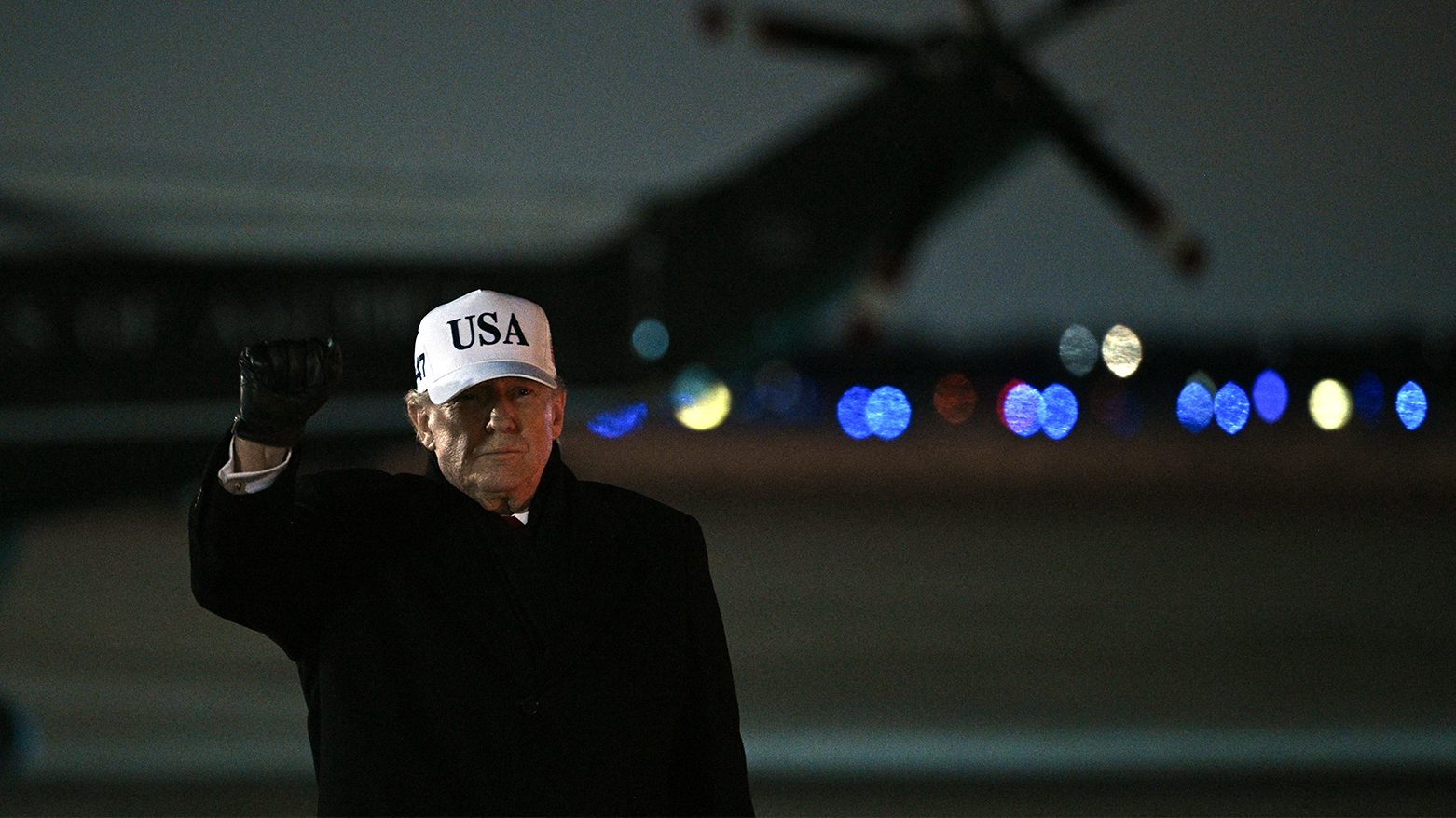
ERBIL (Kurdistan24) - President Donald J. Trump announced on Wednesday that a "massive Armada" of United States naval vessels is currently transiting toward Iran, signaling a significant escalation in military pressure aimed at forcing the Iranian government into a new nuclear negotiation.
Writing in a post on his official Truth Social account on Jan. 28, 2026, the President stated that the fleet is being led by the aircraft carrier USS Abraham Lincoln and described it as a larger force than the one recently deployed to Venezuela.
According to President Trump’s statement, the deployment is characterized by "great power, enthusiasm, and purpose," with the specific mission of compelling Tehran to "Come to the Table" to finalize a deal that would permanently prohibit the development of nuclear weapons.
The President asserted that the United States is "ready, willing, and able" to fulfill its objectives through the use of "speed and violence, if necessary." The announcement serves as a blunt ultimatum to the Iranian administration, with Mr. Trump noting that "time is running out" and that the "essence" of the situation requires immediate diplomatic concessions.
In his public communication, President Trump referenced "Operation Midnight Hammer" as a precedent for the potential scale of a future engagement. He characterized that previous operation as a "major destruction of Iran" and warned that any subsequent military action authorized by his administration would be "far worse."
The U.S. President’s post on Truth Social suggests that the current naval movement is intended to serve as the ultimate deterrent against continued Iranian non-compliance with international demands regarding its nuclear program and conventional military activities.
The announcement of the naval movement has immediately prompted defensive diplomatic and military signals from within the Middle East.
Agence France-Presse (AFP) reported on Wednesday that Saudi Crown Prince Mohammed bin Salman engaged in a telephone conversation with Iranian President Masoud Pezeshkian to clarify the Kingdom's position regarding the escalating tension.
According to a statement from the Saudi Foreign Ministry, the Crown Prince affirmed that Riyadh will not permit its territory or its national airspace to be utilized for military actions directed against the Islamic Republic.
During the call, Prince Mohammed reportedly emphasized the importance of respecting the sovereignty of Iran.
This development marks a notable stance by the Gulf monarchy, which has historically been a primary regional rival to Tehran but now appears determined to insulate its own soil from the consequences of a direct conflict between the United States and Iran.
The Saudi Foreign Ministry’s statement explicitly ruled out the use of the Kingdom’s infrastructure as a staging ground for any strike, potentially complicating the logistical planning for a unilateral American naval operation.
The reluctance of regional neighbors to facilitate an attack was mirrored by direct warnings from the Iranian military establishment.
On Tuesday, a commander of the Islamic Revolutionary Guard Corps (IRGC) stated that any neighboring state that allows its territory to be utilized as a launch point for an assault will be categorized as an adversary.
Mohammad Akbarzadeh, the political deputy of the IRGC naval forces, was quoted by the Fars news agency as stating that while neighboring countries are generally considered "friends," their status would change to "hostile" if their soil, sky, or waters were used against Iran.
According to the AFP report, these warnings from the IRGC followed the arrival of a United States carrier group in Middle Eastern waters earlier in the week. The IRGC’s stance indicates that Tehran intends to hold regional governments accountable for any American military movements conducted from nearby bases or transit corridors.
While the President Trump’s focus remains on the threat of military force, the U.S. Department of State is simultaneously advancing a multi-national diplomatic and economic pressure campaign.
According to a press statement issued by Principal Deputy Spokesperson Thomas "Tommy" Pigott on Jan. 27, 2026, the United States recently convened a symposium in Prague, the Czech Republic, with representatives from 40 other nations.
The objective of the gathering was to coordinate the robust implementation of six distinct United Nations Security Council resolutions (UNSCRs) that have been reimposed on the Iranian regime.
The resolutions—specifically 1696, 1737, 1747, 1803, 1835, and 1929—were formally restored on Sept. 27, 2025.
The State Department noted that this action was taken following Iran’s continued "significant non-performance" regarding its nuclear commitments.
The reimposed mandates require the Iranian government to suspend all activities related to uranium enrichment, heavy water, and nuclear reprocessing. Furthermore, the resolutions prohibit Iran from utilizing ballistic missile technology and ban both the import and export of conventional arms.
During the Prague symposium, participants discussed utilizing national measures to enforce travel bans and global asset freezes on listed individuals. The State Department also highlighted provisions that authorize the international community to seize prohibited cargo being transferred to or from Iran.
To maximize the impact of these sanctions, the United States has committed to providing sector-specific technical security assistance to countries that intend to enforce these renewed obligations.
The State Department emphasized that the urgent need for universal implementation of these measures is driven not only by the threat of nuclear proliferation but also by the "brutal crackdown on Iranian protestors" by the current regime.
This dual focus on security and human rights remains a central component of the administration's justification for the current level of "economic and military pressure" being applied to Tehran.
As the USS Abraham Lincoln and its accompanying fleet move toward their station, the diplomatic landscape remains deeply fractured. The President’s demand for a "fair and equitable deal" faces significant regional resistance to the use of force, even as Washington builds a 40-nation coalition to enforce the most stringent sanctions regime in decades.
For the administration, the arrival of the armada represents the final opportunity for the Iranian leadership to negotiate before the "next attack," which the President warned would exceed the destruction of previous military engagements.