Trump Threatens “Unseen Force” as Iran Vows Fierce Retaliation
Tensions Spike After U.S.–Israeli Strike Kills Iran’s Supreme Leader, Raising Risk of Regional Escalation
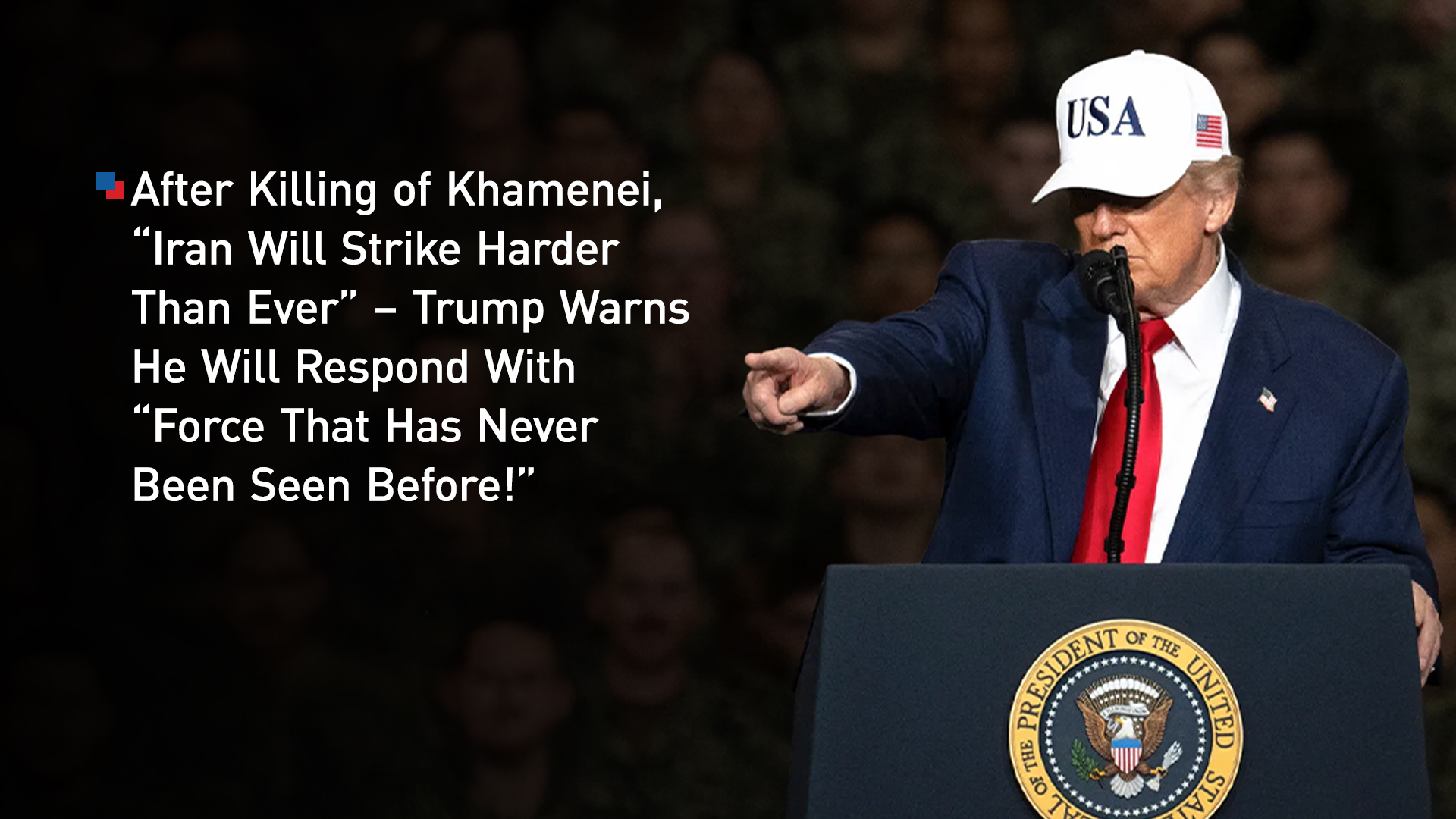
ERBIL (Kurdistan24) — Tensions between the United States and Iran escalated further on Sunday, as President Donald Trump issued a stark warning over Tehran’s planned retaliation for the killing of Supreme Leader Ali Khamenei, while Iran’s parliament speaker Mohammad Bagher Ghalibaf paid tribute to Khamenei and vowed justice against those responsible.
In a message on social media, Trump declared, “Iran just stated that they are going to hit very hard today, harder than they have ever hit before. THEY BETTER NOT DO THAT, HOWEVER, BECAUSE IF THEY DO, WE WILL HIT THEM WITH A FORCE THAT HAS NEVER BEEN SEEN BEFORE! Thank you for your attention to this matter!” The statement marked an unprecedented escalation in rhetoric following the U.S.–Israeli operation that killed Khamenei.
In Tehran, Ghalibaf released a video message reflecting on the loss of the supreme leader, likening the moment to the shock experienced after the assassination of Qasem Soleimani.
“I never imagined I would live a day without him among us,” he said, describing Khamenei as “the Imam of the martyrdom revolution, the second great teacher of the new century after the great revolutionary Imam,” whose decades-long leadership shaped Iran’s political landscape.
Ghalibaf also addressed those responsible for Khamenei’s killing, warning that they “will be held accountable for this crime” and that Iran would act with the full weight of its national resolve.
“This is not merely a battle,” he said. “It is also a moment of reckoning, supported by millions of loyal Iranians who will ensure justice is served and that no aggressor can walk away unpunished.”
The parliament speaker reaffirmed Iran’s commitment to defending its sovereignty, unity, and independence. “Let there be no doubt,” Ghalibaf stated, “that this revolution, under the support of the Iranian people, will be preserved in its entirety and our independence will not be compromised.”
Iran’s top security official on Sunday also warned against attempts to destabilize the country following the killing of Khamenei in large-scale U.S. and Israeli strikes, as Tehran confirmed the 86-year-old cleric’s death and unveiled plans for a transitional leadership structure.
Ali Larijani, head of Iran’s Supreme National Security Council, said in a televised interview that what he described as U.S. and Israeli plans to sow instability and division inside Iran had failed.
“America and Israel believed that by carrying out heavy strikes against military sectors and assassinating senior leaders, they could spread fear and intimidation,” Larijani said. “They hoped people would pour into the streets and force change upon the regime, but the Iranian people, through vigilance and unity, shattered this illusion.”
He added that hostile actors had exhausted multiple pressure tactics in recent years, ranging from economic sanctions to attempts to create livelihood crises aimed at turning the public against the government.
“In recent events, the enemies sought to weaken national unity, but the people’s presence demonstrated that their plots would not succeed,” he said, referring to mass mobilizations earlier this year.
Larijani also warned groups against exploiting the current moment to fragment the country. “Those seeking to divide Iran should know that we will not tolerate it,” he said, calling on citizens to maintain cohesion during what he described as a sensitive transitional period.
In a significant announcement, Larijani confirmed that the constitutional transition process had formally begun.
“An interim leadership council will soon be formed,” he said. “The president, the head of the judiciary, and a jurist from the Guardian Council will assume responsibility until the election of the next leader.”
He indicated that the council could be established as early as Sunday, describing efforts to expedite its formation. State television also reported that President Masoud Pezeshkian and two senior officials would oversee executive affairs during the interim phase.
The heightened rhetoric from both Tehran and Washington comes amid a tense regional environment, with fears of further military escalation across the Gulf.
Observers note that the confrontation now extends beyond conventional retaliation, entering a stage of psychological and symbolic warfare, as leaders on both sides mobilize domestic support and international attention.
The situation remains fluid, with Iran signaling a readiness to strike decisively while the U.S. emphasizes overwhelming countermeasures, marking one of the most dangerous junctures in U.S.–Iran relations in decades.