Trade Routes With Iran Set to Resume Across Kurdistan Region, Officials Say
The Kurdistan Region’s Import and Export Union said that trade routes with Iran will return to full operational status in the coming days.
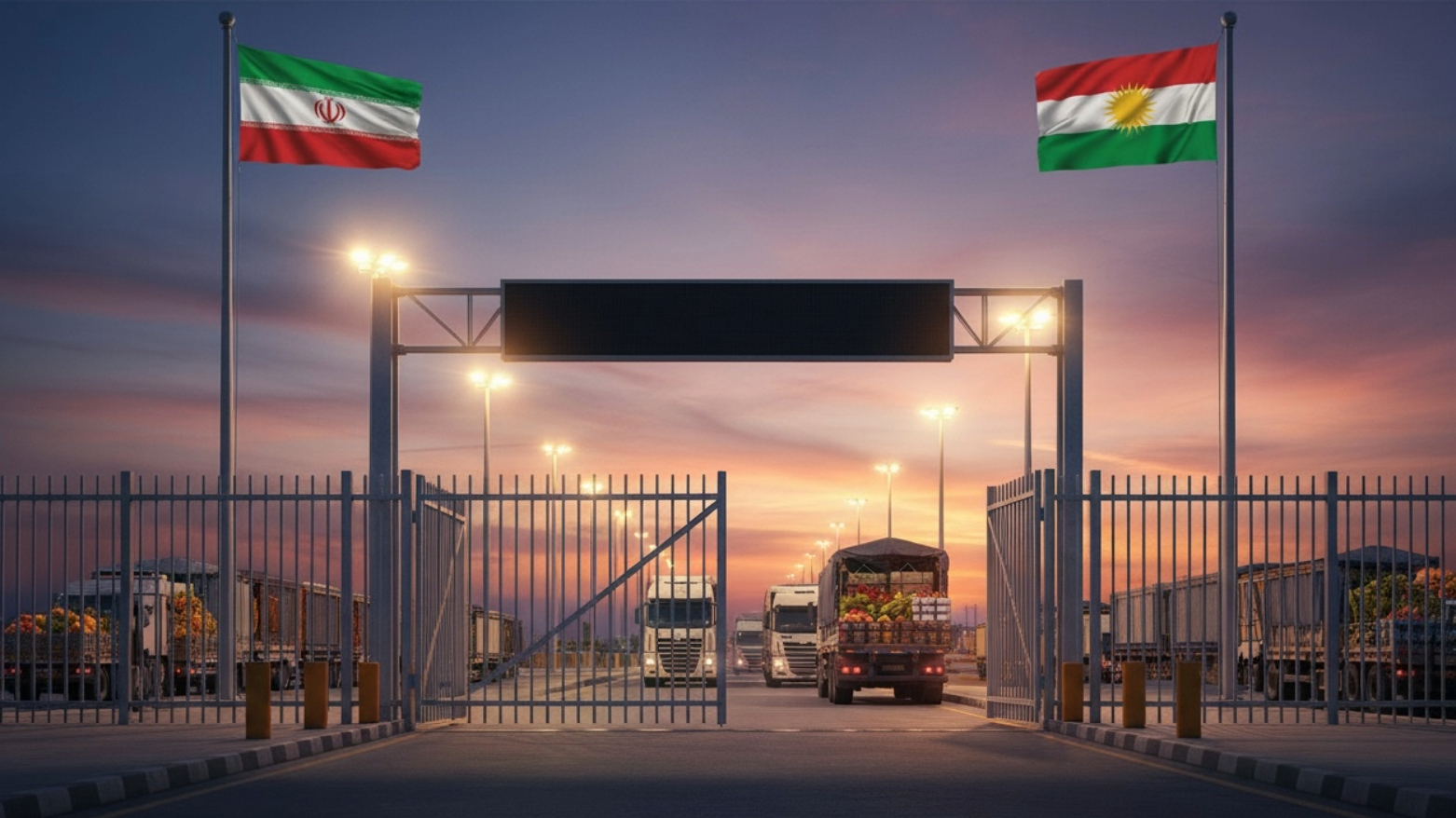
ERBIL (Kurdistan24) - The Kurdistan Region’s Import and Export Union announced Tuesday that all border crossings with Iran will reopen in the coming days, restoring trade routes that had been partially suspended amid regional tensions.
The statement from the union noted that the closures followed recent instability involving Iran, the United States, and Israel, with only the Bashmakh crossing remaining operational for several days. According to the communiqué, the Shushme crossing in Tawela reopened on March 8, 2026, followed by the Sayranban crossing on the evening of March 9.
Officials said that transit through the Bashmakh crossing currently includes roughly 500 trucks of cargo daily, a volume that is increasing. Most Iranian shipments consist of foodstuffs such as vegetables, fruit, dairy products, soft drinks, juices, chocolates, and biscuits, along with a range of other commodities that were routinely imported prior to the recent closures.
The union indicated that the Haji Omeran and Parvez Khan crossings are also scheduled to reopen in the coming days, signaling a return to full operational capacity at the Kurdistan-Iran border.
In its statement, the Import and Export Union emphasized the continuity of trade flows despite the temporary disruptions. “Trade activities and the movement of goods are resuming at multiple points along the border,” the union said, highlighting the gradual restoration of normal operations.
The Bashmakh crossing, located in the eastern part of the Kurdistan Region, has served as the primary conduit for Iranian goods during the recent closures. Union officials said that the steady flow of trucks and cargo through this crossing reflects both demand for Iranian imports and the logistical capacity of regional customs and transport authorities to manage high volumes efficiently.
The reopening of the Shushme and Sayranban crossings followed coordination between regional authorities and border management teams, the statement noted. Both crossings are strategically important for trade, facilitating the movement of perishable goods and other daily essentials. Local officials said that maintaining these supply chains is critical to stabilizing market availability across the region.
The union’s communiqué also underscored that the gradual resumption of border operations has been guided by safety and logistical considerations. “The reopening process is being carried out carefully to ensure smooth transit and the safety of all personnel involved in customs and border services,” it said.
Iranian shipments entering through the Kurdistan Region cover a broad range of consumer goods, reflecting established trade patterns that predated the temporary closures. Union officials highlighted that most shipments are part of regular commerce, including seasonal agricultural products and packaged foods widely consumed across the Region.
Preparations for reopening the Haji Omran and Parvez Khan crossings have reportedly been finalized, and regional authorities are coordinating security and customs arrangements to handle the expected influx of vehicles and cargo. The union indicated that both crossings will be operational within the coming days, completing the full reopening of Kurdistan-Iran trade corridors.
The partial closure of the crossings in recent days had prompted logistical adjustments for traders and transport companies, who relied on the Bashmakh crossing as the sole operational route. The union’s announcement signals a return to multi-point operations, which is expected to streamline trade and reduce delays at key border terminals.
Officials also noted that the gradual restoration of crossings is intended to support the flow of essential goods and prevent shortages of staple items in regional markets. The measure aligns with broader efforts to maintain supply chain continuity amid regional tensions affecting transportation networks.
In addition to food products, Iranian shipments include a variety of consumer items that were routinely imported before the temporary suspension of crossings. The union said that all logistics and customs procedures are being monitored to ensure compliance with regulatory requirements and to facilitate rapid clearance of goods.
The Import and Export Union’s statement did not provide a specific timetable for the reopening of Haji Omeran and Parvez Khan, but indicated that authorities expect both crossings to resume operations “in the coming days,” restoring normal trade activity along the Kurdistan-Iran border.
The reopening marks the first coordinated restoration of multiple border crossings since the temporary closures, signaling a return to established trade patterns and daily cross-border commerce.
Trade officials emphasized that the resumption of crossings will allow regional markets to access essential goods efficiently and maintain supply chain stability, while ensuring that the logistical and administrative capacities at each crossing are fully utilized.
The full reopening of Kurdistan-Iran border crossings is expected to support ongoing economic activity, facilitate the movement of goods, and restore normal transit conditions for traders and transport operators.