Three Thai Sailors Missing After Strait of Hormuz Ship Attack, Iran Claims Responsibility
Three Thai sailors remain missing after the Mayuree Naree was struck in the Strait of Hormuz, causing a fire. Iran’s Revolutionary Guards claimed responsibility. The Omani navy rescued 20 crew; search efforts continue amid rising Gulf tensions and surging oil prices.
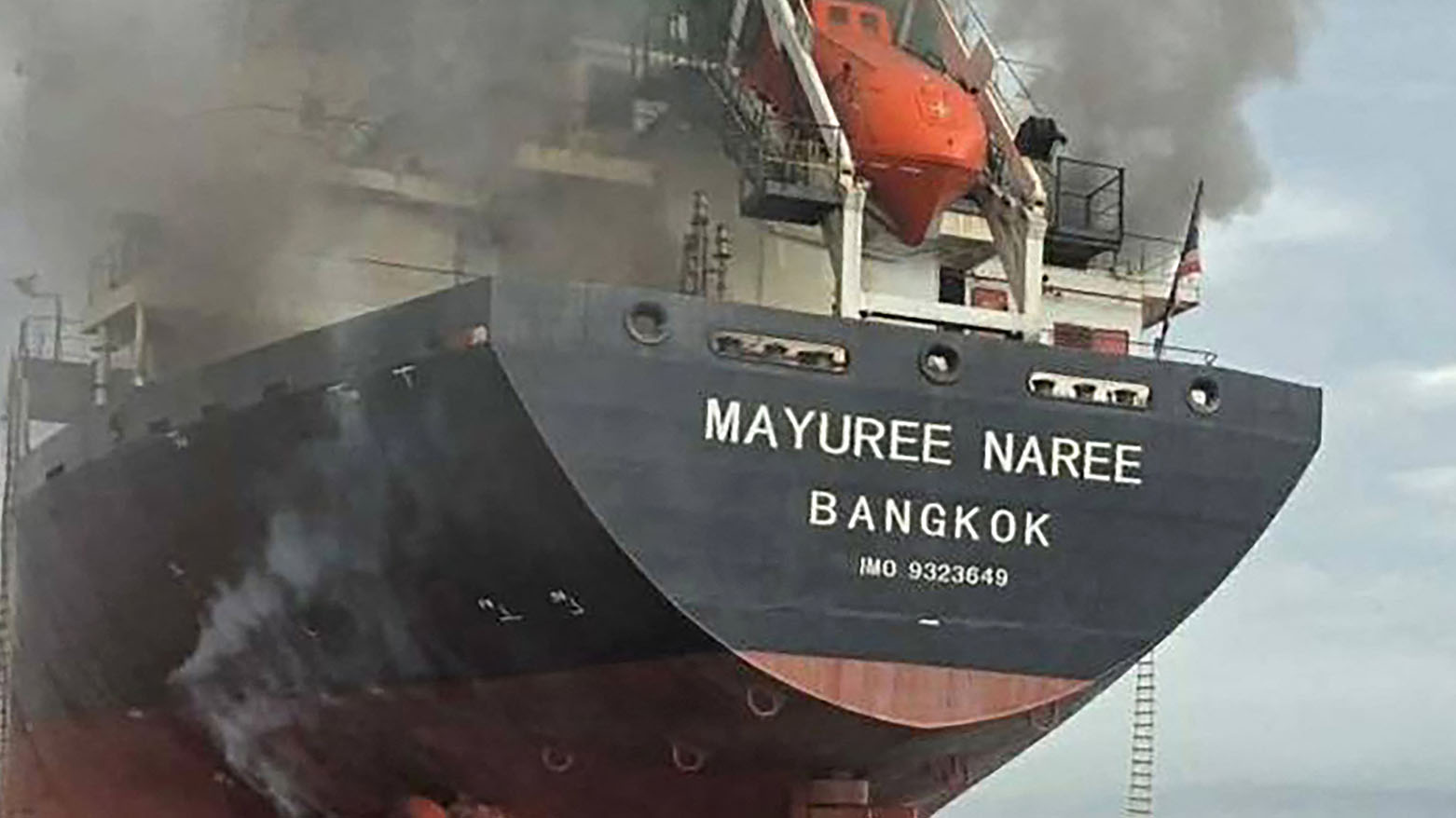
ERBIL (Kurdistan24) - Three crew members remain missing aboard a Thai-registered bulk carrier, the Mayuree Naree, after it was struck by projectiles while transiting the Strait of Hormuz, the vessel’s owner said Thursday. The attack, which occurred Wednesday morning, damaged the ship’s engine room and caused a fire, according to Precious Shipping, the Thai company that owns the vessel.
The Thai transport company reported that authorities had extinguished the fire but were unable to reach the three crew members believed trapped in the engine room.
“We still have not been able to get anyone to board our ship, even though the fire has been extinguished,” managing director Khalid Hashim told AFP, noting that efforts to access the vessel were ongoing. The Omani navy rescued 20 of the ship’s 23 sailors on Wednesday, according to Thailand’s navy.
Thailand’s Ministry of Foreign Affairs confirmed that all crew members aboard the vessel are Thai nationals. Deputy spokesman Panidol Patchimsawat said Bangkok had “protested against the violence done to the commercial ships” and reassured that efforts to locate the missing crew members continue.
He added, “Please be assured that we are on a mission to find the missing three.”
Iran’s Revolutionary Guards claimed responsibility for the strike, stating that both the Mayuree Naree and a Liberia-flagged vessel were targeted for allegedly ignoring prior warnings. The attacks took place after the Thai ship departed Khalifa port in the United Arab Emirates.
The incident comes amid ongoing hostilities in the Gulf region following strikes by the United States and Israel against Iran in late February.
Iran has since launched counterattacks on neighboring oil-exporting states, including attacks on commercial shipping in the Strait of Hormuz, a critical waterway through which roughly one-fifth of global oil supplies typically pass.
The attacks on maritime traffic have heightened concerns about energy security and shipping safety. The disruptions have coincided with other regional incidents affecting oil tankers and ports, including attacks in Iraq’s Basra Province, where two tankers near the port of Umm Qasr were targeted on Wednesday.
One passenger reportedly died, while 20 others were rescued, the Iraqi Ministry of Oil said in a statement. The ministry emphasized that maritime corridors must remain insulated from political disputes to safeguard both regional and global economic stability.
Additional attacks in the region have included strikes on fuel facilities in Bahrain, drone interceptions near Saudi Arabia’s Shaybah oil field, and drones hitting fuel tanks at Salalah port in Oman, causing temporary suspension of operations.
These incidents have contributed to rising oil prices, with Brent crude trading above $101 per barrel and West Texas Intermediate near $96 per barrel, despite a record release of 400 million barrels of strategic reserves by International Energy Agency member states.
Analysts noted that such disruptions continue to threaten global energy markets, particularly as the Strait of Hormuz remains effectively closed in parts due to heightened security risks.
Countries across Asia and Oceania, including Thailand, New Zealand, and Australia, have begun implementing contingency measures to mitigate fuel shortages. Air New Zealand announced cuts to 1,100 flights over the next two months, while Australian authorities adjusted fuel quality standards to release additional domestic supply.
The ongoing maritime attacks follow broader regional tensions in the Gulf, with Iran reportedly signaling readiness for prolonged confrontations affecting energy and economic centers linked to U.S. and Israeli interests.
The Revolutionary Guards have warned that economic hubs, banks, and technology offices across the Gulf and in Israel could be targeted, further complicating regional security dynamics.