Trump Rules Out Deal With Iran for Now, and Questions Its New Leader’s Survival
US President Donald Trump said he is not ready to make a deal with Iran, questioned whether Mojtaba Khamenei is alive, and revealed plans with allies to secure the Strait of Hormuz.
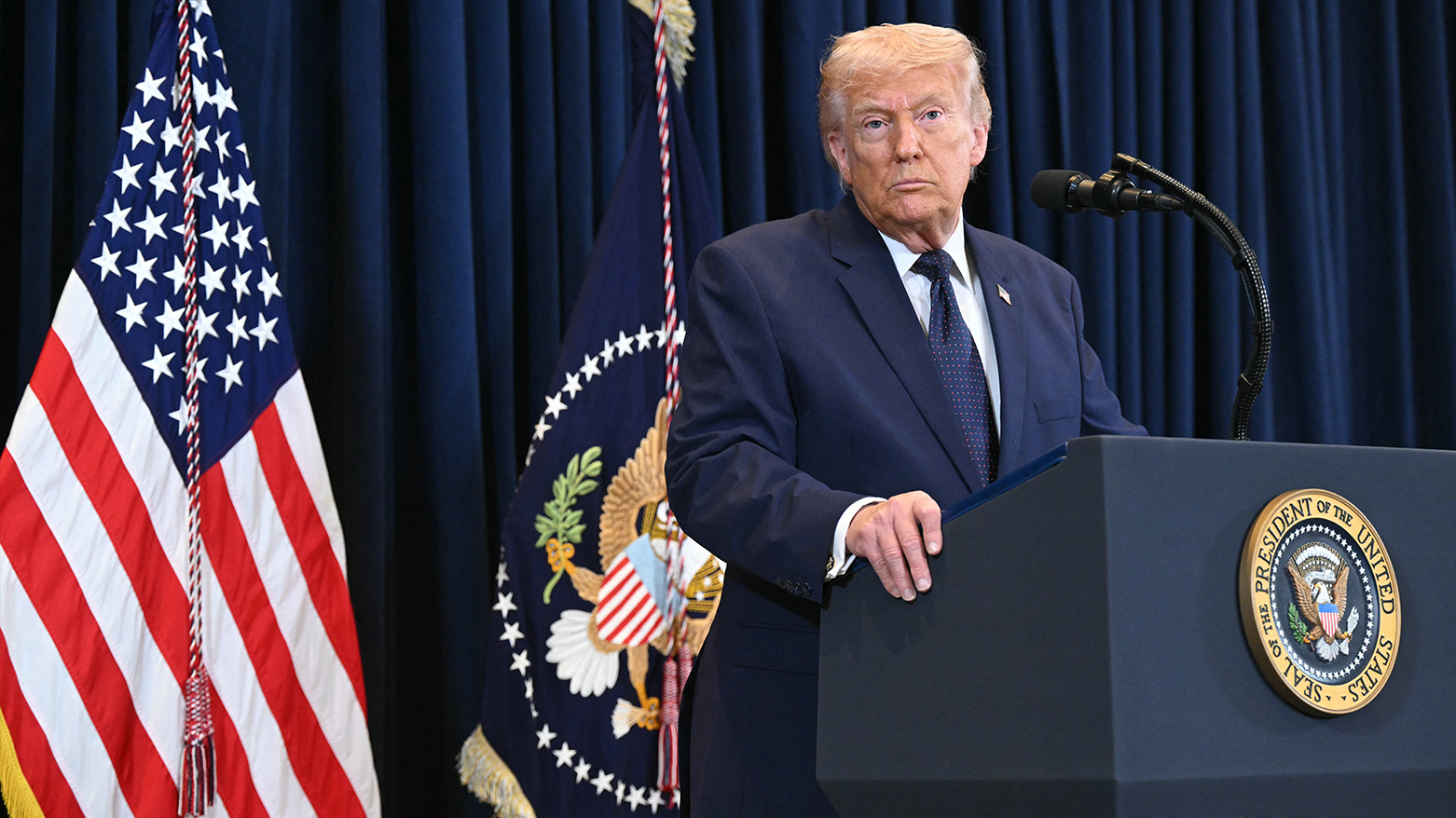
ERBIL (Kurdistan24) - US President Donald Trump said he is not prepared to make a deal to end the war with Iran despite Tehran’s willingness to do so, questioned whether Iran’s new supreme leader Mojtaba Khamenei is alive, and called on him to surrender if he remains alive.
On Saturday, during a nearly thirty-minute telephone interview with NBC News, Trump discussed the ongoing war with Iran, the security of global oil routes, and several regional and international developments.
Trump said he is not willing to reach an agreement with Iran at this stage.
“Iran wants to make a deal, and I don’t want to make it because the terms aren’t good enough yet,” he said, adding that any terms would have to be “very solid.”
When asked about the specific terms required to end the war, the president declined to elaborate.
“I don’t want to say that to you,” he said, though he indicated that a commitment from Iran to completely abandon any nuclear ambitions would likely be part of such conditions.
The remarks follow a Reuters report stating that the Trump administration had dismissed efforts aimed at advancing negotiations to end the war.
The conflict began last month when US and Israeli forces launched joint strikes on Iran, followed by Iranian attacks on Israel and US targets in nearby countries.
Since the start of the conflict, thirteen active US service members have been killed, including six crew members who died on Friday after a US military refueling aircraft crashed in Iraq.
Trump said US strikes on Kharg Island on Saturday “totally demolished” most of the island.
“We may hit it a few more times just for fun,” he said, adding that “we’ve totally decimated it.”
However, he noted that energy infrastructure was not targeted.
“Except, as you know, I didn’t do anything having to do with the energy lines, because having to rebuild that would take years,” Trump said.
Earlier, US Central Command announced that it had conducted “precision strikes” on ninety military targets while preserving oil infrastructure.
Trump also outlined the current state of Iranian military capabilities.
“We’ve knocked out most of their missiles. We’ve knocked out most of their drones. We knocked out their manufacturing of missiles and drones, largely. Within two days, it’ll be totally decimated,” he said.
He added that Iran’s remaining military capability could involve laying mines or launching relatively short-range missiles.
“The only power they have, and it’s a power that can be closed off relatively quickly, is the power of dropping a mine or shooting a relatively short-range missile,” he said, adding that once operations along the shoreline are completed, “they’re not going to have that power either.”
Trump also expressed surprise that Iran had targeted other Middle Eastern countries in response to the US-Israeli operation.
“I was very surprised,” he said, describing the attacks as “the biggest surprise I had of this whole thing.”
According to an NBC News analysis, Iran has launched drones toward several Middle Eastern countries, including the United Arab Emirates, Qatar, Saudi Arabia, Bahrain, and Kuwait, targeting oil infrastructure, logistics hubs, and government centers.
Data from the United Arab Emirates indicates that 1,475 unmanned aerial vehicles had been launched toward the country as of March 10.
Trump also referred to attacks that struck allied countries in the region.
He said US partners in the Middle East, including the United Arab Emirates, Qatar, and Saudi Arabia, “have been terrific” despite being targeted.
“They got shot at unnecessarily,” he said.
The president also addressed developments in Iraq.
On Saturday, Iraqi officials reported that an Iranian strike had hit a helipad inside the US Embassy compound in Baghdad.
Iran had also threatened to destroy oil and gas infrastructure across the region if the United States targeted oil facilities on Kharg Island.
Trump also questioned whether Iran’s new supreme leader, Mojtaba Khamenei, is alive.
Khamenei was named the new supreme leader earlier in the week after US and Israeli strikes killed his father, Ayatollah Ali Khamenei.
Khamenei issued a written statement on Thursday promising to continue blocking the Strait of Hormuz and attacking US allies in the region.
“I don’t know if he’s even alive. So far, nobody’s been able to show him,” Trump said.
“I’m hearing he’s not alive, and if he is, he should do something very smart for his country, and that’s surrender,” he added, though he described reports of his death as a rumor.
US Defense Secretary Pete Hegseth said on Friday that the younger Khamenei was “wounded and likely disfigured” and described his written message as “a weak one.”
“Iran has plenty of cameras and plenty of voice recorders. Why a written statement? I think you know why. His father: dead; he’s scared, he’s injured, he’s on the run, and he lacks legitimacy,” Hegseth said.
Asked whether he preferred a particular Iranian figure to assume leadership in the future, Trump said only that there are people alive who could become strong leaders for the country.
“We have people that are living that would be great leaders for the future of the country,” he said.
When asked whether he was in contact with any potential leaders, Trump declined to comment.
“I don’t want to say that. I don’t want to put them in jeopardy,” he said.
The president also said he is working with several countries on a plan to secure the Strait of Hormuz, a key maritime passageway for global oil shipments, amid rising global oil prices.
Trump said he had asked “numerous countries that are affected by the thuggery of Iran” to help protect the strait.
Several countries, he said, have already committed to the plan, though he declined to identify them.
“They’ve not only committed, but they think it’s a great idea,” he said.
In a message posted on Truth Social earlier Saturday, Trump wrote that many countries affected by Iran’s attempts to close the Strait of Hormuz would send warships to the region alongside the United States.
He mentioned China, France, Japan, South Korea, the United Kingdom, and other countries that could deploy ships to keep the waterway open and safe.
Trump also said it remains unclear whether Iran has placed naval mines in the strait.
“We’re going to be sweeping the strait very strongly, and we believe we’ll be joined by other countries who are somewhat impeded, and in some cases impeded from getting the oil,” he said.
Asked whether US naval forces might begin escorting ships through the strait, Trump declined to provide details.
“I don’t want to tell you anything about that,” he said, adding that such a step is “possible.”
The president also addressed concerns over rising gasoline prices in the United States since the war began.
Trump dismissed the concerns, saying he expects prices to fall.
“I think they’ll go lower than they were before, and I had them at record lows,” he said.
On March 1, the day after the United States and Israel began attacking Iran, gasoline prices in the US averaged $2.94 per gallon.
By Saturday, the average had risen to $3.66.
“There’s so much oil, gas — there’s so much out there, but you know, it’s being clogged up a little bit. It’ll be unclogged very soon,” Trump said.
Asked whether rising fuel prices could affect upcoming US midterm elections, Trump said he was not concerned.
“I’m not concerned at all. The only thing I want to do is make sure that Iran can never be the bully of the Middle East again,” he said.
Trump also addressed criticism from international leaders after his administration temporarily eased sanctions on Russian oil to help stabilize global prices.
“I want to have oil for the world. I want to have oil,” he said, adding that the sanctions imposed after Russia’s invasion of Ukraine in 2022 would be reinstated once the current crisis ends.
When asked about reports that Russia may be sharing intelligence with Iran about US troop locations, Trump said: “Russia is perhaps giving information, perhaps they’re not.”
He added that the United States is also sharing information with Ukraine while attempting to facilitate peace between Russia and Ukraine.
“We’re giving a little information to Ukraine and we’re trying to make peace between the two nations,” he said.
Trump also sharply criticized Ukrainian President Volodymyr Zelenskyy.
“I’m surprised that Zelenskyy doesn’t want to make a deal. Tell Zelenskyy to make a deal because Putin’s willing to make a deal,” Trump said.
“Zelenskyy is far more difficult to make a deal with,” he added.
Earlier in March, Zelenskyy had offered to assist US forces and their allies in the Middle East with intercepting Iranian drones based on Ukraine’s experience countering Russian drones.
However, Trump rejected the need for such assistance.
“We don’t need help,” he said. “The last person we need help from is Zelenskyy.”
Trump’s remarks outlined Washington’s current stance on the war with Iran, the security of the Strait of Hormuz, and wider geopolitical tensions involving regional allies and global powers.