Rights Group in Syria's Northwest Documents Killing & Mass Displacement Eight Years After Afrin’s Takeover
Afrin rights group documented killings, displacement, and demographic change eight years after 2018 events, while calling for safe return of Kurdish residents.
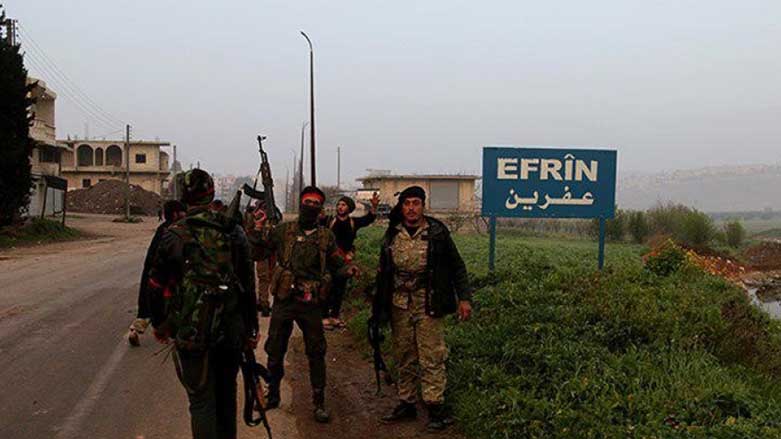
ERBIL (Kurdistan24) - On Wednesday, the Human Rights Organization in Afrin issued a comprehensive statement marking the eighth anniversary of the occupation of the Syrian region of Afrin, warning that violations remain ongoing while displaced residents continue to demand their right to return.
The statement noted that the occupation dates back to 2018, following the military operation referred to as “Olive Branch,” and highlighted that eight years later, the situation on the ground continues to reflect widespread abuses.
According to the organization and other rights groups, approximately 784 people have been killed, including women and children, as a result of direct shelling, extrajudicial killings, and deaths under torture in detention centers.
The statement also documented the abduction and detention of more than 10,000 individuals. While some have been released after paying ransom, the fate of thousands remains unknown. It estimated that more than 2,200 detainees are currently held in prisons under harsh conditions, with hundreds of cases of physical and psychological torture recorded.
The report further detailed large-scale demographic changes, stating that more than 300,000 Kurdish residents have been forcibly displaced from their homes. In parallel, hundreds of families from other Syrian regions have been resettled in the homes of displaced Kurdish residents, significantly altering the demographic composition of Afrin.
Extensive violations against property and the environment were also recorded. Thousands of homes, shops, and agricultural lands have reportedly been seized and redistributed to armed faction members and their families. In addition, more than one million olive trees, along with other forest trees, have been cut down or burned, either for firewood or as part of what the statement described as economic pressure.
The organization also pointed to systematic looting of agricultural production, noting that annual levies are imposed on olive harvests, with large portions confiscated by controlling factions and affiliated economic committees.
Cultural and archaeological sites have not been spared. The statement cited widespread damage to locations such as Ain Dara Temple and Nabi Huri, where excavation and bulldozing activities in search of antiquities have caused severe destruction to the region’s cultural identity.
The organization stressed that these figures represent only documented cases based on names and verified incidents, warning that actual numbers are likely significantly higher due to security restrictions and limited access to information inside the area.
In its demands, the Afrin Displaced Council called on international bodies, human rights organizations, and the Syrian Interim Government to take urgent action. It urged the withdrawal of Turkish forces and affiliated factions, and emphasized the need to ensure a safe and dignified return for forcibly displaced residents, alongside compensation for those affected.
The statement also called for an end to systematic demographic change policies and urged continued documentation of violations, including killings, looting, and attacks on cultural identity, referencing incidents such as the destruction of the Kawa the Blacksmith statue during the early phase of the control over Afrin.
It further demanded that the local administration in Afrin assume its legal responsibilities to protect civilians, particularly those recently returning, ensure the restoration of homes and properties, and pressure remaining settlers to leave and return to their original areas.
The organization confirmed that, as of 2026, Afrin remains under the control of factions that was formerly known as the “Syrian National Army,” now integrated into the structure of the new Syrian army, amid ongoing international and local criticism over human rights conditions.
According to Kurdistan24 sources, approximately 400 displaced Kurdish families returned to Afrin on March 9, 2026, as part of an organized process from Hasakah and Qamishlo.
The source told Kurdistan24 that the initial convoy included families originally from Jindires, Mobata, and Shiye, with the return process carried out based on mutual understanding between the Syrian Democratic Forces and the Syrian government.
The Syrian government has formally pledged to take responsibility for protecting returning civilians and ensuring their safety upon arrival in Afrin.
Eight years on, the Afrin file remains defined by unresolved displacement, documented violations, and a growing insistence on return and accountability.