Trump Administration Weighs U.S. Troop Deployments to Iran Amid Ongoing Conflict
Reinforcements could expand options to secure the Strait of Hormuz, Kharg Island, and Iran’s nuclear materials
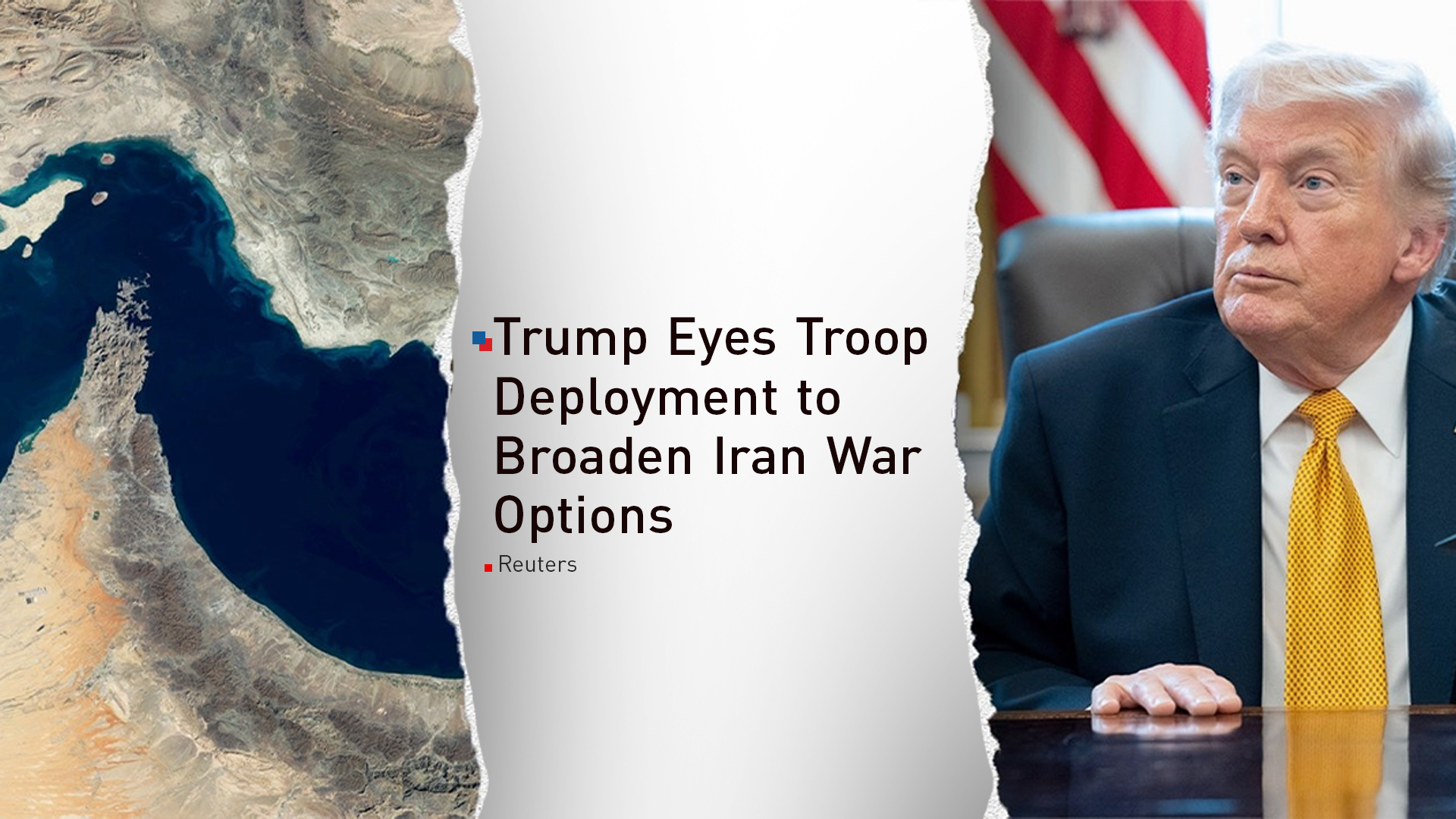
ERBIL (Kurdistan24) — The administration of President Donald Trump is considering sending thousands of U.S. troops to the Middle East as part of ongoing military operations against Iran, according to Reuters, citing multiple U.S. officials and sources familiar with planning. The discussions come as the war enters its third week, with U.S. forces continuing air and naval strikes across Iranian territory.
The potential deployments are aimed at broadening Trump’s strategic options, including securing the safe passage of oil tankers through the Strait of Hormuz, a mission primarily reliant on air and naval assets. However, some officials told Reuters that achieving this goal could require deploying U.S. troops along Iran’s coastline.
The administration has also discussed a possible operation to control Kharg Island, a critical hub responsible for 90% of Iran’s oil exports, Reuters reported, with military experts cautioning that such a mission would carry extreme risk given Iran’s missile and drone capabilities.
Since the launch of the conflict on February 28, U.S. forces have conducted more than 7,800 strikes, damaging or destroying over 120 Iranian vessels, according to a U.S. Central Command factsheet.
Despite this heavy campaign, Trump has kept all options—including limited ground deployments—under consideration. “There has been no decision to send ground troops at this time, but President Trump wisely keeps all options at his disposal,” a White House official told Reuters, emphasizing the administration’s objectives under Operation Epic Fury: degrading Iran’s missile and naval capabilities, preventing regional destabilization by its proxies, and ensuring Iran cannot acquire a nuclear weapon.
Officials also discussed the possibility of deploying forces to secure Iran’s stocks of highly enriched uranium, a complex and high-risk operation even for U.S. special operations units, Reuters reported.
“Certainly there are ways in which it could be acquired,” a senior White House official said, adding that no final decision had been made.
The U.S. military has faced casualties in the conflict, with 13 troops killed and roughly 200 wounded, most with minor injuries. Despite Trump’s long-standing opposition to U.S. entanglement in foreign wars, he has refused to rule out “boots on the ground” in Iran, signaling a possible shift in posture if operations escalate.
Reinforcements under consideration go beyond the upcoming arrival of an Amphibious Ready Group and a Marine Expeditionary Unit of more than 2,000 Marines.
Sources told Reuters that the U.S. military is simultaneously dealing with a temporary reduction in naval assets after the USS Gerald R. Ford aircraft carrier was sent to Greece for maintenance following a fire onboard.
Trump’s stance on the Strait of Hormuz has fluctuated. While he initially suggested U.S. naval escorts, he later called on other countries to secure the waterway, and recently mused on social media about leaving allied nations responsible for its protection if Iran were “finished off.”
The deliberations highlight the delicate balance facing the Trump administration: expanding military options to achieve strategic objectives while weighing significant operational, political, and public opinion risks.