UNICEF Races to Save Children in Iran as Child Deaths Surpass 200
UNICEF has expanded healthcare support in Iran, deploying mobile units and aid to reach 226,000 people, amid reports of rising child casualties and severe damage to schools and hospitals.
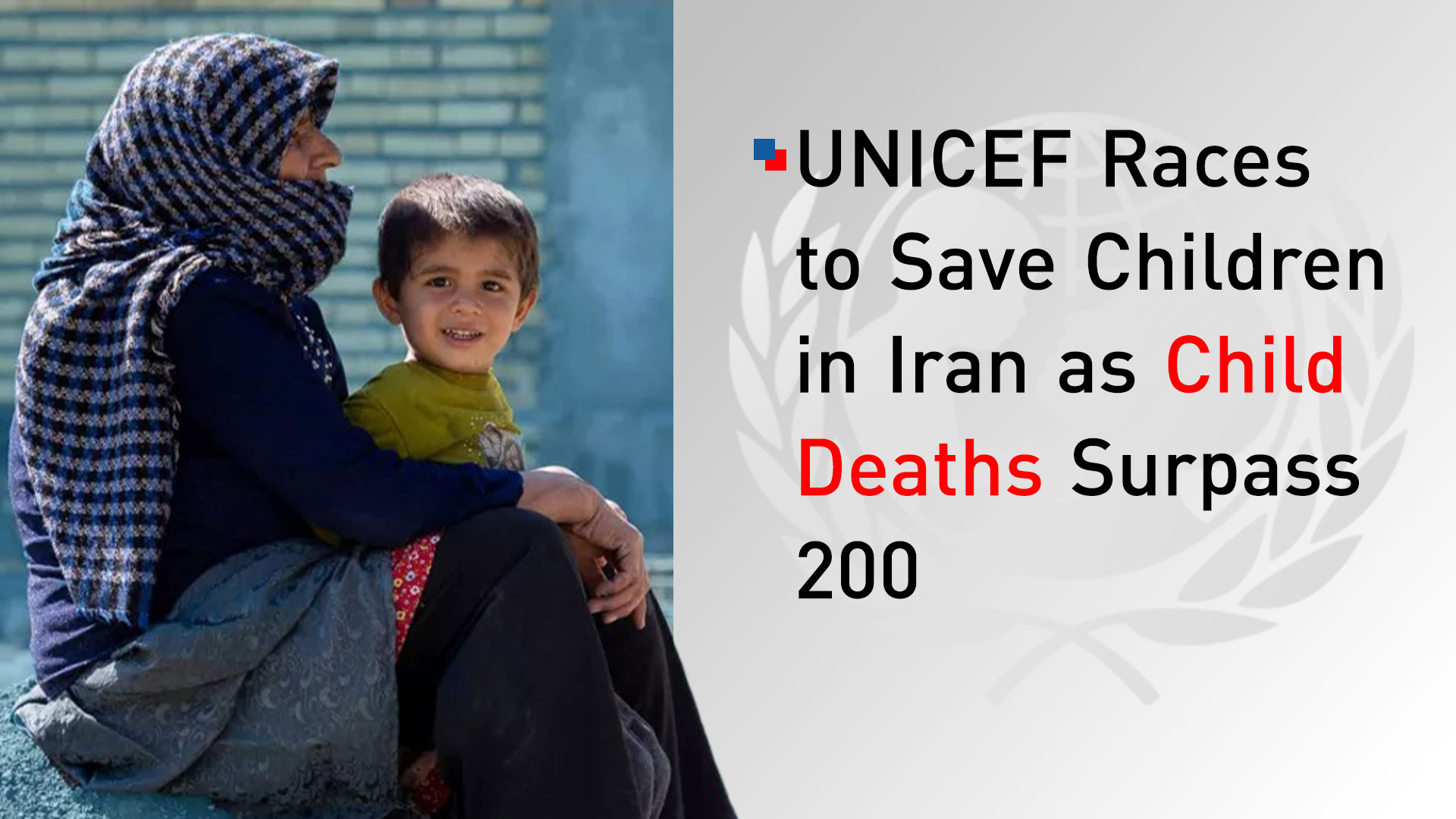
ERBIL (Kurdistan24) - As humanitarian needs surge across Iran, UNICEF has moved to rapidly scale up life-saving health services, deploying mobile units and emergency support to reach hundreds of thousands of children and families facing growing risks.
On Thursday, UNICEF announced it has intensified its support to restore access to essential healthcare services for children and families in coordination with Iran’s Ministry of Health.
According to the statement, two mobile health units, eight primary healthcare (PHC) tents, and 81 emergency PHC kits have already been deployed across various areas.
UNICEF further confirmed that an additional aid convoy is currently in route, carrying two more PHC tents and 131 emergency kits. With these reinforcements, the organization expects its assistance to reach at least 226,000 people.
The agency emphasized that it is also expanding mental health and psychosocial support services for children affected by the escalation of tensions.
In its statement, UNICEF stressed the urgent need to protect children and ensure their access to critical healthcare services, describing these needs as immediate and essential.
Earlier, on Mar. 6, 2026, UNICEF reported that nearly 180 children had been killed due to the attacks in Iran. Among them, 168 girls were killed in an attack on a girls’ primary school in southern Iran on Feb. 28, while classes were ongoing.
Reports indicated that most of the victims were students between the ages of seven and 12. Additionally, 12 other children were killed in separate school incidents across five different areas in Iran.
UNICEF also warned that continued military attacks are exposing children to increasing levels of violence, while damage to civilian infrastructure poses a direct threat to their safety.
At least 20 schools and 10 hospitals have reportedly been damaged, severely disrupting children’s access to education and essential healthcare services.
According to the Iranian Red Crescent, attacks have resulted in the deaths of 204 children under the age of 18, while more than 18,000 civilians have been injured.
The organization stated that over 70,000 civilian sites—including homes, residential buildings, schools, shops, and key infrastructure—have been targeted across Iranian cities.
Among the damaged facilities are 251 health centers, 498 schools, and 17 Red Crescent centers.
As the scale of damage deepens, UNICEF’s expanding intervention underscores a race against time to safeguard children and restore the most basic lifelines of survival.