Iran's Steel Plants Targeted by U.S.-Israeli Aristrikes
The U.S. and Israeli airstrikes on Khuzestan Steel and Mobarakeh Steel in Isfahan mark the latest verified developments in the ongoing military confrontation, with emergency response operations ongoing.
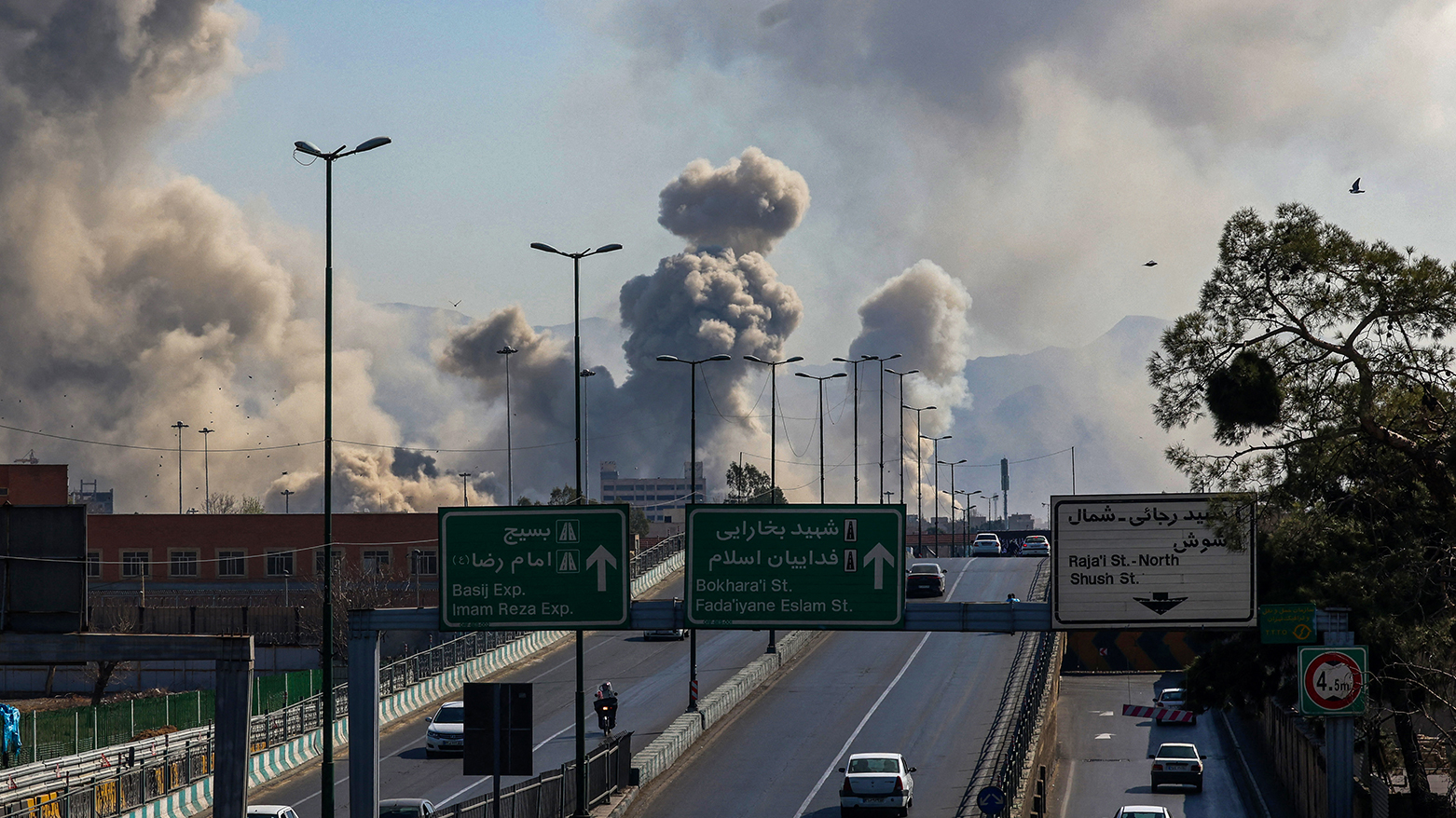
ERBIL (Kurdistan24) - Fars News Agency reported on Friday that U.S. and Israeli forces conducted airstrikes on Khuzestan Steel and Mobarakeh Steel factories in Isfahan province, Iran. Emergency teams were dispatched immediately to the sites, with authorities indicating that further information would be released as it becomes available.
The strikes come amid escalating hostilities between Iran, Israel, and the United States, following repeated missile exchanges and targeted attacks on Iranian and regional infrastructure. The Islamic Revolutionary Guard Corps (IRGC) issued a statement on Friday urging civilians across West Asia to evacuate areas near U.S. military bases, warning of potential targeting risks.
The Governor of Isfahan also confirmed that the casualty count from the strike on the Mobarakeh Steel Plant has risen to 16. Officials reported that one individual was killed and 15 others were wounded in the joint U.S.-Israeli operation.
The announcement, issued as part of Operation “True Promise 4,” described American and Israeli forces as operating from civilian-adjacent locations, which, according to the IRGC, could expose surrounding populations to attacks. The statement was carried by the IRGC-affiliated Tasnim News Agency, which emphasized that Iranian forces consider it their duty to strike what the IRGC described as “terrorist forces of America and the usurping regime” wherever they are positioned.
The escalation has coincided with widespread damage to Iranian civilian infrastructure.
The Iranian Red Crescent Society reported on Friday that 87,294 sites across the country have been damaged or destroyed since the onset of the attacks. Pir-Hossein Koulivand, president of the organization, provided a detailed assessment, noting that 66,261 residential units and 20,127 commercial properties sustained damage, with the bulk located in Tehran Province.
In addition, 289 medical, treatment, health, and rescue centers were hit, alongside 600 schools and 17 Red Crescent facilities. Koulivand also reported that three rescue helicopters and 48 aid vehicles were struck, characterizing the attacks on humanitarian infrastructure as violations of international law.
Israeli officials have signaled an intention to expand their operations in response to continued Iranian missile fire.
Defense Minister Israel Katz stated that strikes would “intensify and expand to other targets in sectors that help the regime develop and use military means against Israeli civilians,” adding that Iran would “pay a heavy price, an increasingly heavy one, for this war crime,” according to a video statement released by his office.
Israeli authorities indicated that the expanded campaign would target additional sectors connected to Iran’s military capabilities.
Iranian officials have described their actions as defensive. A senior Iranian military source, cited in regional reporting, warned against potential U.S. ground operations, asserting that Iranian forces have heightened readiness levels to respond to any incursion.
Iran’s Vice President Esmail Saghab Esfahani posted on X that military action on Iranian soil could trigger economic and strategic consequences, including implications for oil pricing.
Foreign Minister Abbas Araghchi addressed the United Nations Human Rights Council, stating that U.S. and Israeli strikes had affected schools, water facilities, and medical centers, resulting in casualties, which he described as “crimes against humanity.”
Additional Iranian media reports described an explosion in the city of Qom early Friday, resulting in at least six fatalities. Local officials cited residential buildings in the Pardisan neighborhood as the sites of the strike. Reports alleged the use of bunker-buster munitions and referenced a suspected facility among the targets; these claims were not independently verified in the available materials.
The conflict has also extended beyond Iran. Kuwaiti authorities reported that Mubarak Al-Kabeer Port on Bubiyan Island was targeted in an early morning attack involving drones and cruise missiles, causing material damage but no casualties.
Kuwait’s Ministry of Public Works stated that emergency procedures were activated immediately and described the strike as a hostile operation against a key logistical hub integral to the country’s long-term development plans.
In response to the ongoing escalation, U.S. officials are reportedly considering additional troop deployments to the region. A senior defense official told journalists that Washington is evaluating the deployment of at least 10,000 troops from units not currently stationed in the Middle East, with a decision expected within days.
Concurrently, U.S. President Donald Trump has indicated ongoing negotiations with Iran while signaling readiness to escalate military action should diplomatic efforts fail. The United States has paused certain strikes on Iranian energy infrastructure as part of these engagements.
The hostilities have influenced global energy markets. Oil prices declined on Friday after earlier gains, with Brent crude and West Texas Intermediate reflecting market volatility tied to the conflict. Analysts cited diplomatic developments and temporary pauses in attacks on energy facilities as factors influencing the trading environment.
The G7 foreign ministers convened on Friday at Vaux-de-Cernay Abbey outside Paris, addressing both the Iran situation and the ongoing Russia-Ukraine conflict. U.S. Secretary of State Marco Rubio faced scrutiny from European counterparts regarding Washington’s military operations and the blockade of the Strait of Hormuz.
German Foreign Minister Johann Wadephul emphasized the need to maintain coordination on simultaneous conflicts, while British Foreign Secretary Yvette Cooper highlighted the importance of diplomatic solutions to stabilize the region. The meeting concluded without a joint communique, with the French presidency planning to issue an official statement summarizing the discussions.
As of Friday, the conflict remains active, with continuing strikes and warnings affecting both military and civilian sites. The IRGC’s advisory to civilians near U.S. bases underscores the potential risks in the region, while Iranian and Israeli authorities maintain heightened operational postures. The scale of reported damage, particularly to civilian infrastructure, reflects the intensifying nature of hostilities across multiple fronts.