Drone Strike Sparks Fire at UAE’s Barakah Nuclear Plant, Raising Fears Over Fragile Iran Ceasefire
Attack marks first strike on key nuclear facility as regional tensions escalate across Gulf and Red Sea corridors
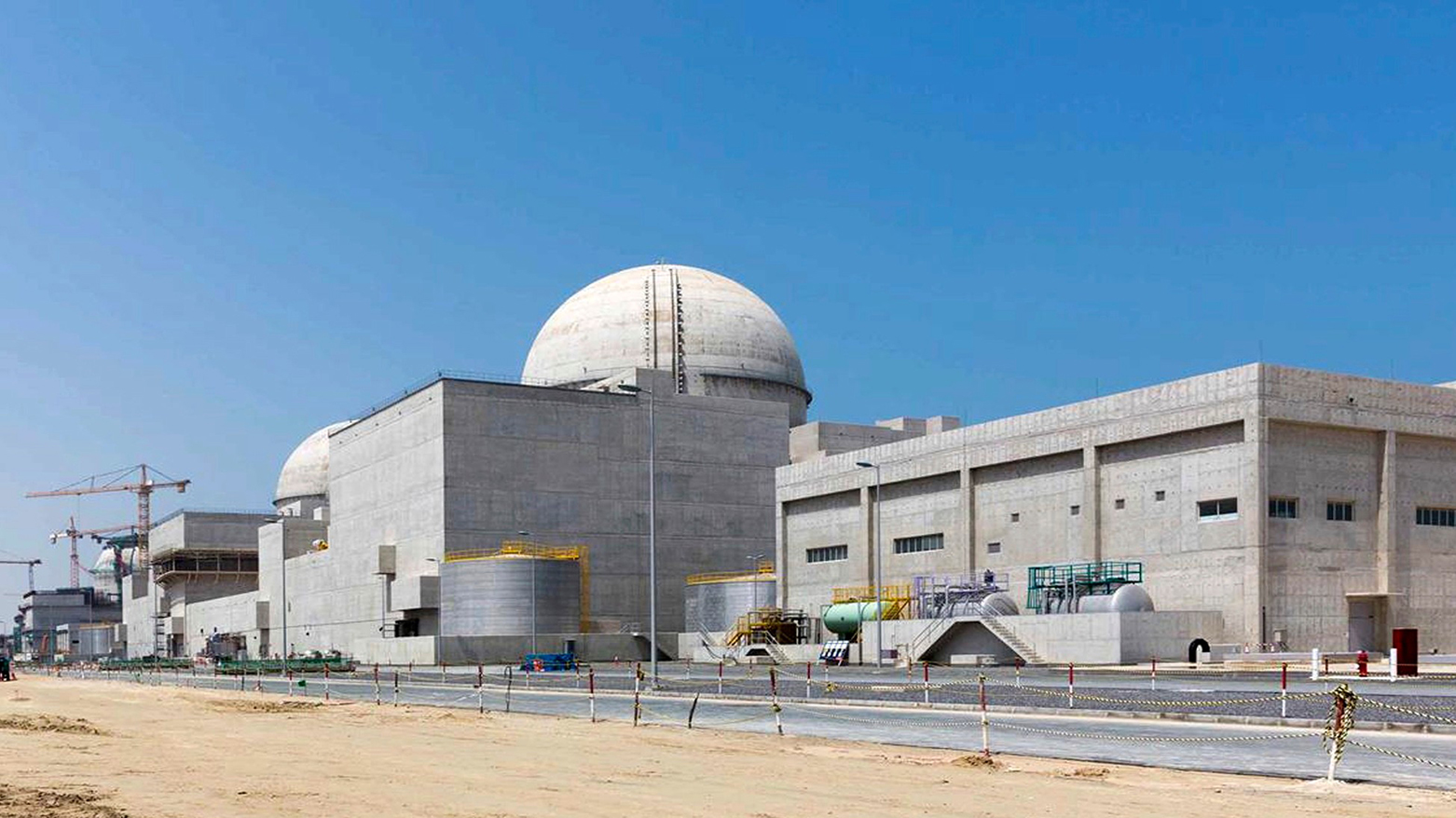
ERBIL (Kurdistan24) — A drone strike targeted the United Arab Emirates’ Barakah nuclear power plant on Sunday, igniting a fire in an electrical generator on its perimeter and intensifying concerns over the stability of the fragile ceasefire linked to the wider Iran conflict.
Authorities in Abu Dhabi said the incident caused no injuries and no radiological leak, and confirmed that plant operations were not disrupted.
No group immediately claimed responsibility for the attack, though suspicion has centered on Iran amid escalating regional tensions and repeated warnings directed at Gulf states in recent days.
The strike comes against the backdrop of a volatile regional environment, where diplomatic efforts to stabilize the Iran ceasefire have stalled, and military tensions continue to rise across multiple fronts.
The Barakah nuclear plant, located in the western desert of Abu Dhabi near the Saudi border, is the UAE’s flagship energy project and the first commercial nuclear power station in the Arab world.
Developed at a cost of approximately $20 billion with South Korean assistance, the facility began operations in 2020 and now provides a significant share of the country’s electricity supply.
The UAE’s nuclear regulator said the fire was quickly contained and posed no threat to nuclear safety. “All units are operating as normal,” it said in a statement posted on social media platform X.
The International Atomic Energy Agency (IAEA), the UN nuclear watchdog, has not yet issued a formal comment. The UAE has not attributed responsibility for the strike.
The attack occurs amid heightened instability in the Gulf, where Iran continues to exert strategic pressure over maritime routes, particularly around the Strait of Hormuz — a critical chokepoint for global energy supplies.
Before the war, roughly one-fifth of global oil and gas shipments passed through the waterway, but ongoing hostilities have disrupted flows and intensified global energy market volatility.
At the same time, Washington has maintained pressure on Iranian-linked maritime networks, while diplomatic negotiations aimed at stabilizing the ceasefire have shown little progress. US President Donald Trump has recently warned that hostilities in the region could resume if tensions continue to escalate.
The Barakah incident also comes amid wider instability across the Middle East, including renewed exchanges between Israel and Hezbollah in Lebanon, raising fears of a broader multi-theatre escalation.
Iranian state media has increasingly framed the conflict in highly militarized terms, with televised programming featuring armed presenters and paramilitary messaging.
In one broadcast, a presenter received firearms training from a member of Iran’s Revolutionary Guard, while another declared readiness to “sacrifice” for the country in a live televised segment, reflecting heightened state-driven mobilization messaging.
The targeting of Barakah highlights a growing global trend of nuclear facilities being exposed to indirect or direct risks during armed conflicts.
Similar concerns emerged during Russia’s war in Ukraine, where nuclear infrastructure became a recurring point of military tension, raising alarms among international regulators.
In the current Iran-related conflict, Tehran has previously alleged threats to its own nuclear infrastructure, although no confirmed damage to operational reactors has been reported.
Sunday’s strike marks the first known attack affecting the Barakah facility since its activation, raising concerns among regional security analysts about the expanding scope of the conflict and the vulnerability of critical energy infrastructure.
The attack underscores the fragility of the current ceasefire framework, which has repeatedly been strained by proxy confrontations, maritime incidents, and cross-border strikes across multiple regional theatres.
With diplomatic talks stalled and military signaling intensifying on all sides, analysts warn that the risk of further escalation remains high, particularly if strategic infrastructure continues to be targeted.
For now, the UAE maintains that its nuclear operations remain safe and stable — but the strike on one of its most sensitive facilities has added a new and potentially dangerous dimension to an already volatile regional conflict.