India Warns Pakistan Could “Become History” as South Asia’s Security Crisis Echoes Across the Middle East
New Delhi warns Pakistan over terrorism support as Islamabad condemns “irresponsible” threats, raising fears of broader regional spillover involving Middle Eastern power blocs
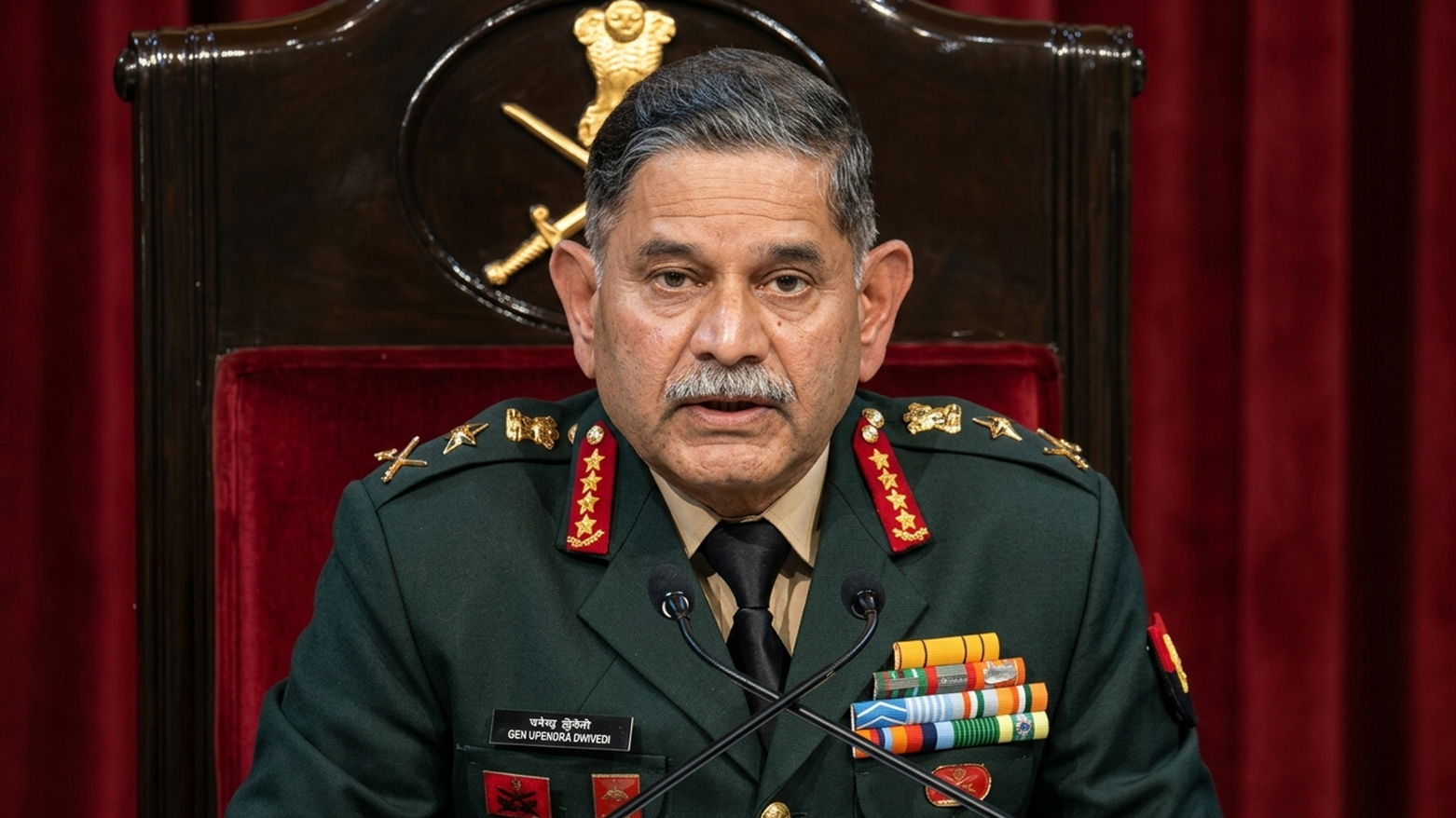
ERBIL (Kurdistan24) — Tensions between India and Pakistan sharply escalated this week after India’s top military official issued a warning suggesting Pakistan could be wiped off the world map if it continues to support militant groups, prompting a strong backlash from Islamabad and renewed international concern over the risks of escalation between the two nuclear-armed rivals.
Indian Army Chief General Upendra Dwivedi said Pakistan must decide “whether it wants to remain part of geography or become history” if it persists in what New Delhi describes as cross-border terrorism.
The remarks were made during an interactive session at the Manekshaw Centre in New Delhi, where Dwivedi was responding to questions about future military responses following last year’s cross-border escalation.
“If Pakistan continues to shelter terrorists and carry out activities against India, then they must decide – do they wish to remain as part of geography, or do they wish to become history?” he said, reiterating India’s long-standing position on cross-border militancy.
The statement referenced India’s earlier military campaign, “Operation Sindoor,” launched in May 2025 following a deadly attack in Pahalgam, Kashmir. The operation reportedly involved precision strikes on alleged militant infrastructure in Pakistan and Pakistan-administered Kashmir, followed by retaliatory actions from Pakistan that led to nearly 88 hours of cross-border fighting before a ceasefire was reached.
Pakistan’s military responded sharply, rejecting what it called “warmongering rhetoric” and warning that such statements risk destabilizing an already fragile regional security environment.
The Inter-Services Public Relations (ISPR), the media wing of the Pakistani military, said the Indian Army Chief’s remarks reflected “dangerous and irresponsible rhetoric” that could push South Asia toward conflict. It stressed that Pakistan is a “sovereign nuclear state” and warned that any escalation would carry severe consequences not only for the region but beyond.
The ISPR also accused India of failing to accept Pakistan’s existence as a permanent regional actor and urged restraint, warning that “narratives of supremacy or national erasure” were incompatible with nuclear deterrence stability.
Nuclear rivalry in a wider geopolitical chessboard
The latest exchange comes amid a broader realignment of global and regional alliances that is increasingly entangling South Asia with Middle Eastern geopolitics.
In recent years, India has deepened strategic ties with several Gulf and Middle Eastern states through energy partnerships, defense cooperation, and infrastructure investments. Meanwhile, Pakistan has strengthened political, economic, and security relationships with other regional actors, including key Gulf partners, leveraging historical ties and its strategic geography.
These evolving alignments have added new layers of complexity to the India-Pakistan rivalry. Analysts warn that in the event of a major crisis, diplomatic and logistical support networks in the Middle East could influence escalation dynamics, even indirectly shaping how regional powers respond to conflict between the two nuclear states.
The Middle East itself has been undergoing rapid strategic fragmentation, with shifting alliances driven by competition between regional powers, energy security concerns, and ongoing conflicts in Gaza, Iran-Israel tensions, and Red Sea maritime insecurity. This has created a fluid environment where partnerships are increasingly transactional rather than ideological.
In this context, any large-scale India-Pakistan confrontation would not remain confined to South Asia. Energy routes, diaspora populations, arms supply chains, and diplomatic alignments across the Gulf could all become secondary pressure points, potentially drawing Middle Eastern actors into political or economic responses.
Persistent instability despite ceasefire
Despite the ceasefire agreement reached after last year’s escalation, border tensions between India and Pakistan remain high. Both sides continue to accuse each other of provocation, with periodic skirmishes and rhetorical escalation sustaining a volatile security environment.
India maintains that cross-border terrorism remains the central issue, while Pakistan argues that India’s military posture and political rhetoric risk destabilizing a nuclear-sensitive region.
Security experts warn that even limited miscalculations could carry disproportionate consequences given the nuclear capabilities of both states and the increasingly interconnected nature of global alliances.
For now, both New Delhi and Islamabad appear locked in a cycle of deterrence messaging and political signaling, while broader geopolitical shifts in the Middle East and beyond continue to raise the stakes of any future confrontation.