Iran Confirms Death of IRGC Navy Commander Alireza Tangsiri
The Iranian Islamic Revolutionary Guard Corps formally confirmed the death of its naval commander, Rear Admiral Alireza Tangsiri, who succumbed to severe injuries following an Israeli strike.
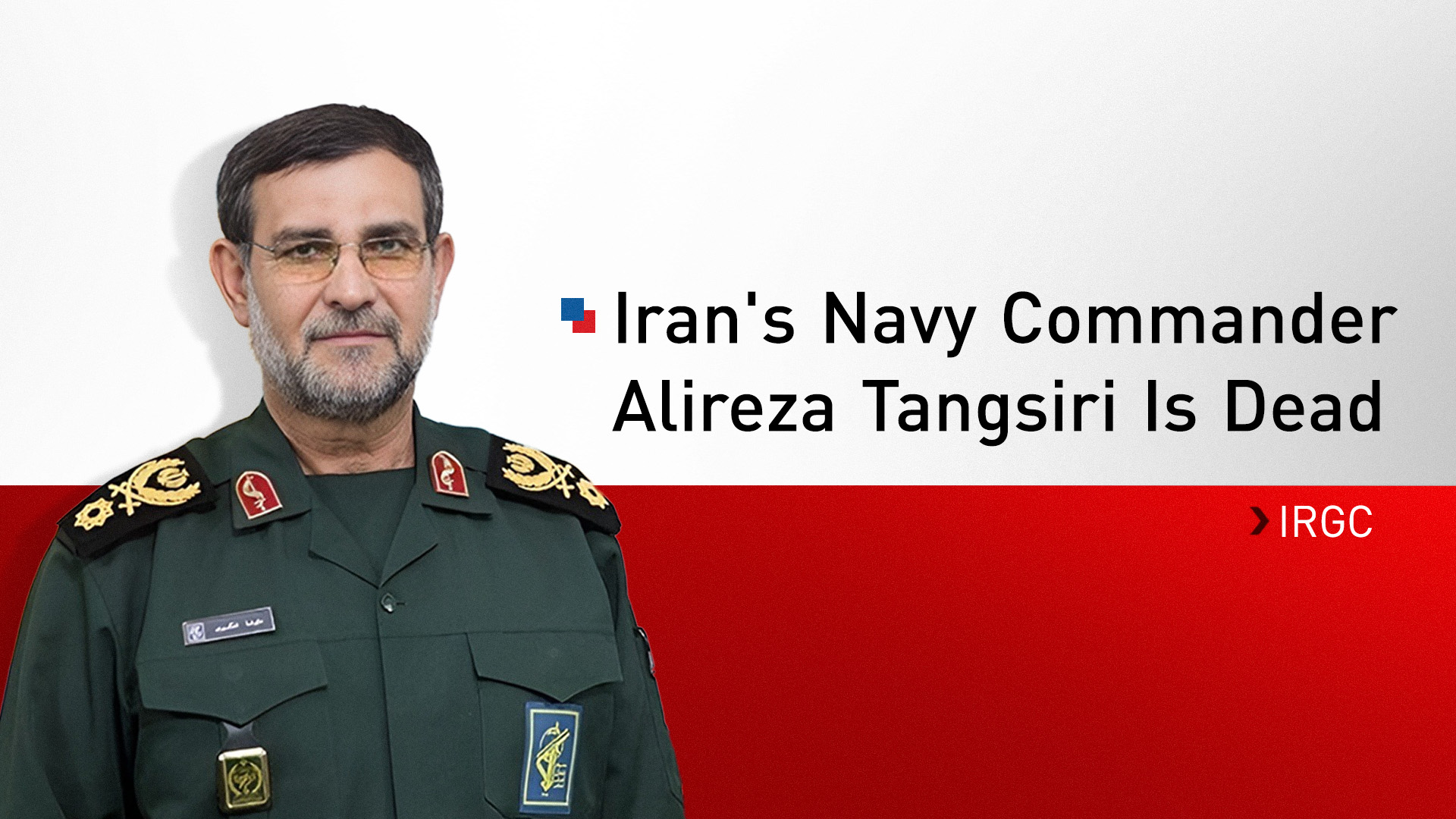
ERBIL (Kurdistan24) - The Iranian Islamic Revolutionary Guard Corps confirmed the death of Rear Admiral Alireza Tangsiri, the commander of its naval forces, who succumbed to severe injuries following recent military strikes.
The confirmation, issued via a formal statement published by the Fars News Agency, marks another significant casualty within Iran's senior military leadership amid the ongoing conflict.
According to the official statement released by the Fars News Agency, Rear Admiral Tangsiri died due to the "severity of his injuries."
The publication detailed that prior to his death, the naval commander had been actively "engaged in organizing and strengthening the forces and the defensive shield of the islands and coasts targeted by the aggressor enemies."
The statement also characterized Tangsiri’s recent military activities, noting his involvement following "heavy strikes that resulted in the destruction of the enemy's vital facilities and infrastructure and the downing of an American fighter jet."
The Revolutionary Guard framed his death as martyrdom following "nearly half a century of tireless jihad."
The formal confirmation from Iranian authorities follows earlier claims made by the Israeli government.
Last Thursday, Israeli Defense Minister Israel Katz announced that the top naval commander had been killed in a military strike.
The Israeli Defense Minister explicitly identified Tangsiri as "the person directly responsible for the terror operation of mining and blocking the Strait of Hormuz to maritime traffic," according to reporting by Al-Monitor.
Following the Defense Minister's initial announcement, the Israeli military released a subsequent statement detailing that the strike which killed Tangsiri was executed in the Iranian coastal city of Bandar Abbas.
The operation received immediate international acknowledgment, with U.S. Central Command issuing a public statement praising Israel for the successful execution of the strike, Al-Monitor reported.
The Revolutionary Guard's statement addressed the systemic impact of Tangsiri's death on its military capabilities. The communique asserted that the front will "continue its path with authority following the martyrdom of the field commanders."
The statement further claimed that during Tangsiri's recent absence due to his injuries, the forces of the Revolutionary Guard Navy continued delivering "crushing blows and maintaining decisive management of the Strait of Hormuz."
The official Iranian statement also extended condolences to the "Supreme Commander of the Armed Forces, His Eminence Ayatollah Khamenei," despite earlier reports indicating Khamenei was among the Iranian leaders killed during the current conflict.
Rear Admiral Tangsiri, reportedly born in the coastal city of Bushehr in 1962, had a long and prominent career within the Iranian military apparatus.
According to the Washington Institute for Near East Policy, cited by Al-Monitor, Tangsiri served as a naval brigade commander during the Iran-Iraq war and subsequently headed the 1st Naval District in Bandar Abbas. He held that position until becoming the deputy naval commander in 2010.
In 2018, Ayatollah Ali Khamenei formally appointed Tangsiri as the chief of the Revolutionary Guard's naval forces.
Throughout his tenure, Tangsiri maintained a highly confrontational posture regarding maritime security and the presence of foreign militaries in the region.
He was heavily involved in Iran’s military operations and strategic positioning within the Strait of Hormuz, a critical global shipping chokepoint.
Just days before the current war began on Feb. 28, Tangsiri publicly repeated threats to close the strait. The United States had previously sanctioned him in 2019 for making similar threats regarding the vital waterway.
Tangsiri's death represents the latest in a series of targeted eliminations of senior Iranian political and military figures by Israeli and U.S. forces since the war commenced.
According to previous reporting, the casualty list of high-ranking Iranian officials includes Supreme Leader Ayatollah Ali Khamenei, Revolutionary Guard commander Mohammad Pakpour, Iranian military chief of staff Abdolrahim Mousavi, and senior security official Ali Larijani.
Prior to his death, Reuters characterized Tangsiri as one of the key remaining operational figures within the Iranian establishment, specifically noting his significant role in Iran's efforts to close the Strait of Hormuz.
This article was updated on Monday, March 30, 2026, at 10:53am.