Israel Says It Struck 'IRGC-linked Military University' in Tehran
Israel’s military said it struck "IRGC-linked facilities at Tehran’s Imam Hossein University," targeting missile and weapons R&D sites, including wind tunnels and engineering centers, in recent operations.
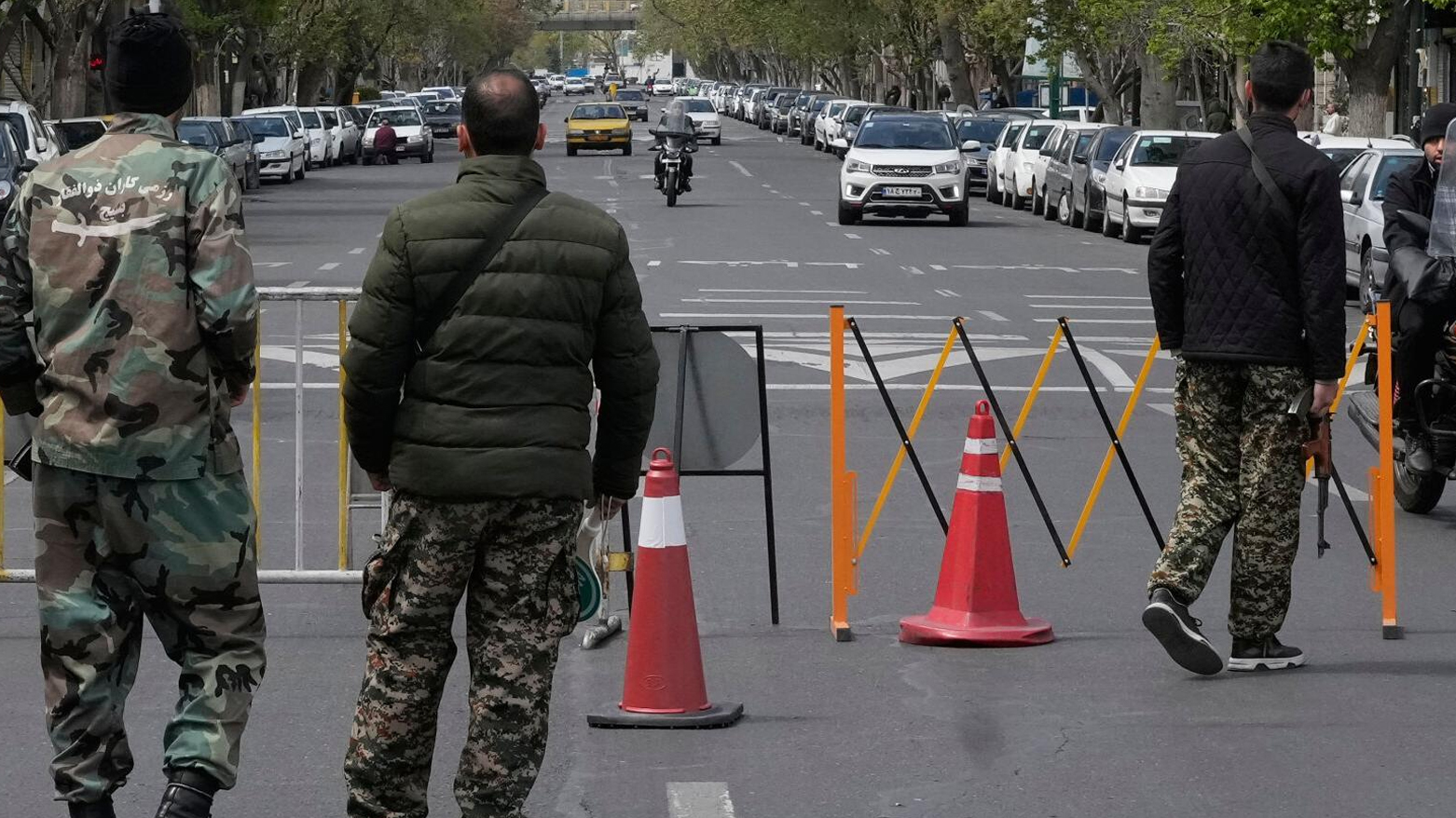
ERBIL (Kurdistan24) - The Israel Defense Forces (IDF) announced on Monday via its official Telegram channel that it has successfully struck military infrastructure within the compound of Imam Hossein University, the primary military academic institution of the Islamic Revolutionary Guard Corps (IRGC) located in Tehran.
The disclosure regarding the targeting of the university, which reportedly serves as a critical emergency asset for the Iranian regime's military bodies, coincided with statements from U.S. President Donald Trump regarding the potential seizure of Iran’s main oil terminal on Kharg Island.
According to the IDF's statement, the university compound was utilized as a civilian cover for the research and development of advanced weaponry.
The military infrastructure destroyed during the operation included subterranean wind tunnels used for the testing and development of ballistic missiles, as well as the university’s chemistry center, which the IDF identified as a site for the development of chemical weapons.
Additionally, the technology and engineering center of the mechanics and development group, a complex allegedly central to ballistic missile production, was among the targets struck.
The IDF noted that several countries have previously imposed sanctions on the university and its senior officials due to its direct affiliation with the IRGC and its involvement in advancing militant activities.
The institution is commanded by Mohammad Reza Hassani Shahnegari, a senior IRGC officer with a rank equivalent to Brigadier General. Shahnegari is responsible for overseeing officer training, force buildup, and university operations.
The Israeli military stated that the strikes were intended to inflict significant damage on the Iranian regime’s weapons production and development capabilities.
These developments in the heart of the Iranian capital occurred as U.S. President Donald Trump suggested a possible expansion of American military objectives.
In an interview with the Financial Times on Monday, President Trump raised the idea of American forces seizing Kharg Island, which houses Iran’s most significant oil terminal in the Persian Gulf.
“Maybe we take Kharg Island, maybe we don’t. We have a lot of options,” the President told the publication, adding that such a move would require a sustained U.S. presence on the island.
The President further disclosed that Iran had agreed to allow 20 oil tankers to transit the Strait of Hormuz starting Monday morning. He characterized this development as a “sign of respect” from Tehran.
While the President noted that negotiations were performing “extremely well,” he maintained a cautionary tone regarding the long-term outlook for a diplomatic settlement. “You never know with Iran because we negotiate with them and then we always have to blow them up,” he stated.
The Associated Press reported that the broader conflict continues to escalate across multiple fronts despite signs of nascent ceasefire talks. Iran has responded to the possibility of a ground invasion by threatening to mine the Persian Gulf.
Meanwhile, Iranian forces conducted a strike on a key water and electrical plant in Kuwait, continuing a campaign targeting Gulf Arab states that have seen significant impact from the monthlong war.
In Lebanon, the conflict between Israel and Hezbollah has resulted in further casualties among regular military forces.
An Israeli strike on a Lebanese army checkpoint near the coastal city of Tyre killed one soldier and wounded several others on Monday, the Associated Press reported.
This brings the total number of Lebanese army soldiers killed in Israeli strikes to at least 11 since the current hostilities erupted. While the Lebanese military has been deploying in the south to assert control, officials noted they have not engaged in direct clashes with the Israeli ground forces currently operating in the country.
The Israeli military also confirmed that a sixth soldier was killed in southern Lebanon on Sunday. Israel maintains that its ground invasion is necessary to establish a security zone in the depopulated southern region to protect its northern communities from Hezbollah projectiles.
According to Lebanese officials, the conflict has killed more than 1,200 people and displaced over one million individuals across Lebanon.
Domestic infrastructure in Israel has also been affected. Video footage confirmed a fire at an oil refinery in the northern city of Haifa on Monday, marking the second such incident at the facility since the war began. It remained unclear whether the blaze was caused by a direct missile strike or falling debris.
The Associated Press noted that Israel, which operates two refineries, has previously targeted Iran’s South Pars natural gas field and other petrochemical installations.
Regional instability was further evidenced in Bahrain, where the Interior Ministry reported a fire in a commercial building in Al Dair, a village near Bahrain International Airport. While no injuries were reported, investigations into the cause are ongoing. Bahrain reportedly sounded its missile alert sirens twice on Monday.
Diplomatic mediation efforts are currently being led by Pakistan and supported by China. Chinese Foreign Ministry spokesperson Mao Ning told a daily briefing in Beijing that China appreciates Pakistan’s mediation role and is ready to coordinate with relevant parties to safeguard regional peace.
Pakistan announced on Sunday that it intends to host talks between the United States and Iran, though neither Washington nor Tehran has formally confirmed whether such discussions would be direct or indirect.
Within Iran, the government continues to carry out domestic executions amid the external conflict. State media reported that two members of the Mujahedeen-e-Khalq, an exiled Iranian group, were hanged on Monday.
The men, identified as Akbar Daneshvarkar and Mohammad Taghavi, were convicted of armed rebellion in October 2024. Amnesty International described the trials as grossly unfair and alleged that the men were tortured during interrogations.
In a separate report, Iranian state television read a statement from the Revolutionary Guard confirming that Rear Admiral Alireza Tangsiri, the IRGC navy chief, has died. Israel had previously claimed to have killed Tangsiri in an operation on Thursday.
The Guard’s statement noted that Tangsiri “joined the ranks of Allah due to the severity of his injuries” and praised his role in maintaining a chokehold on the Strait of Hormuz.
The economic and legislative landscape in Israel has shifted in response to the war. The Israeli parliament passed a $270 billion budget, the largest in the country's history, which included a 20 percent increase for the Ministry of Defense.
The ministry’s budget has reached $45 billion, necessitating funding cuts in other government sectors. The passage of the budget also extends the term of Prime Minister Benjamin Netanyahu by avoiding early elections.
Additionally, the parliament began debating a bill that would make the death penalty the default punishment for West Bank Palestinians convicted of murdering Israelis.
International pressure on Iran’s military capabilities is also mounting. Noura Al Kaabi, a minister of state at the UAE’s Foreign Ministry, called for the “disarmament” of the Iranian missile program in a column for the state-linked newspaper The National.
Al Kaabi stated that a regime that weaponizes global trade and launches ballistic missiles at homes is “no longer an acceptable feature of the regional landscape.”
As the war enters its second month, the spot price of Brent crude oil has reached approximately $115, a 60 percent increase since the conflict began on February 28.
In Tehran, lawmaker Alaeddin Boroujerdi suggested that Iran should consider withdrawing from the Nuclear Nonproliferation Treaty, questioning why the country should observe international restrictions while being subjected to military strikes.